A US conciliation policy in relation to Russia and Vladimir Putin, in the context of the Ukraine war, could have catastrophic consequences, warns the historian Christian Goesche, a senior lecturer in modern European history at the University of Manchester, in an interview for Euronews.
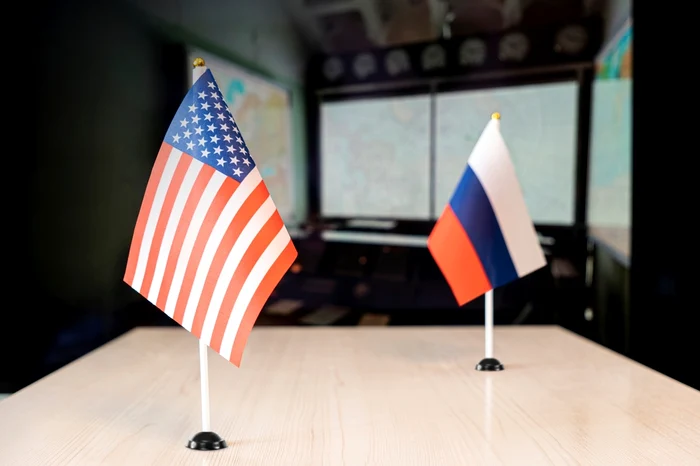
Photo shutterstock
Russian President Vladimir Putin “mocks” his attempts to his American counterpart Donald Trump to put an end to the Ukraine war, said Kaja Kallas, head of the European Union foreign policy, in a recent interview with Euronews.
“Putin just beats all Trump's efforts … After Alaska's discussions, Putin intensified his attacks,” Kallas said last week.
“Why do we offer (Russia) everything he wants just before starting the negotiations? This is a conciliatory approach, which never worked!” She said in February.
“Since 1938, when British Prime Minister Neville Chamberlain and his French counterpart Edouard Daladier have made concessions of Nazi Germany beyond Czechoslovakia, the word” conciliere “has gained an outdated shade in common language and political debate,” explained the history for Euronews.
“It is about trying to avoid armed conflicts and wars through large concessions,” said the historian, co -author of the volume “Munich '38 – the world at the crossroads”, which will be published at the beginning of next year.
At the 1938 Munich Conference, Chamberlain and Daladier gave up the threats of Adolf Hitler, and the United Kingdom and France left Czechoslovakia. The Munich Agreement stipulated that Czechoslovakia had to give up the region of the Suds Germany and leave the territory within 10 days.
Chamberlain and Daladier were deceived by the vicious promises of the German dictator and, instead of maintaining peace, Hitler triggered World War II only a few months later.
The dangers of conciliation policy
Goeschel said that only some parallel between the 1938 situation and the current demand of Russia for large parts of East Ukraine can be made, and this to extract a lesson about possible consequences.
“We cannot actually equate Putin with Hitler, not that is,” said Goeschel.
“It is about how liberal democracies, how the West should proceed to preserve the fundamental values, that is, freedom, democratic separation and the right of peoples to self -determination.”
“It is about better to understand what could happen if the Western powers behave too shy to the expansionist dictatorships and allow them to take over the territories,” he added.
Returning to the situation of Ukraine, the historian said that “Trump's behavior towards Putin is not very robust compared to the more dominant behavior of his predecessor, Biden,” he said.
“If Trump or any of the Western powers would end an understanding with a little over the head of Ukraine, this would be” catastrophic, because it would feed Russia's appetite for new territorial conquests, “the historian warned.
The historian said he did not believe that this is the case, emphasizing “countless attempts to improve Putin, independent of the so-called Russia supporters.”
“There was the Minsk Agreement, in which the German Chancellor then, Angela Merkel, played a key role. The red-green government under the leadership of Gerhard Schröder made Russia's concessions. So many vain attempts were internationally to improve Putin,” he added.
Goeschel believes that there has been a completely wrong evaluation of Russia's military objectives from Western powers. In addition, Western democracies want to avoid war as long as Europe's military training is not in good condition, he added.
“We relied too much time on the US military defense umbrella. These are the main reasons why it took us a long time until we wake up and realize how dangerous it is,” he said.