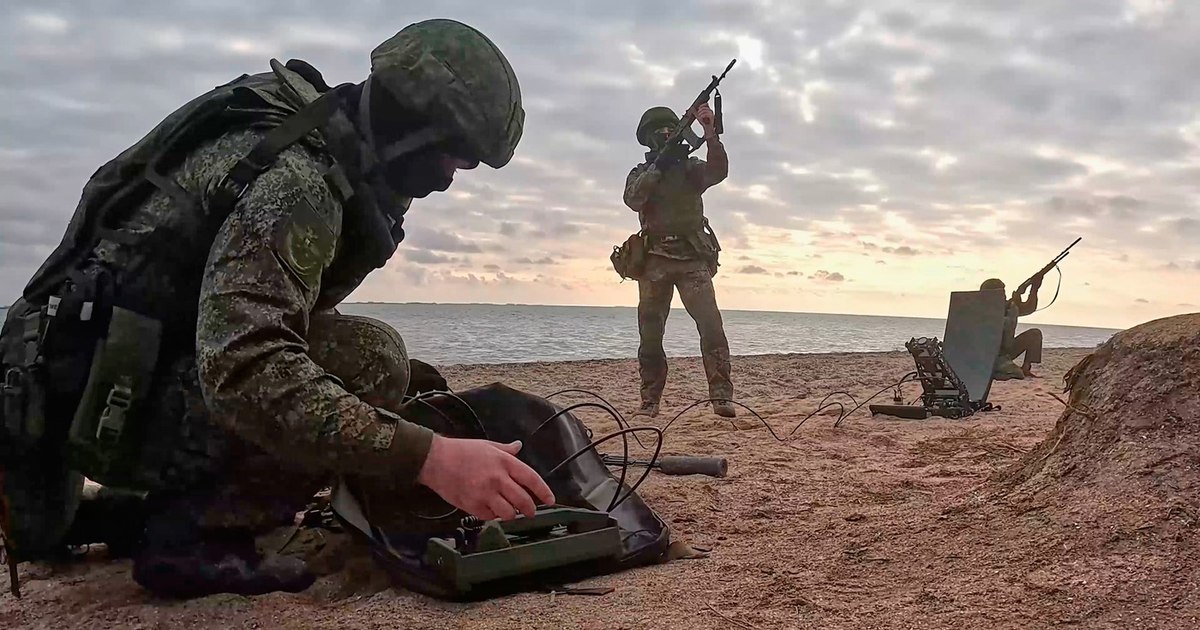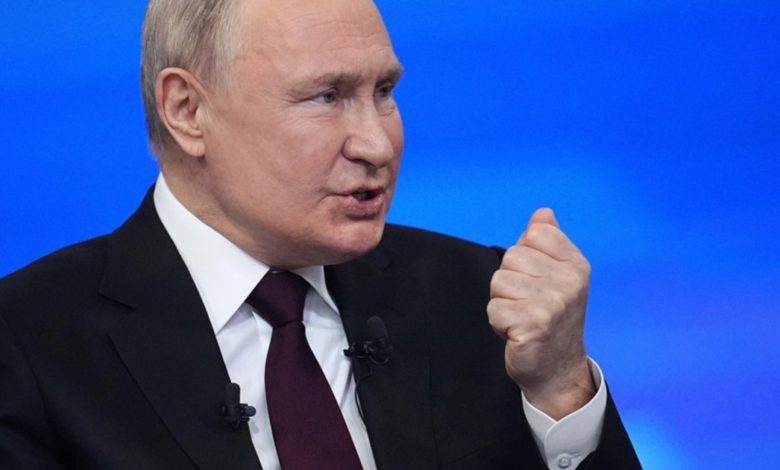
After the recent meetings in Alaska and Beijing, Russia seems to have found his confidence to look beyond Ukraine. To Europe.
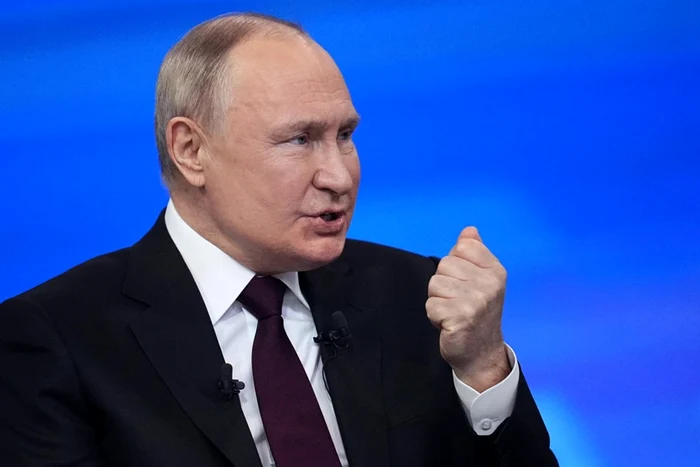
Russian President Vladimir Putin/Photo: EPA/EFE
It is a familiar scenario: before the invasion of Ukraine, Russia staged a series of challenges meant to present Moscow as a victim of a Kiev regime. As, on February 21, 2022, the Russian Ministry of Defense announced, with an air of calculated severity, that two armored carriers of the Ukrainian army had entered the Rostov region, where they were “neutralized”. A poorly tailored lie, which was convinced anyone – not even those who broadcast it.
Today, almost four years from that moment, Europe is again the theater of troubled movements. In the last days, NATO and the EU have been the target of a series of coordinated challenges: 19 Russian recognition drones were overcome by the Polish airspace; Three MIG aircraft, frequently used to launch Kinzhal missiles on Ukraine, have entered Estonia's airspace for more than 12 minutes – enough to travel over 500 kilometers; Two fighter jets flew dangerously below a Polish drilling platform in the Baltic Sea. At the same time, some of the largest airports in Europe were affected by a massive computer malfunction, which several European officials suspect to be the result of a Russian cyber attack.
The history of these types of operations is not new. The manual of the dictator looking for pretexts for invasion was written in the 20th century, with pages signed by Hitler and Stalin. The Poles did not forget that World War II started with a fake: a group of Nazis dressed in Polish uniforms attacked the Gleiwitz radio station, giving Goebbels the justification necessary to declare that Germany is under attack. Stalin followed quickly, invoking the “protection” of the Ukrainians and the Bielors in eastern Poland. Similarly, in the case of the incident in Mainila: some obususes drawn “by mistake” on the Soviet territory have opened the way to the Winter War against Finland, writes the Russian Independent Publication Novaia Gazeta Europe.
The difference now is the technology
According to the humiliations suffered by the Russian army in the first years of the Ukraine war – including a deeply unpopular partial mobilization – Putin now seems to believe that it has the rear wind. Not so much because of military advances on the ground, but because of the contradictory messages coming from US President Donald Trump.
The US, during the period when she seemed to give up the security guarantees for NATO allies, gave Putin an unexpected maneuver. The Russian planes and drones did not dare to cross NATO borders as long as Washington has transmitted clear discouragement signals. But the renewed friendship between Trump and Putin, validated at the Alaska Summit and consoloded by Xi Jinping to the Beijing military parade, reappeared the Kremlin's ambitions.
The refusal of Moscow to accept the proposal to cease the fire from the US, invoking the “deep causes” of the conflict, is a clear indication: Putin has no intention to stop the war machine. On the contrary, Europe becomes an acceptable target again.
Inside Russia, things are even more complicated. The “special military operation” had to be a Blitzkrieg in the Crimea style 2014. Instead, Russia has transformed into a militarized society, in which loyalty to the regime is rewarded with money, status and impunity for war crimes. A sudden peace would leave this suspended system without political fuel. Therefore, Putin can be less motivated by the conviction that he defeats even more than the fear that a society out of war logic could return against him.
And then what does the Kremlin stop today? The answer seems more and more to be: nothing.
Europe must prepare for a direct conflict with Russia
Military analysts warn that Europe must prepare for a direct conflict with Russia. A terrestrial invasion is unlikely in the near future, but air incursions and hybrid actions may become more and more frequent. Drones over Poland may be just the prelude to a conflict for which Europe is not yet prepared.
The challenge, in Russian logic, is not intended to convince, but to cause a reaction. And the reaction offers justification.
The Czech Republic, through President Petr Paul, suggests that planes entering the NATO space should be shot down. Estonia believes that it is sufficient to invoke Article 4 of the NATO Charter, which provides consultations between allies in the event of a threat. But what do you do when the challenge becomes a routine?
We know from history that dictators do not stop when they feel weakness. On the contrary. Those who hope to reassure them through concessions only open their lust.
Finland's president Alexander Stubb said without bypasses: Security guarantees for Ukraine must include Europe's availability to fight. Finland's recent history explains this position. The question is whether the rest of Europe has learned the same lesson.