The most effective weapon of modern warfare does not fire a single shot. It changes what we believe to be true.
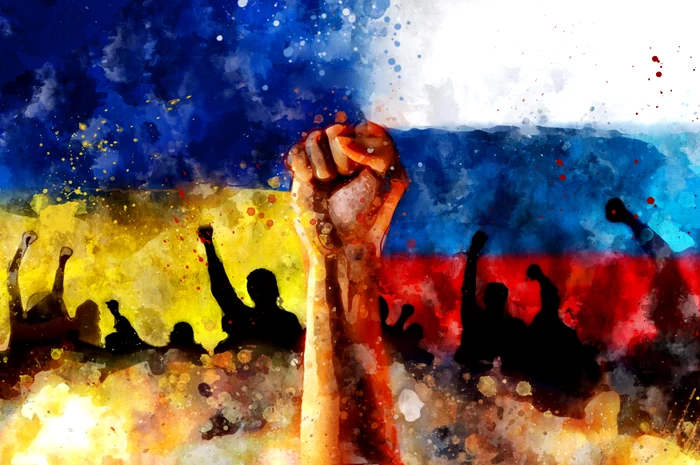
The cognitive war is waged simultaneously against the army and the civilian population/PHOTO: Archive
Today there is a front that does not appear on maps and has no trenches. A front that crosses news feeds, social networks and, above all, our decisions. There is an essential struggle here: the struggle over how we understand reality and act upon it. NATO calls it, in a recent report by its Office of Science and Technology, “cognitive warfare” – the deliberate influencing of civilian and military thinking and behavior through informational, psychological and technological means.
For Ukraine, this concept is not an academic theory. It is a daily experience, lived continuously since 2014. In many European capitals, it is still regarded as a “Ukrainian specificity”. In reality, it is a systematic attack on democracies, writes pravda.ua.
The war to control reality
The central target of cognitive warfare is not a particular opinion, but the process by which we form our opinions. Who builds our image of the world? Who do we believe? How do we order informational chaos into meaning? And how quickly can we move from understanding to decision?
The NATO report directly links this phenomenon to the OODA cycle – observe, orient, decide, act. The opponent does not necessarily have to change the final decision. It is enough to compromise the first two stages – observation and orientation – for decisions to become delayed, contradictory or politically impossible.
This is exactly how Russia acted before the full-scale invasion. The information space was simultaneously flooded with incompatible explanations: there will be no attack; Ukraine provokes; it is an internal conflict; The West exaggerates. Not a “true” version of reality was the goal, but the fog. And in the fog, any decision becomes risky.
Today, the cognitive war is waged simultaneously against the military and the civilian population. The military is being targeted with falsehoods about surrenders and catastrophic losses. Civilians – with panic, disbelief and exhaustion. The tools are multiple: troll factories, bot networks, pseudo-media, made-up experts, ghost NGOs and influencers who hide the involvement of the Russian state.
Disinformation is no longer just outright lies. It is packaged in entertainment, “analysis”, rumor or genuine outrage. Real problems – corruption, blackouts, war fatigue – are systematically exploited to undermine trust. Technology amplifies everything: microtargeting, deepfakes with “surrenders”, networks of Telegram channels, cyber attacks and data leaks. The goal is not to convince, but to exhaust society to the point of paralysis.
Technology as a multiplier of vulnerabilities
NATO recognizes that technology did not create cognitive warfare, but it made it faster and more effective. No need to influence the masses anymore. It is enough to hit the right audience at the right time.
Hence the transition from classic propaganda to FIMI operations – external information manipulation and interference. We are no longer just talking about messages, but about ecosystems: bots, cloned media, artificially generated “voices”, content farms that simulate organic debate.
In Ukraine, this phenomenon is described as “informational exhaustion”: a continuous stream of themes that undermines mobilization, discredits allies and instills the idea that resistance is futile. Russia's bet is not to win the debate, but to destroy society's ability to remain consistent.
Ukraine – laboratory, Europe – target
Russian operations in the EU are not simple “domestic disputes”. They are deliberate strategies of social fragmentation and weakening of political will.
In Ukraine, the stake is blocking the defense. In Europe, turning support for Ukraine into a subject of internal conflict. What is tested today on the Ukrainian public will be adapted tomorrow for other democracies, exploiting local vulnerabilities.
Therefore, Ukraine's experience should not be presented to Brussels as a request for help, but as a warning.
NATO and Ukraine: two perspectives on the same struggle
NATO looks at cognitive warfare as a long-term structural problem: protecting decision-making processes, inter-institutional coordination, investing in resilience. It is a logical approach for an alliance of more than 30 democracies.
The Ukrainian approach, however, was formed under the pressure of survival. It is pragmatic, flexible and often improvised. The state does not monopolize the informational struggle, but coordinates, supports and amplifies effective initiatives in society.
Journalists, fact-checkers, volunteers and experts create a web of trust that often proves more resilient than any centralized system. It is a real model of collective information defense.
In addition, Ukraine is obliged to do three things simultaneously: defend, respond and anticipate. Block hostile channels, counter propaganda, and identify early the themes the adversary is trying to exploit.
What NATO and the EU should learn
Ukraine's experience offers concrete solutions, not theory.
First, cognitive resilience must be treated as part of defense, just like air defense or cyber defense.
Second, real cooperation with civil society is needed. Decentralized, “hive” models are more flexible and efficient than rigid structures.
Third, institutionalized collaboration with major technology platforms is critical to combating botnets and inauthentic coordinated behavior.
Fourth, it must be accepted that, in existential situations, special, time-limited, transparent and justified information regimes may be necessary – as demonstrated by Ukraine.
Cognitive warfare favors the aggressor because it is cheap, discreet and effective without occupying territories. But it only works where there is mistrust, fatigue and fragmentation.
In this war, it is not those with the most beautiful doctrines who win, but those who learn the fastest, adapt and maintain inner confidence.
Ukraine has already paid the price for this lesson. The question is whether the Allies will learn from it before the war reaches their doorstep.