The tireless struggle of drone pilots to hold the defense in the most exposed areas of the front

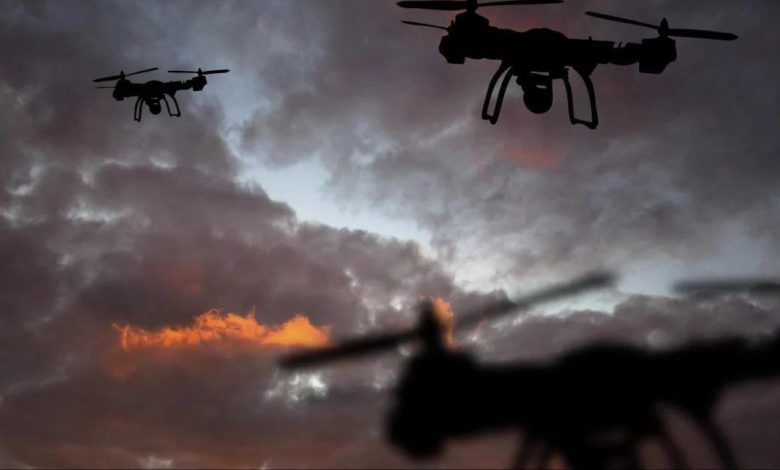
On one of the front lines where Russia has made the most progress in recent weeks, drone pilots are wondering how much longer they will be able to keep up and keep fighting, The Guardian reports.
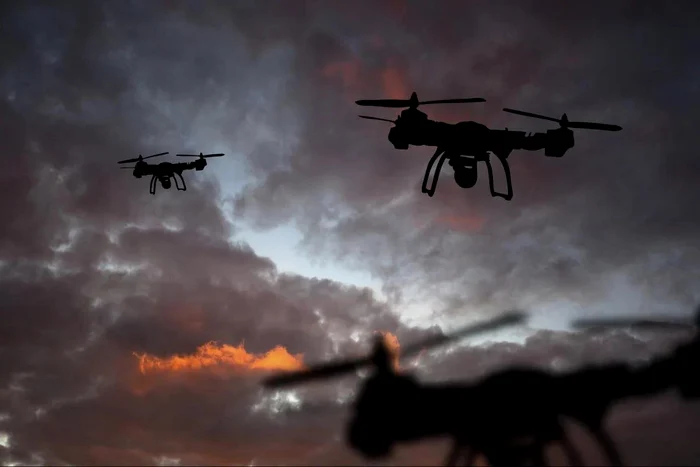
PHOTO EPA-EFE
Tucked away in a heated, wood-lined bunker, Dmitro is tasked with monitoring and providing support to frontline drone crews. Watch multiple video feeds on a screen in an increasingly hot section of the front that stretches from the town of Pokrovske to Huliaipole, 80 kilometers east of the city of Zaporizhia.
The 33-year-old pilot is part of the 423rd Drone Battalion, a young specialized unit established in 2024. He goes through the data streams of the battlefield's Delta system, zooming in on them one by one. Grainy footage comes from FPV drones; clearer footage with heights and speeds from commercially purchased Mavic drones; at another point a bomber drone appears, with available ammo marked in green.
It's a common sight on the Ukrainian front, although, as Dmitro and his commander Kostia, a captain, point out, the terrain below varies. No, it's not Donetsk, easier to defend, with its towns and elevations. It is a flat agricultural land dotted with destroyed villages where the Dnipropetrovsk and Zaporizhia regions meet.
With Vladimir Putin's latest stated goal of capturing all of the Donetsk region, either through diplomacy or force, the front line gave way in November near these borders. Geography makes defense difficult, Kostya observes: “There are a lot of fields and if we lose a height advantage, we have to retreat for miles.”
The front line where the defense gave way
Recently, an opportunistic Russian attack east of Huliaipole caught the Ukrainian defenders by surprise. The area had been held since 2022 by a war-weary 102nd Territorial Defense Brigade of soldiers from Ivano-Frankivsk in the west, but they could not withstand the sudden pressure. One battalion completely surrendered. In November, about ten kilometers were lost.
The difficulties arose partly against the backdrop of Ukraine's intensive defense in the east, explained Serhii Kuzan, president of the Ukrainian Center for Security and Cooperation. “Due to the large concentration of forces in Pokrovsk and Mîrnohrad, the reserves were exhausted and for this reason this offensive was possible.” Troops from the 225th Assault Regiment were redeployed to stabilize the situation by the end of the month.
Although the Ukrainian Mavic drones have extraordinary reconnaissance capability, with experienced pilots able to spot movements from several hundred meters away, the Russian invaders were able to exploit the frequent late autumn fog. “Take advantage of our lack of visibility due to the weather,” combining it with heavy 250 kg glide bomb strikes, says Kuzan,
The Russian Air Force still operates about 300 aircraft and can launch the munitions from 80 to 120 kilometers away – beyond the range of Ukrainian air-to-air missiles. Although the planes and missiles can be tracked on radar, the defenders only have four minutes to act. Electronic countermeasures can deflect their trajectory, a process Ukrainian soldiers estimate is effective 70 percent of the time.
Continuous fire defense
When the weather is clear, drone crews work tirelessly on defense. Russian soldiers head to predetermined points, trying to avoid the deadly drones above, often carrying little food and water, and sometimes no weapons at all, to be picked up later if they survive. But when the weather is clear, the flat terrain and the absence of vegetation mean only one thing: infiltrations are exposed.
Maksym, 29, and Serhii, 24, have just returned from five days at the front as part of a mixed team of FPV and Mavic pilots. It is the period of rest which often means relaxing with a video game like Stalker 2: Heart of Chernobyl, a post-apocalyptic shooter in the exclusion zone around the destroyed nuclear power plant.
“It helps us do our job”Maksym says with a smile. “If you fly a jet in one of the “battlefield” games, it's basically the same as flying a Mavic. It's good exercise.”
Pilot rest time depends on Russia's activity level. “You can always have enough [timp] sleep for 15 minutes and you're good,” claims Maksym. Both the FPV and Mavic drones have a battery life of up to 20 minutes and can be launched one after the other if necessary, with the ability to hit up to 15km – and even further, up to 29km if an FPV is launched from a second “mother drone”, which also doubles as a relay.
What's it like to kill Russians? “You rejoice because you have killed your enemy,” he says, this is the reality of war.
The statistics paint a stark picture. In November, the 423rd Battalion reported killing 418 Russian soldiers, in line with figures also reported by other specialized Ukrainian drone units, with the total number of casualties reported publicly as part of a points system that awards extra supplies to those who kill the most enemies.
The Russian military suffered about 1,033 casualties per day in November and 382,000 in total in 2025, according to British estimates. Drones account for 60 percent of the reasons Russians are killed or injured, Ukrainian military chief Oleksandr Sîrski said, with pilots flying 10,000 combat missions a day in November.
Vitalii Hersak, the unit's commander, speaking from a large bunker near Zaporizhia, points out that the battalion was established last November, a testament to how young drone warfare is. His claim that “we destroy a battalion and a half of enemies per month” it may be a slightly overestimated figure, but it is not too far from the truth. The problem is that Russia seems to have “infinite numbers”, while Ukraine “it has practically no infantry”, which makes certain sectors of the line more difficult to maintain.
How long does the fight last?
Further east, along the front, two experienced drone pilots from the Da Vinci Wolves battalion, stationed in the Dnipropetrovsk region, are wondering how long they will be able to continue defending at the required level of intensity. How many enemies did they kill? Everyone wonders if it could even be 1,000, although in reality they have no idea – according to some official figures, the unit's top pilot has over 400 kills. “I think I could do it for another six months, that's all”says one of them, although it is not an estimate of the duration of the war.
They show no signs of stopping their resistance, though maintaining an active defense will require new pilots and longer breaks from front-line combat. Sasha, whose callsign is Lego because he's a 3D artist and student, is learning to fly FPV drones. He signed up three months ago, but told his father “right before I got on the train,” he says, because he wanted to avoid a tense family conversation.
The soft-spoken young man doesn't know if he'll make it. “I haven't been in a position yet,” he says, but says he should try: “There came a moment when I realized: I can't sit and do nothing and just live.” Sasha is reluctant to comment on the ongoing peace negotiations, arguing that he has no right to do so, as he has never been on the front lines. Instead, his opinion boils down to this: for Ukraine, “the priority is simply survival.”