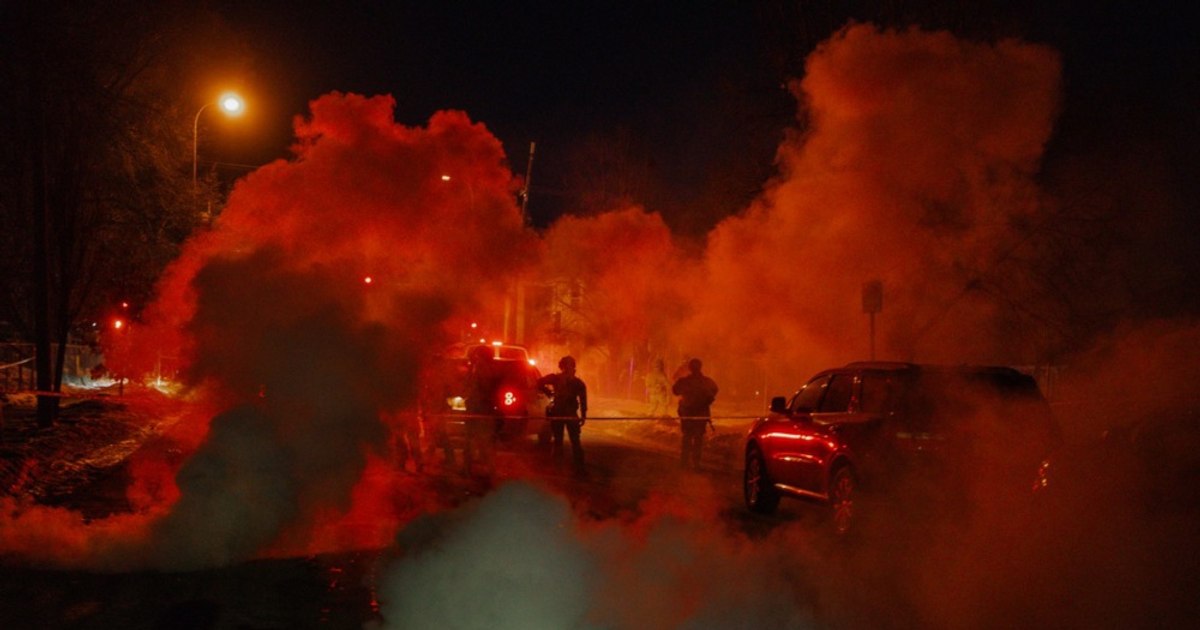
In a gas station destroyed on the front line, a few kilometers from the so-called “zero line”, a drone unit of the Ukrainian army is preparing for a new mission. It is night, and the danger does not come from the Russian artillery, but also from the air: FPV drones – unanswered air vehicles, controlled in real time – constantly patrols the area.
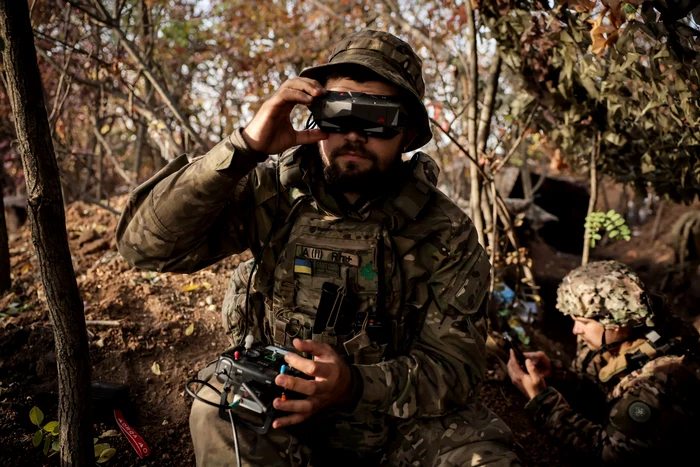
Ukrainian/photo drone operator: Profimedia
The commander of the unit, known under the Adama indicative, leads a team from the 34 Coast Defense Brigade. It is a recently established formation, but already recognized for its operational efficiency in the use of attacks, reports in a report The Atlantic.
“We do not use the real names. Adama is piloting the attack drones. Ghost is in charge of recognition. Triple has checked the targets and records the results,” Explains one of the soldiers, under the weak light of a red light.
Local production, maximum efficiency
The drones used by Ukraine are manufactured locally – sometimes even in improvised garages or workshops – and cost only a few hundred dollars. In 2025, the authorities estimate that over 4 million such devices will be produced, most of them equipped with FPV rooms and explosive loads.
On the evening of June 1, when this mission takes place, the Ukrainian forces had just hit several Russian military aircraft, including long -range bombers. As a reaction, Russia launches a wave of attack drones on southern Ukraine.
Against the background of these tensions, Adama's team moves quickly, without headlights, through a devastated city. In Herson, the traces of the Russian occupation are still visible – bombarded buildings, destroyed roads, abandoned playgrounds. The Russians left the area in November 2022, but destroyed the Dniester of the Nipper in retreat, which led to severe floods.
Mission: Identification and Elimination
At the place of launch, the team prepares two types of drones: one of recognition and one of attack. Shortly after they are in the air, real -time images indicate a potential Russian incursion: two fast vehicles cross the river, landing soldiers behind the Ukrainian line.
“Probably Wagner“Says Adama, referring to the group of Russian mercenaries known for his special operations. “They did this before.”
The teams in the area enter a silent competition to identify and eliminate targets. An internal score system rewards the destruction of equipment or neutralization of combatants. Depending on the daily priorities established by the intelligence services, a missile launcher, for example, can be worth more than an armored carrier. On that day, elite soldiers receive the highest score.
A system based on rewards
This “front game” – as some call it – allows drone operators to accumulate points. These can then be changed for equipment, consumables or comfort benefits: from new to devices with nocturnal view. Although it is not an official public recognized system, it is widely used and logistically supported by the Ukrainian army.
“It's like scouts,” jokes a drone operator. “Instead of sweets and toys, now we tighten points for thermocouches.”
But reality is far from a play. Attack drones, sometimes composed of 3D printed parts and metal debris, are capable of causing significant damage. In one case, the team follows for hours a Russian soldier trying to escape among the ruins. Adama refuses to remove him immediately, preferring to find out where he is hiding. When it enters a seemingly abandoned building, operators detect indications of a hidden base. The attack ends with a massive explosion – a sign that there were ammunition inside.
War becomes personal
Unlike artillery, drones involve direct, almost personal contact with target. The operator sees the image in real time, he can see the victim's reactions, sometimes even before impact. It is a form of combat closer to the assassination than to the classic fight.
“Sometimes we see them coming out. At other times, nobody simply appears.”says Adama, while completing a spreadsheet where the missions and results are recorded.
After almost 20 hours of continuous operations, the team withdraws. A vehicle comes to take them in a hurry. The drone detector signals the presence of a Russian device nearby. It accelerates, and the bridge over the Dnieper – the only output – becomes a risky obstacle. They pass well, but nearby still smokes the wreck to another vehicle previously hit.
The invisible factory of the war
In a seemingly abandoned warehouse, the team reaches what seems to be an improvised production line. Dozens of 3D printers work continuously, creating drones. The walls are covered with components, waiting for the following orders.
At the departure, Adama gives the journalist The Atlantic a badge – the emblem of his brigade, a camouflaged crab. “The crabs adapt. I can operate anywhere”says the military.
Instead, he receives a set of golden wings, a symbol of American naval aviation. Without speech, Adama removes another patch – black, with the inscription “PMC Wagner”, partially burnt.
“He was in flames when he died.”he says, without giving details.
Drones have radically changed the dynamics of the conflict in Ukraine. Although it represents only about 2% of the army's number, the drone operators units are responsible for a significant proportion of the losses suffered by Russia.
The efficiency, accessibility and adaptability of these teams have transformed them into a central element of the Ukrainian military strategy. In a conflict where the technological superiority was often claimed by Moscow, Kiev's response came from an unexpected source: small teams of operators, working in the dark, with locally manufactured equipment, but with a global impact.