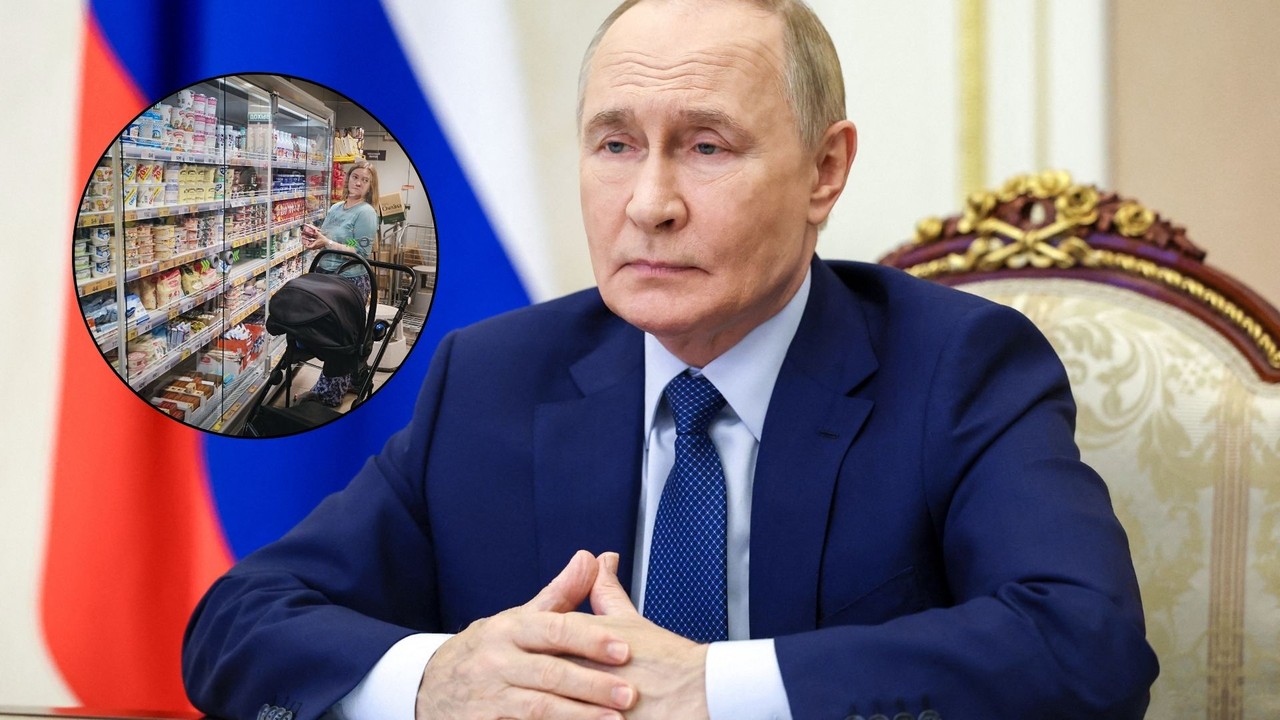
Russian stores limited the range: in July the number of food products fell by 2.3 percent, and non -food products – by 1.8 percent. Compared to the same month of last year – writes the “Kommiersant” daily, citing Nielsen's research.
The largest decrease was recorded in segments of alcoholic beverages, children's articles and facial care – 5.6 percent, respectively, 5.1 percent. and 7.3 percent Market participants explain this trend reduction of shopping space due to high rental costs and a change in Russian consumer habitswhich forces you to leave only the most sought after products on the shelves.
Group X5, the largest food retail seller in Russia, announced that from the beginning of the war against Ukraine, the assortment in its stores has decreased by an average of 15-20 percent. In the summer, the company started switching to smaller formats. The area of each store is about 400 sq m – three times less than in ordinary supermarkets of the network.
Similar actions were taken by the Magnit chain, opening stores in a maintenance-free Ultra-Convenience format under the new Zarajad brand from a magnite with an area of just 100 sq m. Super network-and Lenta hypermarkets also confirmed the course for reduction and optimization: only the most popular goods are left on the shelves, and the released area is allocated to the services and the released. In addition, new hypermarkets are much smaller than those that the company opened earlier.
Continued article under video material
Russians give up products
According to calculations, from January to July, the average area of grocery stores has decreased by 0.7 percent, to 312 sq m – currently retailers have reached the point where you can draw conclusions about the success of previously introduced brands and the conditions of limited space on the shelves remove those that are not popular among buyers – notes the director for customer service Nielsen Saltate Niasanowa.
The hypermarket format gives way to compact “home” stores and sales points with a large share of ready food – says Olga Sumiszewska, a partner at the consulting company One Story. According to her, most often in such stores one need is satisfied by one product, which allows you to give up less popular goods.
The Russians save more and more on everyday articles due to a rapid price increase. Even according to the official data of the Federal State Statistics Service Rosstat from the beginning of the war, the level of increases reaches 40 percent.
This means that 58 percent Citizens consciously give up some products that they bought earlier, 57 percent. He tries to find counterparts in lower price categories, and almost half (49 percent) choose shopping in discount stores – they show research.
Economy in trouble
According to official data, at the end of August, price increases amounted to 8.3 percent. in terms of year on year and 4.10 percent from the beginning of the year. The meat, gasoline and municipal services increased the most.
The Russian economy clearly loses impetus, which did not escape Vladimir Putin's attention. The President of Russia during a Monday meeting with government members and representatives of the Central Bank expressed dissatisfaction with current economic results. He also called for new solutions to implement.
In July 2025 Economic growth in the country has practically stopped. Its rate amounted to 0.4 percent. Gross domestic product (GDP) year on year – the Russian Ministry of Development said on 27 August.
Compared to June (economic growth by 1 percent of GDP), the economy slowed down 2.5 times, and compared to December last year (4.5 percent)-up to 11 times. The economic slowdown in Russia results from actions aimed at limiting inflation, which increased after the Kremlin opened its treasures to finance the war and relieve the effects of sanctions.
– Currently, Russia is balancing on the brink of recession – notes Tatiana Orłowa, an economist from the Oxford Economics economic consulting company.
I’m Ashley Davis as an editor, I’m committed to upholding the highest standards of integrity and accuracy in every piece we publish. My work is driven by curiosity, a passion for truth, and a belief that journalism plays a crucial role in shaping public discourse. I strive to tell stories that not only inform but also inspire action and conversation.