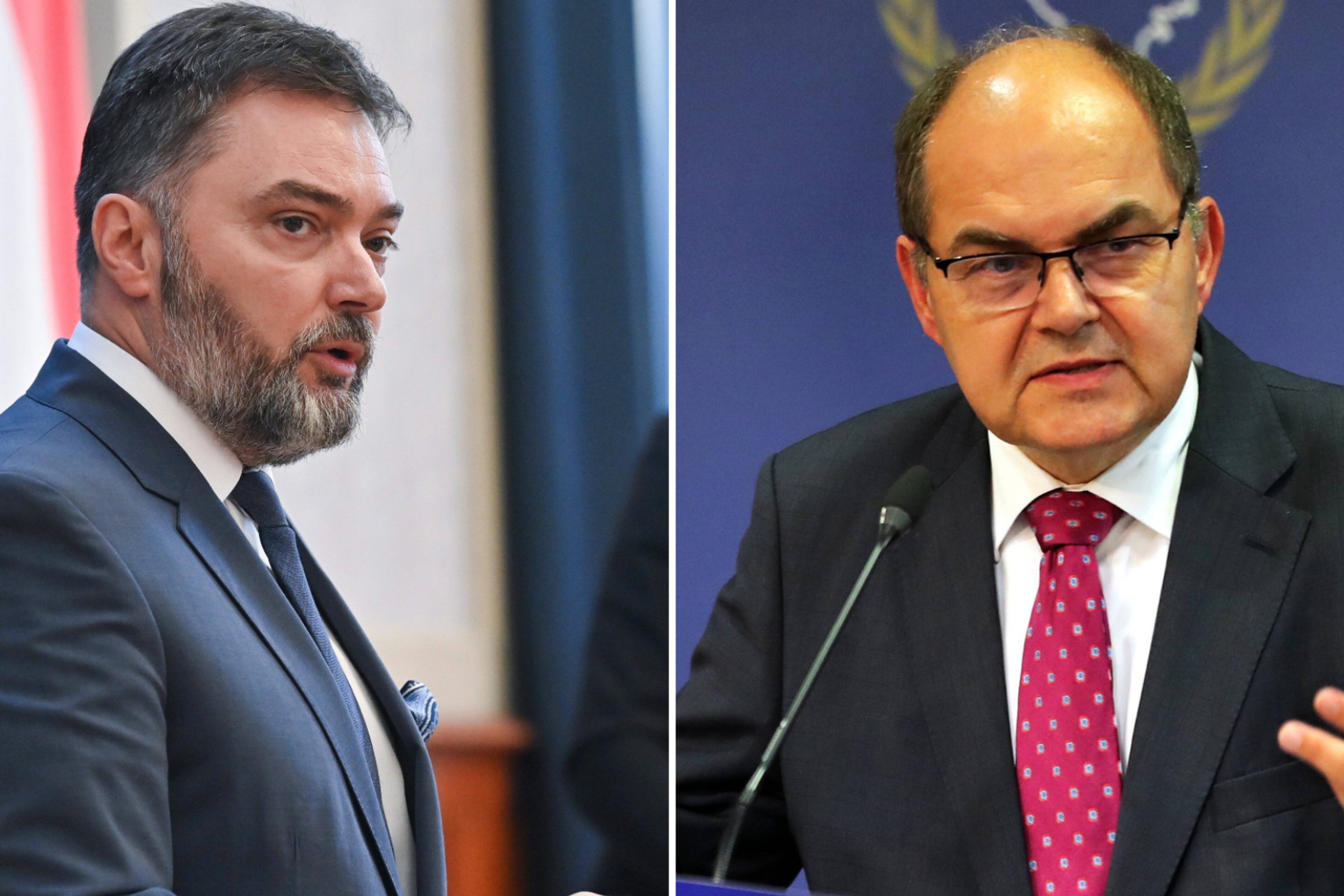
Stasza Koszarac, a member of Milorad Dodik's Alliance of Independent Social Democrats (SNSD), wrote on his Instagram account that he “sent the occupier Schmidt” a Nazi helmet with an attached “Letter to the occupier”, in which he stated that “it was not a gift, but a souvenir of Schmidt's ancestors, whose values this occupier upholds.”
The article continues below the video
What helmet did Minister Koszarac send?
Who received the helmet from Minister Koszarac?
How did the US and the EU react to Koszarac's actions?
What values does Koszarac believe that Christian Schmidt represents?
Christian Schmidt serves as the High Representative of the international community in Bosnia and Herzegovina – an official appointed after the end of the war in BiH in the 1990s to supervise the implementation of the provisions contained in the Dayton Peace Treaty.
Dodik and his colleagues question Schmidt's mandate, arguing that he operates illegally in BiH. Dodik's obstruction of the implementation of decisions made by Schmidt led to his removal as president of Republika Srpska – the majority-Serb autonomous part of BiH.
Representatives of the US and EU: we condemn the actions of Stasza Koszarac
Koszarac stated that Schmidt's “unconstitutional manipulations” destroyed democracy in BiH and led to the “political trial of Dodik.” In his letter, he described Schmidt as “the embodiment of political evil and bad intentions towards Republika Srpska” and suggested that he was “at risk of the Nuremberg trials”, referring to the trials of former Nazi officials and collaborators that took place after World War II.
The EU Representation in BiH posted a message on the X platform, emphasizing that it “strongly condemns the scandalous gesture of Minister Koszarets (…) and such behavior is unacceptable on the part of a public official.” The U.S. Embassy in Sarajevo wrote on the same platform that “the minister's actions are counterproductive and contrary to efforts to maintain stability and promote prosperity.”
Bosnia and Herzegovina is made up of three entities – the Serb-majority Republika Srpska, the Federation of Bosnia and Herzegovina, which is dominated by Bosnian Muslims and Croats, and the small Brčko District. The RS and the Federation of BiH have their own presidents, governments, parliaments and are connected by weak central institutions based in Sarajevo.