INTERVIEW. An interpreter in an extremely rare voice comes to Bucharest, at the Enescu Festival: “My voice is a barometer of the way I live. I cannot work in excess, I cannot live under the pressure of stress or intellectualizing everything”

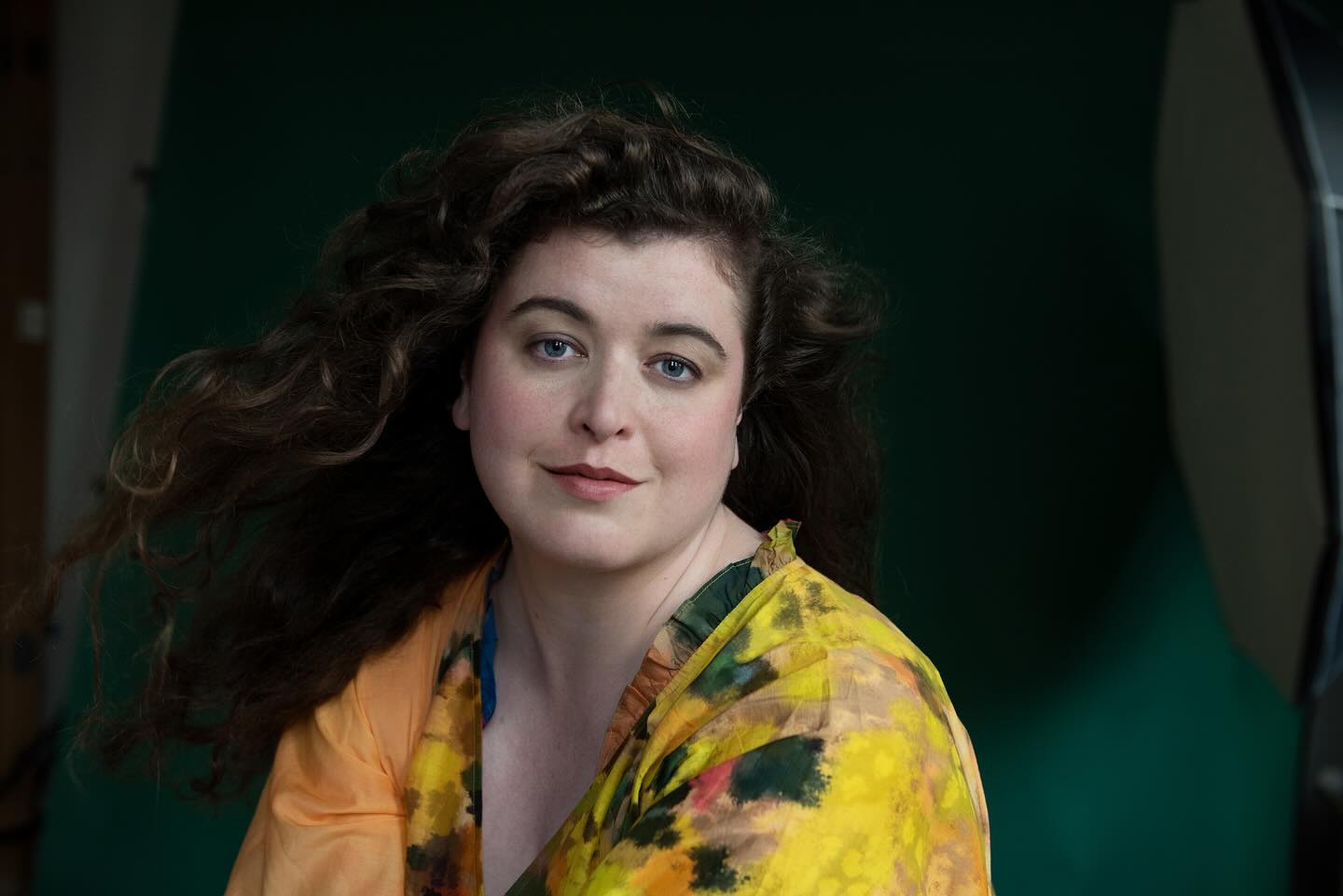
Jess Dandy, the most important British contraltist of his generation, has a rare and deep voice, which brings an authentic and innovative approach to classical music. In addition to his artistic career, Jess Dandy develops projects that connect music with mental health and relationship with nature, while bringing a new perspective on art and well -being. In an interview for the public Hotnews, conducted on the occasion of the Enescu Festival, the artist talked about how he got to accept his voice, considered a rarity in the field, as well as about the role of classical music in the present society.
In the landscape of classical music, female voices tend to gravitate around the high register – bright and intense mezzo -soprano often dominate the big scenes. However, from time to time, a voice that descends deeper, both in tone and in the content, appears. A voice of contrary – the most serious female vocal category, remarkably rarely encountered, characterized by its deep, soft and often dramatic stamp. “I accept my voice meant accepting my body, femininity, as well as understanding the voice not as decorative and pleasant, but as something elementary and sometimes unpredictable,” says Jess Dandy for Hotnews.
Originally from Cumbria, Jess Dandy It is one of the most authentic contrasts of the current British scene, with an artistic presence that combines the musical force with a lucid reflection on the world. Educated at Cambridge, formed at the intersection between spirituality, ecology and art, Dandy is not only a perfect performer, but also an active voice in redefining the artist's role in society. “Classical music is just sound: it is visceral, it is existential and you do not need a diploma in musicology to feel the impact of an authentic work in the body and soul,” she adds.
Her repertoire covers from Bach and Mahler, to contemporary creations and collaborations with interdisciplinary artists. At the same time, it is the co-founder of Songpath, an initiative that proposes musical hiking in nature, for a better mental health, but also Music & Being Collective, along with the composer Alex Mills, an “open laboratory” dedicated to exploring the potential of music to reconnect people with their self and the world, through the world and the world. The initiative is at the intersection between music, art, well -being, spirituality, self -expression and physical and mental health.
Jess Dandy will be present in Romania on September 15, in a concert he will hold at the Romanian Athenaeum, from 4.30 pm, together with conductor Charles Dutoit and pianist Martha Argerich. She will interpret my mother, goose M. 60, the concert in major soil for piano and orchestra M. 83 and noble and sentimental waltzs M. 61 of Maurice Ravel, as well as the Great L. 109, by Claude Debussy.
- The XXVII edition of the George Enescu International Festival takes place between August 24 and September 21, and the theme of this year will be “Anniversaries / Celebrations”-a tribute to the great musicians and the reference moments in the history of prestigious ensembles.
- The edition marks 70 years since the death of George Enescu and evokes the memory of other emblematic creators of the 20th century: 150 years since the birth of Maurice Ravel, 100 years from Pierre Boulez or 50 years since the death of Dmitri Șostakovici.
- In Bucharest, for 29 days, more than 4000 artists from 28 countries will be present, in over 95 concerts hosted by the Palace Hall, the Romanian Athenaeum, the Auditorium Auditorium, the Radio Hall, the Odeon Theater – Mina – the new immersive art Museum, as well as by the National Opera Bucharest and the National Theater “.
- HotNews is the media partner of the Enescu Festival
https://www.youtube.com/watch?v=qap_45m1l8i
“My voice is a barometer of the way I live”
Hotnews: – How did you discover your account of the contrary and what attracted to Opera and Lied, in a musical world often dominated by sopranos?
Jess Dandy: – The discovery of my account of the contrary was a long process of discovering the ideas received about how a young woman should sound. Towards the end of the postgraduate singing studies in London, I started working with a teacher who encouraged me to explore my chest voice and appreciate the natural darkness of my stamp. I listened to other contras and thus discovered a new vocal empathy: Kathleen Ferrier, Maureen Forrester, Helen Watts, Marian Anderson. I approached the opera and Lied because of my voice-even as a child, I had a “classic” style of singing, which would not have been in other genres. The lied is also a special passion for me, because of my love for poetry and the musical and rhythmic potential of words.
– Your type of voice is truly special-how did you get to hug it and how do you think your personality influenced?
-Thank you, we, the contrary, are indeed a rare species! Accepting my voice meant accepting my body, femininity, as well as understanding the voice not as decorative and pleasant, but as an elementary and sometimes unpredictable. I had to give up the temptation of high grades and enjoy something less obvious. My voice is a barometer of the way I live. They cannot work in excess, I cannot live under the pressure of stress or intellectualizing everything too much. My voice forced me to live a life in which I am aware of my own body, balanced, anchored.
The “scary and chaotic” process of being an artist
– Did your way in the classical music industry be generally linked or full of challenges? What were the biggest obstacles you met as a young artist?
– I have not yet met any young artist whose road in classical music was smooth, despite the appearances on social networks. Becoming a musician forces you to deconstruct and ask yourself fundamental, difficult questions. Not everyone is willing to do that. It is a scary and chaotic process. The biggest obstacle to me was the wrong need for certainty. As soon as I looked at the uncertainty as a possibility, I realized that a lot of opportunities were right under my eyes.
– How do you protect your voice-both physically and emotionally-in an area where performance pressure is constant?
– I had to learn how beneficial the rest can be. I meditate, practically yoga, I have a wonderful circle of friends and family. When I am not leaving for tournaments, I spend time in the native region, Cumbria, which allows me to reconnect with nature and other creative interests.
“I think it is an interesting time to be a woman”
– What do you love most about the chosen profession and when you feel you are closest to your artistic purpose?
– I am interested in the idea of soul. In my opinion, my profession asks me to lead a “animated” life. In a world dominated by a digital space without a body and without a place, I like how analogical, how “primordial” my practice is; How a man of 200,000 years ago could have done exactly what I do. I feel the most aligned with my artistic purpose when I am completely present in resonance, when the song becomes a kind of sound yoga.
– How do you see women's role and visibility in today's classical music? Do you think things have changed to previous generations? –
– I think it's an interesting time to be a woman. This does not mean that there are no challenges. I continue to worry about the emphasis on the image. However, I see colleagues who fully assume the creative power and ability and I trust the force of female solidarity to remove meaningless things.
https://www.youtube.com/watch?v=h4mgqgrpyq
“Classical music is just sound”
– Would you be tempted to experience with other musical genres, maybe even from the urban or contemporary area? Do you believe in such collaborations?
-We conceived with pianist Keval Shah a meditation-concert, inspired by Hindu Scripture Bhagavad Gita, who combined the European lied with new compositions signed by Indo-American composer Reena Email. It combines classic western techniques with Hindu tradition. I took lessons with a Hindu singing teacher to find a sound that remains anchored in my Western formation, but that can incorporate elements of Hindu school, such as tuna and ornamentation. The western model is deeply secular; I liked to embrace the singing as a sacred practice of meditation and invocation.
– What would you recommend to someone who is not familiar with classical music at all? How can it start to connect with it and understand it emotionally?
-I think classical music is enveloped in a lot of socio-economic mythologies, which make people believe that they could not approach it, because “they will not understand it.” Classical music is just sound: it is visceral, it is existential and you do not need a diploma in musicology to feel the impact of an authentic work, in the body and soul. So I would simply recommend listening to: without discrimination, frequently, without judgment, without expectations, experiencing with all kinds of repertoires, without panic if you “do not understand” it immediately.
“Sing Missa Solemnis will not bring world peace as through magic”
– We live an uncertain global period, marked by tensions, crises and polarization. What role can classical music play in such a context? Can a certain kind of clarity or relief offer?
– I am divided on this question. I am not part of those who see classical music as a universal panacea. To sing Missa solemnis (no the famous composition signed by Ludwig van Beethoven) will not bring world peace as a magic. However, classical music exemplifies a commitment to the truth, towards a necessary complexity, the search for the soul, of collaboration, depth and vulnerability, towards a mysterious value that defies the capitalist obsession for quantifiable growth at any price. These are strong features.
– You are the co-founder of the Songpath project, which combines music and walking in nature to support mental health. In a profession that can be emotionally demanding, how did you get to be aware of the importance of psychic balance and how does your personal experience influence you?
-I co-founded Songpath after a difficult time in terms of mental health. I learned that many people feel disconnected and meaningless in their lives. We developed it with a psychotherapist-we make different musical routes in nature and we help the participants establish a better relationship with themselves, with the others and the world around.
– “Music & Being Collective” creates a space of dialogue between music, body and consciousness. What kind of impact did you notice from this interdisciplinary exploration – on both the participants and your personal relationship with music?
– The impact of the “Music & Being” project was truly transformer. As artists, we have created a space in which each person can dig deep into the deepest parts of his experience and to weave these individual threads along with those around him, while creating intermediate works that communicate with an often painful eloquence through their truth. Participants often report that they have never caused themselves so much, and I share this impression. As an artist, it is the most authentic work I have done so far.