The counties in Romania where less than half of the children are vaccinated. “Rujeola is one of the most contagious infectious diseases” – doctor

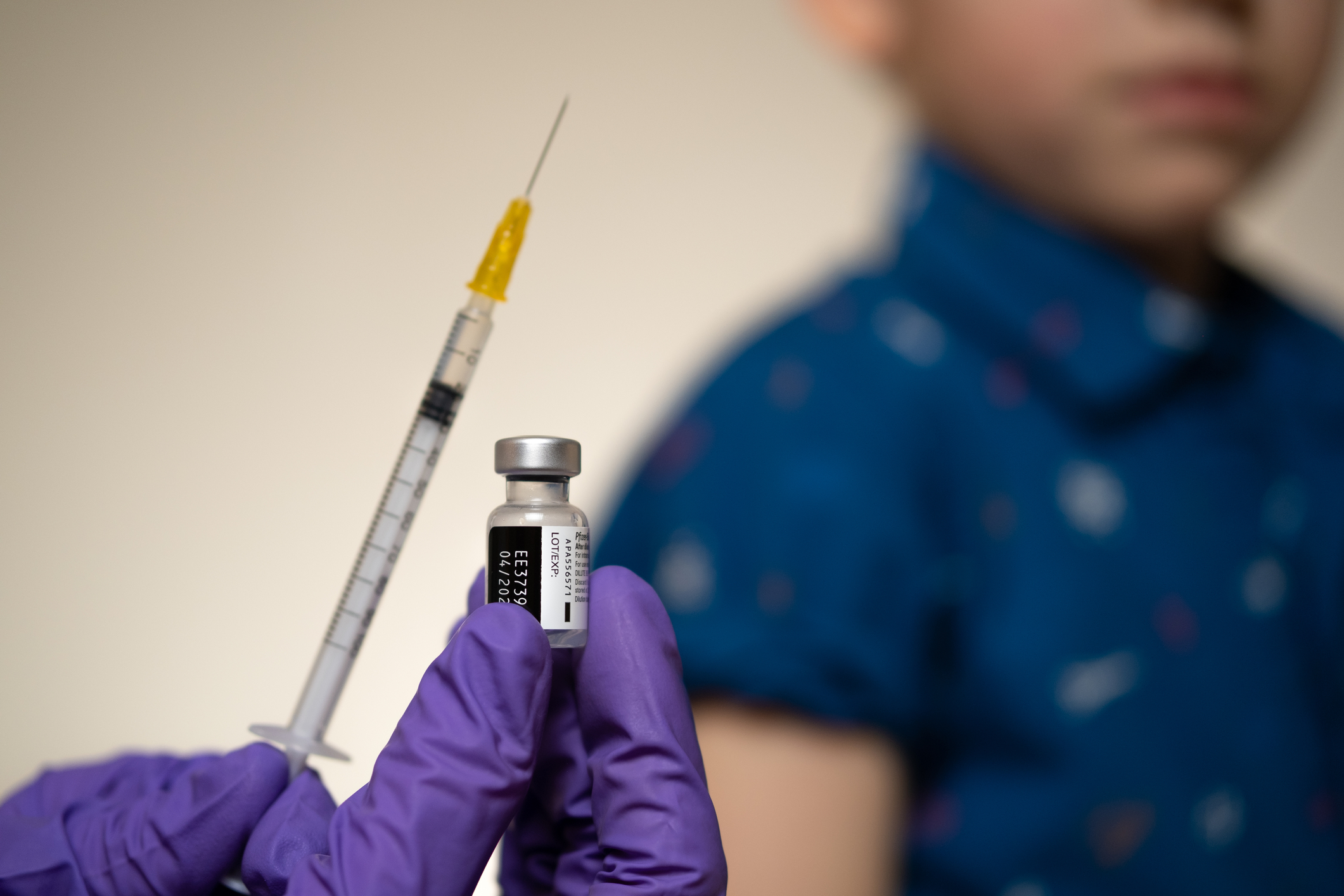
The antivaccine movement has reached the phase where the effect reaches public health.
- The article is part of the PULSE project, an international journalistic consortium in which Hotnews is a part and providing the public documented and diverse perspectives, with information from several countries, about issues of great public interest. The article was written by Alina Neagu (Hotnews – Romania), along with Justė Ancevičiūtė (Delphi – Lithuania) and Julie ŠaFová (Deník Referendum – Czech Republic).
- In the previous article I spoke about the structural conditions that led to the death of 30 Romanian, unvaccinated children.
Romania has counties with measles vaccination rate over 95% (Giurgiu county – 97.5%), but also counties where less than half of the children are vaccinated (Neamț – 44.9% and Hunedoara – 48.6%), according to the data of the National Institute of Public Health.
In such situations, “the reasons behind the refusal should first be identified. It may be distrust in the vaccine. But it may also be the religious context or be an influence of local factors: for example, a priest who does not allow his parishioners to be vaccinated,” says Dr. Gindrovel Dumitra, the coordinator of the Romanian group.
“I do not think there is an answer, at this moment, regarding what should be done at national level to reach that 95%vaccine coverage rate. Because I do not think there is a national intervention to solve this problem,” adds the doctor.
“From my point of view, the problem must be deepened at local level – identified the right measures for the situation in the respective area. And further, the interventions are clearly directed to the problem fund,” says Dumitra.
“Misinformation about vaccines occurs occasionally”
Even in the Czech Republic, a country where “misinformation about vaccines for diseases other than Covid appears occasionally”, there are no general campaigns against anti-vaccine opinions.
The Czech authorities prefer to focus on punctual vaccination campaigns, such as the one organized in 2022 for refugees in Ukraine.
A campaign to combat misinformation was carried out only during the Covid-19 Pandemic by the Ministry of Health in this country. The then campaign included information about vaccines and the importance of vaccination and focused on dismantling common myths about immunization. However, she was criticized by experts on the grounds that she came “late”.
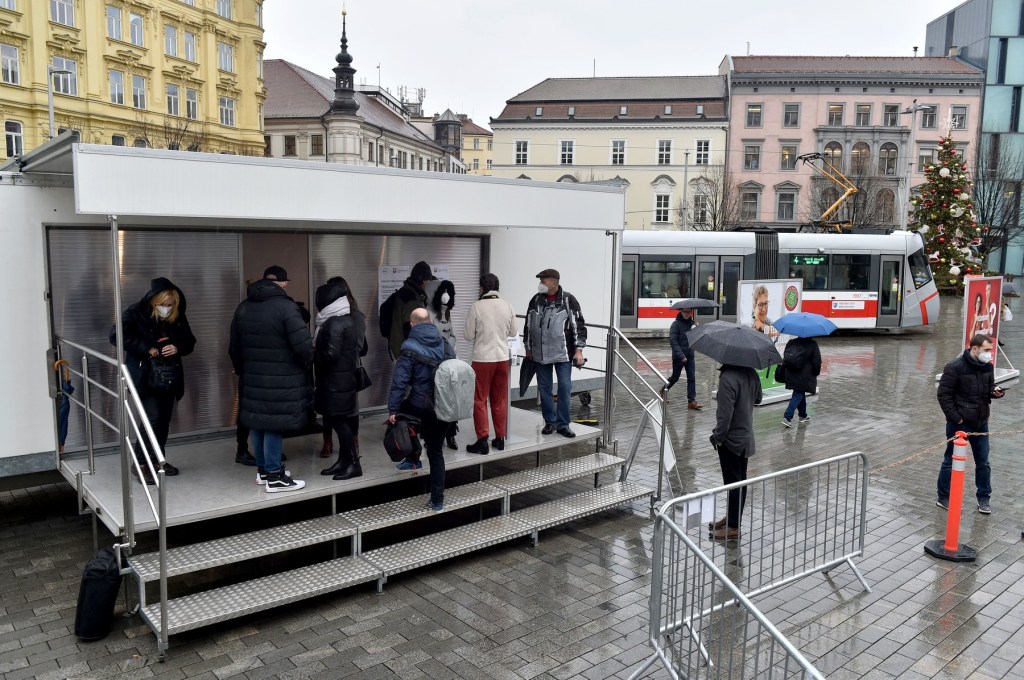
In the Czech Republic, a country with a rate of 87% of their measles among children, many parents postpone the moment of vaccination until the little ones go to kindergarten or school, when ROR vaccination becomes mandatory.
“Significant global threat”
“Rujeola remains a significant global threat,” the World Health and UNICEF organization points out.
In 2024, 359,521 measles cases were reported worldwide. “The transmission of the virus across the borders and continents takes place regularly, and the outbreaks of this extremely contagious disease will appear wherever the virus finds groups of unvaccinated or insufficiently vaccinated people, especially children,” the two organizations draw.
Country with 3 cases of measles in one year
Although globally, the number of illnesses is increasing, there are countries that have almost managed to eliminate the disease.
Lithuania registered, in 2023, only 3 cases of measles. In 2024, he had 10 cases.
The highest incidence of measles in Lithuania was in 2019, when there were 834 diseases.
The data, however, show that in Lithuania, the proportion of vaccinated children is decreasing since 2009, even though it stays higher than in other countries.
In 2009, this country had a 97%vaccination rate. In 2018, 92.2% of the children in Lithuania were vaccinated against measles. In 2021, the vaccination rate was 88.41%, and in 2022 of 86.46%.
The National Center for Public Health in Lithuania believes that “vaccination saves lives” and that it is the only “specific measure that can protect against this infectious disease and its serious complications.”
In 2023, the Infectious Diseases Control Division within the National Center for Public Health in Lithuania conducted a survey among the population on vaccination.
It turned out that only about half of the respondents have a positive attitude towards vaccination and agree that vaccines are safe, protect against infectious diseases and are not only beneficial for pharmaceutical companies.
The reluctance in terms of vaccines is based on the belief that vaccination is a choice, therefore, people have the right not to be vaccinated. There are also concerns about the side effects of vaccination, as well as a lack of confidence in government decisions and health authorities.
Some of the respondents also mentioned the fear of immunizing with certain vaccines, which they consider insecure.
Dr. Dumitra: “measles is one of the most contagious infectious diseases”
The measles is 10-18 times more contagious than the Covid-19's disease, which triggered a pandemic, says Dr. Gindrovel Dumitra, the coordinator of the vaccinology group of family doctors in Romania.
“To first understand what the disease we are talking about: measles is one of the most contagious infectious diseases. And here, to have a comparison term and to understand, I will remember that basal reproductive number we were talking about in pandemic. Hotnews.
In the case of Covid-19, the basal reproductive number oscillated between 1, 2 or just over 2, depending on the moment of the pandemic. This means that “a person who was sick of Covid-19 became two others.”
“Well, in the case of measles, the basal reproductive number is 16-18. Which means that a person who has the disease transmits it to other 16-18 people, who in turn get sick. It is the largest basal reproductive number,” explains Dr. Gindrovel Dumitra.
“If a case with a reduced vaccine coverage, it spreads immediately,” the doctor points out.
There are three categories of people who have protection in front of the disease:
- those vaccinated with the full scheme,
- those who have already passed through illness and have immunity all their life
- Babies up to about 6-7 months, who receive antibodies from the mother.
Misleading symptoms
In the case of measles, the symptoms are misleading, draws attention to the doctor Gindrovel Dumitra: their debut occurs only about 10-14 days after contact with an infected person, by the appearance of non-specific signs.
“Before the rash itself on the skin, the first sign is fever. Then there is a oral lesion, inside the lips, at the molar level. Only 48 hours after the fever appears, the doctor appears,” explains the doctor.
“When severe fever appears and only 48 hours later the rash appears on the skin, you, because you have a child with a high fever, you can intervene in the hospital. He stays in contact with other children with fever and respiratory disease, and 48 hours later, his rash appears.
Why Romania passes cyclically through a measles epidemic
Gindrovel Dumitra also says that, if we look at the last years, Romania passes, cyclically, through a measles epidemic: “In 2005-2006 we had measles epidemic, in 2011-2012 another, then 2016-2019, and the most recent from December 2023 until September 2024.”
Why is this happening? “It means that the number of unvaccinated children creates a critical mass of susceptible people, and the appearance of a case determines, at one point, the evolution in the community and the appearance of the epidemic.”
On September 4 last year, the Ministry of Health declared the measles epidemic in Romania. Alexandru Rafila, the Minister of Health at that time, spoke of “a sustained decrease in the number of cases and the disappearance of outbreaks at national level”.
Alexandru Rafila also said, then, that the epidemic “resolved”, but not by vaccination: “The measles was resolved, but this did not resolve by vaccination, but by the illness of the receptive population that was not vaccinated and now the incidence of measles has decreased.”
The former Minister of Health has warned that things can be repeated over “one year, two or three years”, if the decrease of the vaccine coverage will bring the risk of increasing the number of illnesses again.
The solution that Rafila spoke about – regaining parents' confidence in “traditional vaccines”: “In the medium term we must restore confidence in vaccination, and these traditional vaccines should be in the attention of parents, to protect their children and, many times, even on them or other elderly relatives who are at risk.”

The PULSE project is a European initiative to promote cross-border journalistic partnerships, co-financed by the European Commission (DG Connect) within Multimedia actions by Grant Agreement LC-0272862. HotNews.ro collaborates in the project with other prestigious publications in Europe: Delfi (Lithuania), Deník Referndum (Czech Republic), the largest Austrian newspaper Der Standard (Austria), some of the largest publications in Greece – Efsyn, El Confidential, Spain, the largest Polish newspaper Gazeta Wyborcza, the oldest analytical and information site. MediaPool, one of the largest HUVG HUVG and Italian newspaper with economic profile for 24 hours, one of the oldest and most powerful publications in the peninsula.
Three renowned transnational media organizations-OBCT (Italy), N-OST (Germany) and Voxerop (France) will coordinate the project activities.