The most bizarre and painful wars in the history of humanity. When the armies were defeated by birds and buckets


Wars are a dark and dramatic page of human history. But there are also some who shine smiles or even laughing. And this is because they were caused for so absurd reasons that they may hardly think they have ever taken place.
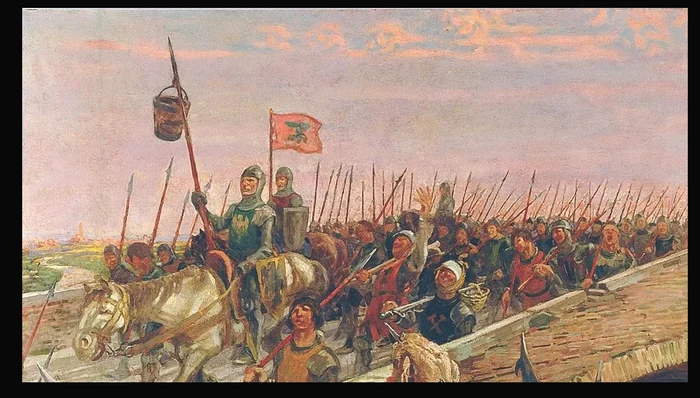
The War of the Photo Ndbosch.Medium.com photo
War was a constant of the history of humanity. There were so many wars that they almost lost their string. Most were triggered by the desire to take on resources, to win new territories, from the desire to obtain more power, from personal pride or even in love and jealousy.
However, there were wars that started for stupid reasons, or they were absurd in themselves. Thousands of people died for a stolen bucket or for a lost football match. Even people were fighting with some birds, losing war. There were the most tragic-comic moments of the military history of humanity, which at first glance seem only a bad joke.
How did people fight with the birds and lost
One of the most bizarre and apparently absurd wars in history bore the name “Emu War” and took place in 1932, in Australia. The peak, this war did not take place against the people, but against some birds. Maybe from here the absurdity of the situation. Specifically, the Australian army fought with the EMU bird population on the territory of Australia for three months. Emu birds are similar to the ostrich, do not fly, run very quickly, have long legs with very strong claws and are quite high. That is, an Emu bird reaches a height of 1.9 meters, being the second bird in the world, after the ostrich. Emu birds are omnivorous, eating especially seeds, flowers, grass and insects.
What did the Australians stay on these birds? Well, everything has to do with agriculture and some bad habits of these features. The story began after the First World War. The veterans from the Australian army, who fought with the British in the Great War, received land from the Australian government. In general, they were in Western Australia, in areas that the government wanted to develop from an agricultural point of view. With the great economic crisis of 1929, veterans transformed into farmers were encouraged to increase their areas cultivated with wheat, in exchange for subsidies. The government did not keep the word and the price of wheat decreased alarmingly, risking more and more farmers. In addition, the situation was complicated by the arrival, by migration, of over 20,000 EMU birds in the area of Western Australia.
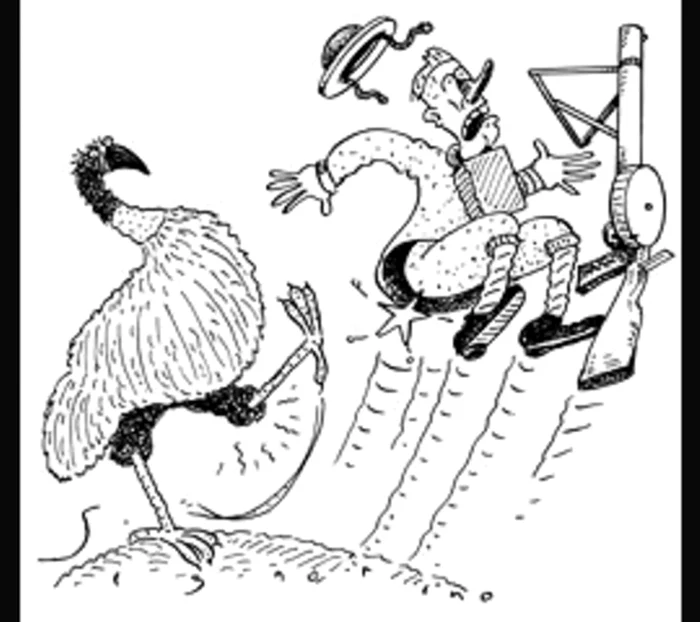
Caricature on the “Emu War” photo Washingtonpaper.com
These birds considered that the cultivated land were a good habitat and settled in the area. Began to create substantial damage. That is, they destroyed the crops but also the fences that surround the culture areas, which facilitated the penetration of rabbits that completed the disaster picture. The most affected was the district champion in Wheatbelt, West Australia.
Farmers made a desperate petition in the government. Pentru a nu scăpa situația din mână și mai ales pentru ai îmbuna pe fermierii nenorociți și de recomandările greșite, dar și de minciunile cu subvențiile, miniștrii s-au grăbit să le facă pe plac și efectiv au declarat război păsărilor Emu. The Minister of Defense, Sir George Pearce, sent in October 1932 soldiers of the Australian Royal Artillery armed with machine guns Lewis and over 10,000 cartridges, under the command of Major Gwynydd Purves Wynne-Aury Meredith from the 7 heavy artillery regiment. Which seemed like a formality turned into a true “war” of Guerrilă of Emu birds.
After several hundred were killed by machine guns, the birds organized themselves incredibly. On the fourth day of the “campaign”, the Austrian soldiers noted that “Each pack seems to have its own leader now, a large bird with black feathers, which has a height of 1.8 meters and watches while its comrades are working on destruction and warns them about our approach.”.
In addition, Emu were hard to bring down. “If we had a military division with the ability to withstand bullets like these birds, they would face any army in the world. They can face the machine guns with the invulnerability of the tanks. They are like the zulușs that even the Dum-Dum bullets could not stop.”confessed Major Meredith. After two attempts, the Australian soldiers actually withdraw.
The number of birds emu killed was insignificant compared to the number of total herds. Total victory for Emu.
Over 3000 dead people for a bucket
Another completely absurd war took place five centuries earlier than the struggles of Australians with Emu. More precisely, in 1325 in medieval Italy. And it all started from a bucket. But let's start with the beginning.
The “War of the bucket” as it remained in history was carried between two rival cities in the Emilia-Romagna area, in northern Italy. Both cities were run by two powerful Italian merchants and bankers called Guelfi and Ghibelini, depending on the belonging to the Roman-German Empire. The two factions fought for three centuries for power and supremacy. Around 1325, Modena had captured Monteveglio Castle, in the rule of Bolognese.
The tension between the two cities had grown. There was only a spark to start the war again. The fire lit from a bucket. The medieval stories say that in a night from 1325, a group of soldiers from Modena sent in a raid through the territories of the rivals, sneaks into Bologna and stole the oak timber from the municipal fountain. The bucket was exposed, as a trophy, in their communal palace.
For Bolognese it was an affront too hard to endure. Many believe that it actually disturbed the capture of the Monteveglio Castle, but also the fact that they were not sufficiently vigilant on the night of theft. Bologna gathered an army of 32000 people who left against Modena, in November 1325. Modena managed to gather only 5000 infantrymen and 2000 knights.
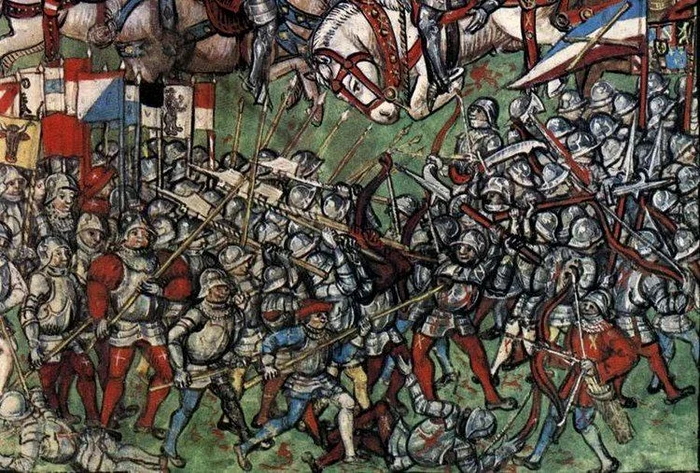
Around 3000 people died in the War of Alchetron.com photo
The two armies met on the field of Zappolino. Although the moderns were in a tactically inferior position, in the plains, their troops were struggled in battle, being formed especially of contardment, professional soldiers who practiced mercenaria. Under these conditions although they were numerically outdated by almost six to one and practically surrounded by the enemy, the Modena fighters fought with great skill and courage. In just a few hours they put their enemy on the run. The soldiers in Modena humiliated the Bolognese. They followed them to Bologna, entered the city and caused great destruction leaving the city without water. For humility to be total, those in Modena stole the Bolognese and the second bucket, found at a well near the city's gates. More than 3000 people died for the two buckets.
A derby of pride and a terrible slaughter
In the category of absurd wars, the bloody conflict between Hondus and Salvador spent about five decades can enter lightweight. I mean we could say in the modern world. Pretext: a fanatic derby for qualifying at the 1970 World Cup. Obviously, this war known as “football war” has much deeper roots and broke out due to existing tensions.
It all started from immigration, xenophobia and nationalism. In 1969, Honduras had an area of more than five times larger than El Salvador, but Salvadorians were 40% more numerous than those in Honduras. So at the beginning of the twentieth century, the Salvadorians had begun to migrate in large numbers. Until 1969, over 300,000 Salvadorians lived in Honduras, representing over 10% of the country's population. The big owners of Honduras agricultural companies, however, put pressure on the government to escape the Salvadorian immigrants who, they said, occupy the national land.
In order to please them, the Honduras government has given a land reform law. The law began to be applied since 1967 and much of the lands illegally occupied by Salvadorians became the property of the Government and the municipalities of Honduras.
The land was redistributed to the locals, and the Salvadorians expelled from Honduras. Including those who lived in the country for a long time. Obviously, this led to deep animosity between the two countries. But not enough to lead to armed conflict. However, the drop that filled the glass was a series of qualifications for the 1970 World Cup. And this is when the Latin Americans are fanatics in terms of round ball. In June 1969, El Salvador and Honduras were playing the qualifying matches for the 1970 World Cup, in two sleeves. The first match took place in Honduras on June 8, 1969.
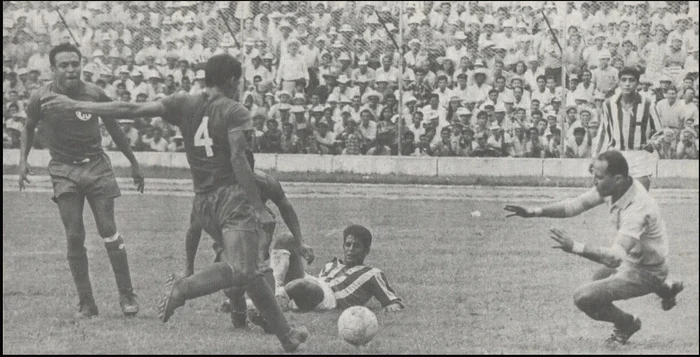
The football match between Honduras and El Salvador Photo Attackingfootball.com
The footballers in Honduras won 1 to 0. Salvadorian fans set fire to Tegucigalpa stadium. In the second match, the Salvadorians managed to take revenge on football and won with 3 at 0. The victory of El Salvador was followed by anti-Salvadorian riots throughout Honduras. On June 26, 1969, the third match of the separation was played. The match was played on neutral field in Mexico. Salvador would also win this match, with a score of 3 to 2 in extensions. The revenge of the fanatical fans in Honduras was cruel against the Salvadorians who remained in the country.
This is why it was reached the situation in which El Salvador broke any diplma ties with the neighboring country, because as the Salvadorian officials stated, over 12,000 citizens were forced to escape from Honduras, after the match, to save their lives. “The Honduras government did not take any effective measures to punish these crimes that constitute genocide and did not provide compensation or repairs for the damages caused to the Salvadorians.”the Salvadorian officials specified.
And the war between El Salvador and Honduras began. It took only four days, between July 14 and 18, 1969, with intense street struggles, but also on borders. In total, over 1000 soldiers died but also around 2000 civilians. The war ended following the intervention of the organization of American states (OAS), who asked for an armistice and threatened with economic sanctions against Salvador if he did not withdraw his troops from Honduras.