The Americans and Ukrainians agreed that “real progress toward any agreement depends on Russia's willingness to demonstrate a serious commitment to long-term peace, including steps toward de-escalation and an end to the killing.” The question is whether Washington believes the Kremlin is actually capable of doing this.
The article continues below the video
Why does Trump want to end the war in Ukraine?
What do Americans think about Russia?
What are the chances of a peace agreement?
Does Trump understand the nature of the conflict in Ukraine?
According to Dr. Marcin Fatalski from the Department of American Studies at the Jagiellonian University, there is such a belief in Donald Trump's circle.
— They believe that the key to solving the conflict is some kind of compromise on Ukraine. They believe that the end of the war will lead to Russia returning to international cooperation, which will be profitable for everyone and will also open up opportunities for the United States – he says in an interview with Onet.
— In other words, at least for some of Washington's political elites, the Ukrainian war is not a fundamental conflict between the Western world and Russia. This is a local war, perceived more as a challenge to European security, which the United States wants to end, explains the expert.
At the same time, he emphasizes that there are still Republicans, such as South Carolina senator Lindsey Graham, who are skeptical about whether Russia poses a threat to American interests.
Expert on the challenge for Europe. It points to the new US security strategy
Last week, US Vice President JD Vance said that they really thought this conflict would be the easiest to end. Previously, Donald Trump himself admitted this publicly. “I thought the war in Ukraine would be the easiest to resolve because of my relationship with Vladimir Putin, but Putin has really let me down,” he said in September.
— For Trump's team, this is a conflict in the post-Soviet area, the nature of which they do not fully understand. In general, the history of our part of Europe and its current conditions are not intensively studied in MAGA circles, emphasizes Dr. Marcin Fatalski. We are talking about the MAGA movement, i.e. the community centered around Donald Trump, which unites his supporters under the slogan “Make America Great Again”.
— This is one of the challenges we face. The new security strategy of the United States clearly states that this war is continuing, among other things, because European countries are unable to accept the vision of compromise and consider Russia a threat. The prevailing belief in Washington is that Moscow's aspirations end in Ukraine, or at least in its eastern part. They believe that some type of territorial agreement favorable to Russia will mean an end to the conflict and Russian expansion in this part of Europe, says the expert.
Witkoff was supposed to give instructions to the Russians. “It's not the first time in history”
In late November, Bloomberg reported that the US president's special envoy, Steve Witkoff, gave Russians tips on how to approach Trump before his meeting with Volodymyr Zelensky. In addition, Vladimir Putin's representatives were to discuss handing over the 28-point peace plan to the Americans, who were then to present it as their own initiative.
— It doesn't appear that the leak of this information outraged Donald Trump. This was treated as a certain negotiation failure. Of course, if we look at it from the side, also through the eyes of a significant part of the American establishment, we are dealing with a disturbing situation when a businessman, and at the same time a special envoy of the White House, somehow stands on the other side, trying to strengthen its negotiating position. This is not how it should be, says Dr. Fatalski.
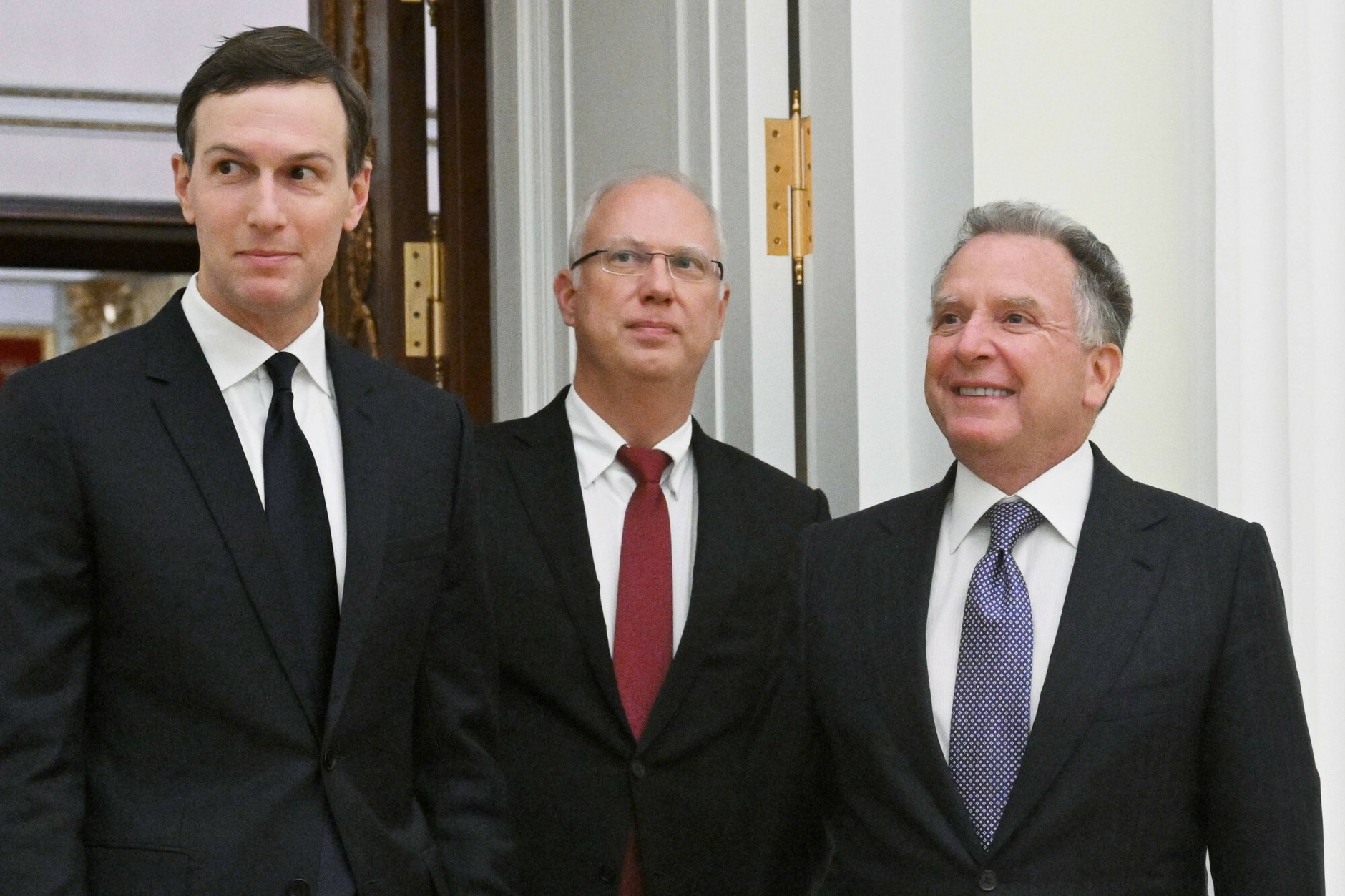
From the left: Jared Kushner, Kirill Dmitriew, Steve WitkoffIMAGO/Kristina Kormilitsyna/Imago Stock and People/East News / East News
— This is not the first time in history when a businessman appointed as a diplomatic representative focuses primarily on the potential benefits of peace, underestimating the potential political threats. This was also the case in the 1930s. We also know such businessmen from that period, says the Americanist. He estimates that this approach is probably dominant in the Trump administration, which sees Russia primarily as a business partner.
That may be Trump's point. “Strengthen the potential of the USA”
This may change if Marco Rubio takes the lead in the negotiations or if Gen. Keith Kellogg regains his position. – However, if I were to base it on what we read in the national security strategy, I would rather assume that the line of action regarding Ukraine will be that of Jared Kushner – assumes the Onet interlocutor. We are talking about Donald Trump's son-in-law participating in the negotiations, who represents a very transactional approach.
— For this to change, the US president would have to recognize Russia as a vital threat to American interests. He probably doesn't think so, so it's hard for him to treat issues of a just peace as a fundamental goal. This may be due to his belief that the origins of this war are not complicated. He does not talk about the Middle East this way because he understands the complexity of interests in this region, says the expert.
— When it comes to Ukraine and Russia, Trump does not delve into the nature of this conflict nor does he share the European perspective on the threat from Moscow. He does not see this war as a key challenge to US policy. The challenge, in Washington's assessment, is to achieve “strategic stabilization” between Europe and Russia, to include Moscow in relations with the West and to restore Europe to transatlantic cooperation on American terms in order to strengthen the US potential in the context of competition in the Indo-Pacific – analyzes Dr. Fatalski.
The expert estimates that Donald Trump treats world politics as a game of great powers. — For him, Putin's attitude, which sometimes frustrated him, is a consequence of the fact that we are dealing with the leader of a superpower that has some idea about its security zone. And although he is angry at the fact that Putin gives the impression of a man who does not strive for a peaceful solution, he still believes that Russia's expectations must be taken into account to some extent, he says.
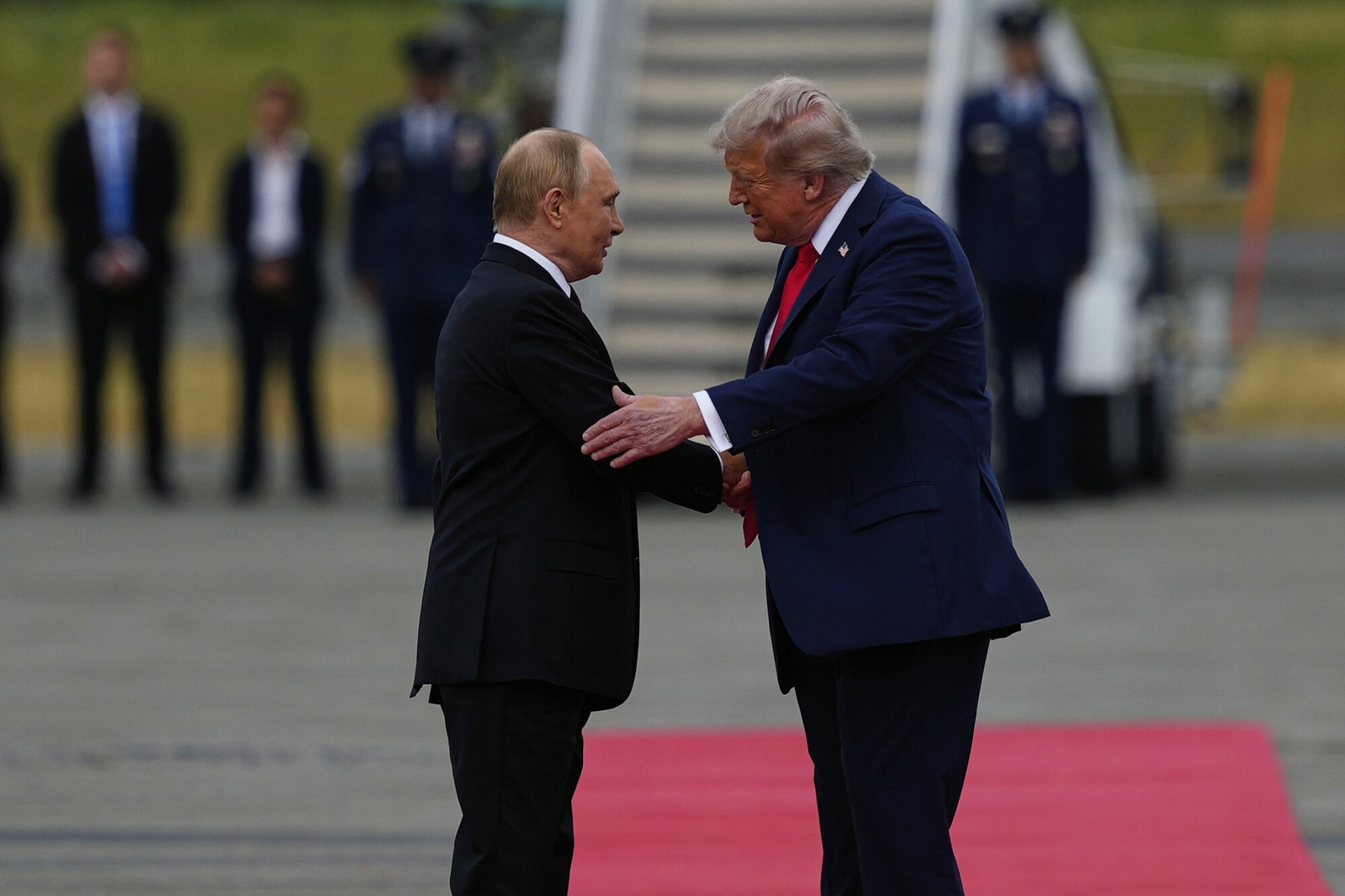
Donald Trump and Vladimir Putin on August 15 in AlaskaJulia Demaree Nikhinson/Associated Press/East News/East News
— From his point of view, it is a great power that Ukraine cannot beat on the battlefield and with which the West will not wage war, so it will be pragmatic to find some kind of agreement. I don't know if he believes in Putin's good will. I believe that he believes that people are driven by business, and that it is profitable for Russia to return to cooperation with the West, he adds.
Frustration is growing. Americans may withdraw from negotiations
Dr. Fatalski, when asked whether American efforts will finally bear fruit or whether Washington will give up, stating that this war is Europe's problem, replies that both scenarios are probable.
— In the face of Russian attacks on energy infrastructure and the approaching winter, Ukraine is unable to wage this war without support. The Americans have an important role to play here because they are the main supplier of weapons paid for by Europe, he says. — It may also be that Americans, frustrated by their inability to achieve success, will simply withdraw. The question is under what conditions, he adds.
— Russia is also under sanctions, so I think the Americans are putting pressure on both sides. The problem is that they position themselves not as a supporter of Ukraine, but as an arbitrator between the two parties to the conflict, trying to reach a peace agreement, the expert concludes.