Breaking law on magistrate's pensions, attacked at the RCC by the High Court of Cassation and Justice led by Lia Savonea


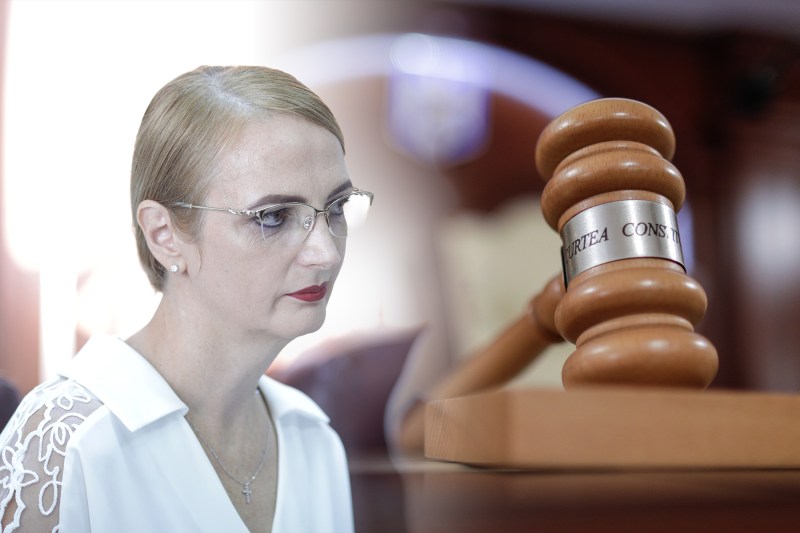
Lia Savonea and the Constitutional Court of Romania. Collage: Ion Mateș / Hotnews. Inquam Photos / Octav Ganea
The judges of the High Court of Cassation and Justice decided, on Thursday, to notify the Constitutional Court regarding the unconstitutionality of the law that amends the special pension system for judges and prosecutors and for which the Bolojan Government has assumed the responsibility in the Parliament.
- The law of the Bolojan Government, which has generated protests in courts and prosecutor's offices, by suspending activities, stipulates that the pension of the magistrates will not be more than 70% of the last net salary collected, compared to 80% of the last gross salary, as it is now.
- The retirement age would increase gradually at 65.
- If the project passes the Constitutional Court, it will enter into force from October 1, 2025.
- Another change is that in order to retire the magistrates will have to be 35 years old, given that they can now retire if they are 25 years old.
The supreme court, led by Judge Lia Savonea, convened on Thursday the United Sections of the Magistrates, who decided to attack the law to the Constitutional Court, claiming that 8 articles of the normative act are unconstitutional.
In the notification that covers 39 pages, the High Court details the reasons why, in his opinion, the new law of the magistrates' service pensions is unconstitutional.
The ICCJ accuses the Government of adopting the new law without the CSM opinion and violating the legal provisions regarding the assumption of liability.
How the Government has changed the Special Pension System
The draft law has generated harsh reactions in the judicial system and led to the triggering of protests by the courts and prosecutor's offices, by suspending the activity.
HotNews asked Prime Minister Ilie Bolojan on Tuesday, in a press conference, if he resigned if the draft law on the pensions of the magistrates will fall to the RCC. “When you have an important project that is a milestone to make other similar decisions, if it does not pass, it is hard to assume that the government still has the legitimacy to come up with similar measures in other fields,” said Ilie Bolojan.
By 2036, there are transient norms – the magistrates will be added, gradually, every year, one year and six more months at the retirement age, ie it will increase gradually. From 2036, the retirement age will be at 65.
The project on magistrate's pensions changes includes the following changes:
- Establishing the retirement age for magistrates at the standard age of the public pension system, respectively 65 years.
- To retire the magistrates will have to be 35 years old. Now, magistrates can retire if they are 25 years old.
- The pension of the magistrates will not be able to be more than 70% of the last net salary collected. Now, it is 80% of the last gross salary collected.
- For the magistrates who are currently in office: the new staggering of the increase of the retirement age for magistrates, by adding an additional period of 1 year and 6 months, until 2036.
Magistrates will be able to retire in advance, provided they are 35 years old, but if they are not 65 years old, an annual penalty “2% until the standard retirement age in the public system” will be applied.