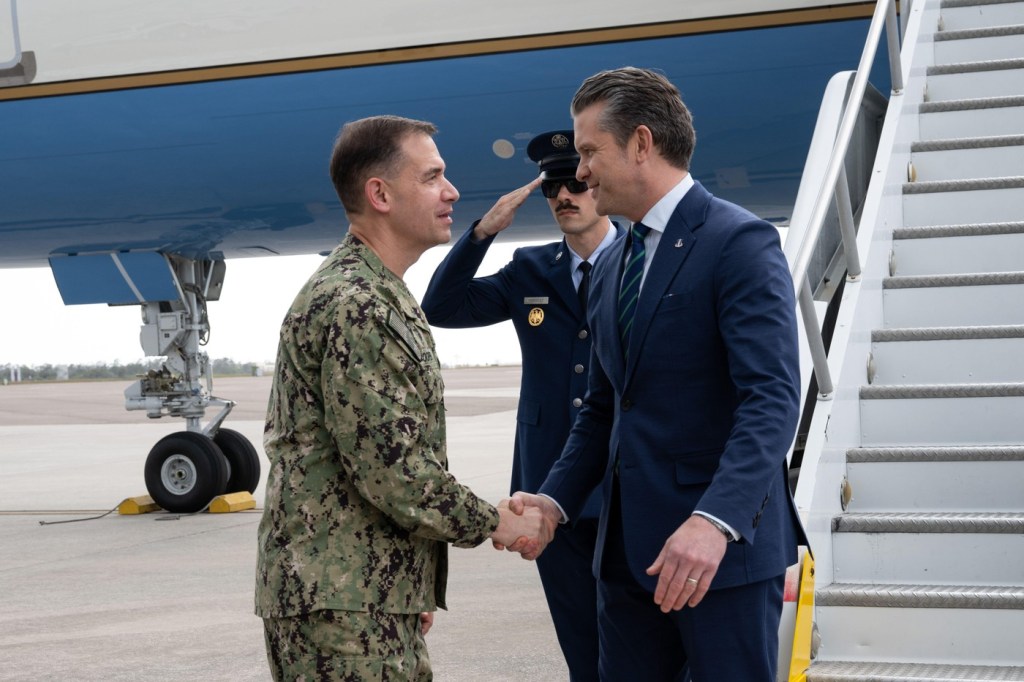
Who is the admiral leading the US military operation against Iran. His speech compared to Pete Hegseth's: “Let's be ruthless and lethal”

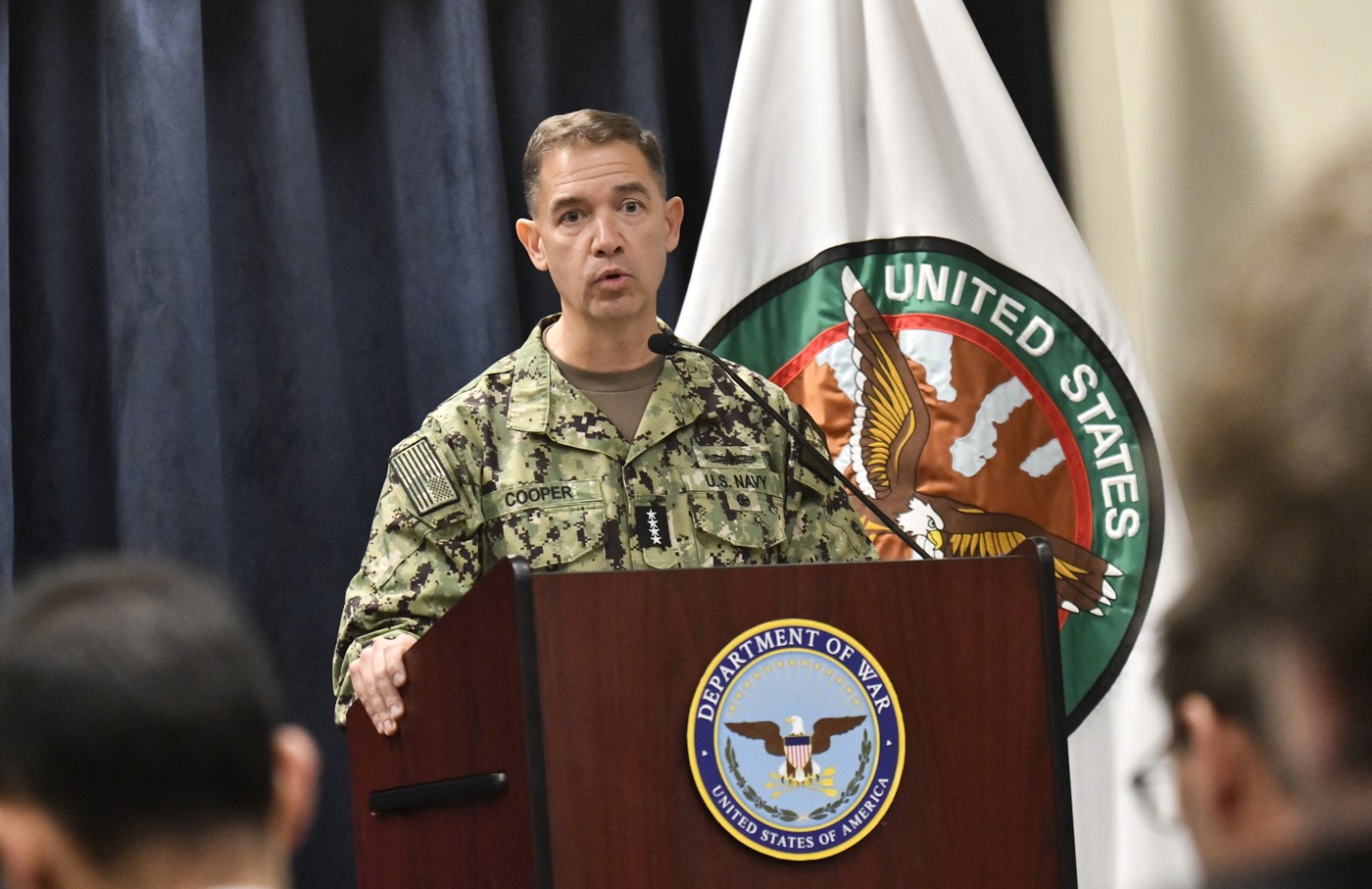
In the summer of 2024, the threat to shipping in the Red Sea was at its peak. Yemen's Houthi rebels have been firing on international ships, forcing maritime traffic to bypass one of the world's most important waterways and travel thousands of miles around Africa instead. By August, they had sunk two ships and killed several crewmen, as strikes by the United States and Britain failed to deter them.
Vice Admiral Brad Cooper, then number two in the US Central Command, wanted to see with his own eyes what the problem was, reports CNN, which dedicates an extensive material to the senior US military official.
Cooper, who was tasked with developing a plan to combat the Houthi rebels, knew those waters well as a former commander of the US Navy's 5th Fleet based in Bahrain, said Dan Shapiro, who worked at the US Department of Defense on Middle East issues.
And to experience the problem first hand, this meant that Vice Admiral Cooper would be under the command of officers much younger than himself. “Instead of just listening to reports from the captains of those ships, he went out to sea and sailed with them. He put himself in harm's way,” Shapiro told CNN. “That says something about how he understands the connection between real-time information on the ground and strategy.”
Two years later, Brad Cooper, now an admiral, heads Central Command, or CENTCOM, which coordinates the joint US-Israeli war effort against Iran. A day before Donald Trump gave the order to launch the operation on February 28, Cooper briefed the president at the White House on military options.
But as the war spreads across the region — with Iran attacking American targets, Gulf neighbors and merchant shipping — the outcome of the conflict is becoming increasingly unclear. And the stakes have grown considerably.
Like Generals Norman Schwarzkopf and David Petraeus, CENTCOM commanders who led previous US military operations in the Middle East, Cooper is under immense pressure to achieve a decisive victory on the battlefield. But he was also asked to implement a war plan against Iran that has existed inside the Pentagon in one form or another for years. Previous US presidents ultimately chose not to implement those plans – in part because of the repercussions now unfolding.
Markets are rattled by the closure of the Strait of Hormuz, the world's most important sea route for transporting energy. A total of 13 American servicemen were killed and 140 others were wounded. In addition, congressmen from both parties are demanding an explanation of what led the United States to launch an attack on a girls' school in Iran that killed 168 children.
It is now up to Cooper to keep the military campaign on track until a political decision is made to end it, however long that may take.
Connections “from the heart” with Israel
And sources who have worked closely with Brad Cooper say he is especially well-prepared for this moment, not just because of his battlefield prowess, but also because of his political instincts, having learned to navigate both the troubled waters of the Middle East and the backstage of power in Washington.
According to CNN, interviews with former and current military officers, defense officials and Congress show that during a naval career spanning more than three decades, Cooper proved effective both in his interactions with the congressmen who oversee his budgets and with his allied counterparts in the Middle East.
And this has been especially true in relation to the Israel Defense Forces (IDF), which is now conducting joint military operations with the US against Iran.
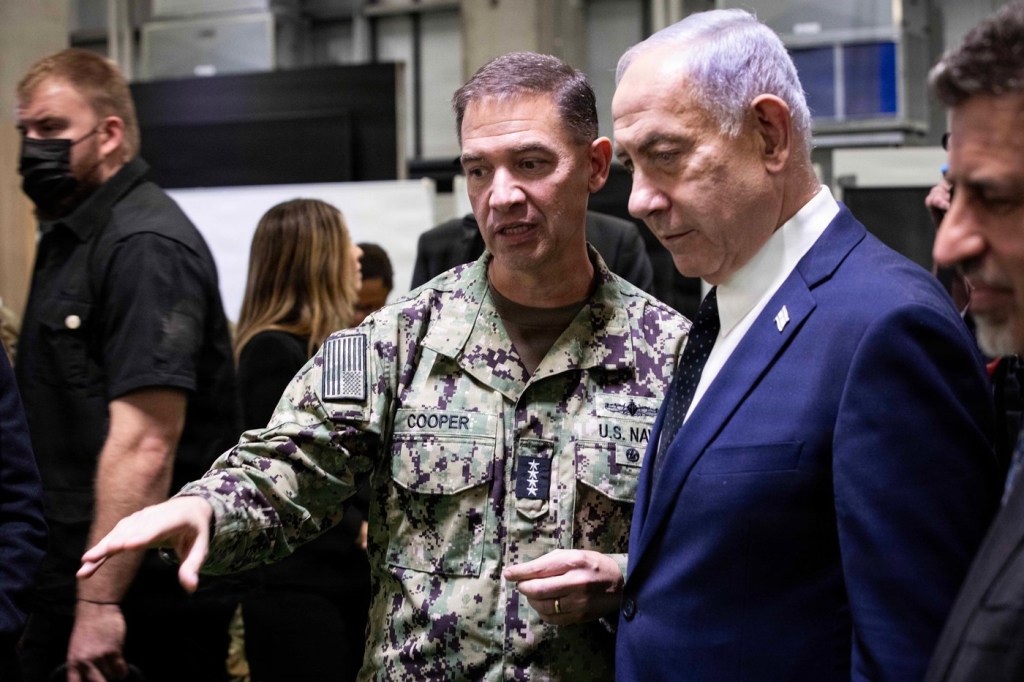
“After five years in the region, I don't think there's a general in Israel who doesn't know him,” a serving Israeli military official told CNN, referring to Cooper's time in command of the Navy's 5th Fleet. Cooper has visited Israel so many times that he has come to know many Israeli colonists by name as well, the official added. Moreover, Cooper spoke almost daily—and sometimes several times a day—with the Israeli army chief.
And in a rarity for a military officer, Cooper joined Trump's son-in-law Jared Kushner and US special envoy Steve Witkoff for indirect diplomatic talks with Iran in Oman last month. The next day, Kushner and Witkoff visited the USS Abraham Lincoln aircraft carrier at Cooper's invitation.
In fact, Cooper has had a close connection with Israel for years, one that comes “from the heart,” according to a former senior Israeli military official who worked closely with him, writes CNN.
A relationship that, indeed, dates back to when Cooper was commander of the US Fifth Fleet. “There was then unprecedented cooperation with the Israeli navy,” the former Israeli military official said. “One of the main decisions made at that time was to place an American liaison officer in the Israeli navy and an Israeli liaison officer at the naval base in Manama, which shows the extent of the partnership.”
The former official said Cooper organized meetings between navies in the region and connected commanders to create a “regional maritime counter-terrorism surveillance.”
“He's a politician”
Since taking office in August 2025, two months after the US strikes on Iran's nuclear facilities, Brad Cooper is only the second US Navy admiral to lead CENTCOM.
Officials say he is a stark contrast to his predecessor, Reserve Gen. Michael “Erik” Kurilla, who had a strong and sometimes bold personality but mostly preferred to stay behind the scenes, while Cooper is more comfortable in the spotlight.
Kurilla, whose military career included commanding special operations forces, enjoys an almost mythical status in some parts of the Army because of his combat experience, including a tour of duty in Iraq when he was shot several times but kept fighting. A commanding figure and personality, “no one was wondering who was in charge” when Kurilla was in a room, a former defense official told CNN.
Kurilla was a “brilliant commander,” the official added. But Cooper — smaller in stature and softer-spoken, with a career spent largely aboard U.S. Navy ships — appears to have adjusted to the political aspects of his position more quickly than Kurilla ever did, the official said. “He's a politician, shakes hands, seems genuinely interested in what you're talking about, remembers people's names – he's a much better master of that art than Kurilla.”
Under Cooper's leadership, CENTCOM's messaging has become somewhat more political, with more references to Trump in press releases and videos, the former official said.
His language also sometimes seems to mirror that of Defense Secretary Pete Hegseth: In a message to the military at the start of operations against Iran, Cooper told troops to be “ruthless and lethal,” a phrase frequently used by Hegseth and his Pentagon team.
In a statement to CNN, Hegseth said Cooper “enjoys my full confidence” and that his “deep understanding of the region and focus on the battle plan are critical to the mission and the continued success of our Soldiers supporting Operation Epic Fury today.”