Max, Russian “application for everything”. New phase of mass surveillance


The latest attempt to create a sovereign digital ecosystem is gaining momentum. Max, a messenger supported by the state developed by VK (formerly Wkontaktie), is positioned as a patriotic alternative to WhatsApp and Telegram – Platforms, which in recent weeks have experienced total or partial disturbances in voice and video connections throughout the country.
Officials say that Max will soon become a Russian “application for everything”: a single platform for sending messages, making payments and using state services. The application launched in March already has over 18 million registered users. There were only 1 million in June. We delved into the functionality of the application, its weak points and effects of government efforts. Will Max become what the authorities announce?
From September 1, Max must be pre -installed On all smartphones, tablets, computers and TVs sold in Russia. The authorities could not choose the dates better. From mid -August, WhatsApp and Telegram users were unable to make voice calls. They broke either immediately or in a few seconds.
Roskomnadzor officially blocked the functions of voice calls in both messengers, citing their use by fraudsters and terrorists. However, this movement affected ordinary citizens who relied on these services to save on the costs of cellular connections and international roaming.
– Many Russian companies still fully rely on Telegram and WhatsApp messengers in the field of official connections. These [ograniczenia dotyczące połączeń] Once again they show how of this kind [zależność] undermines the total profitability of the company – said Denis Kuskow, general director of Telecom Daily, in an interview with RBC Life.
Some of the greatest Russian social media stars were involved in promoting Max. Rapper Instasamka – who recently started cooperation with the authorities and even condemns other musicians – she praised the quality of Max's connections in the Instagram post, claiming that She talked for two hours in the underground garage without losing the connection. Pop Star Wales Carnival, Ambassador VK Video, also praised “a perfect combination of application even during movement or in the elevator”.
Continued article under video material
The Denis Dorochow comedian also joined the campaign, praising the communicator's communication during the trip. The musician Jegor Krid went even further, promoting Max in his music video for the single “Morie”. Lying in a rubber boat at sea, he speaks on the phone: “Brother, you can believe it, Max works even at sea!” This inept placement of the product caused common mockery in the comments.
Users ridiculed the primitive marketing message, and Streamer Jesusavgn noticed that Max is simply praised for performing its basic function. “They will even catch you in the elevator,” he joked, suggesting that Max, like VK, provides data with the Russian authorities.
The VK project director, Artemij Lebedev, pointed to the lack of Max's anonymity as its main advantage. In an interview with blogger Amiran Sardarow Lebedev said that this function eliminates bots and spam. What is more controversial, he said that he appreciates the fact that there is no “mulch” on the platform (so offensively called Ukrainians in Russia).
User reviews are very diverse. “It still hangs and my messages do not always go through,” wrote one of the reviewers on Google Play, who rated the application for one star. In turn, the user ios left a five -star review: “Finally, an application that simply works, unlike WhatsApp. I hope they will improve it.”
Max is to be everywhere – at home, at the office, at school, at work
In addition to spectacular marketing, Max is of course to serve political goals. Officials want to integrate it with the “Gosus Service” State Services Portal through a unified identification and authentication system (ESIA). This would allow citizens to Logging in to government platforms, paying media bills or signing documents directly via the applicationAnd, as a result, making Max with a digital gate to basic services for citizens.
However, at the meeting of the government committee at the beginning of August, the Federal Security Service initially blocked the direct connection of Max and ESIA, citing the risk of leakage of personal data. According to sources from the IT industry cited by Russian media, FSB has submitted a multi -page list of requirements, from certified encryption systems to source code audits. Similar fears were expressed by Deputy Prime Minister Dmitry Grigarenko, who supervises the project.
On August 7, Maksut Szadajew, minister for digital development, announced that Max met all FSB safety requirements regarding integration with Gosusgods. VK claims that they are currently working on the other reservations, a Full integration is expected only in late autumn. For now, however, Max looks like any other chat application: no additional functions can be seen, and the issue of integration of government services is far from clarity.
Even without full access to Gosusłuts, state institutions are aggressively pressing on society to accept max. The Ministry of Municipal and Municipal Services in Moscow ordered the migration of all neighborhood chats from WhatsApp and a telegram for a new messenger. According to Jewgenij Stupin, a former deputy Moscow urban pride, this order comes directly from the Federal Ministry of Construction and Housing. Posters instructing residents to download the Max application, appear in the entrances to residential buildings in large citiesincluding in Moscow and Saint Petersburg.
Educational institutions in over 20 regions are also forced to go to the max, and the Republic of Tatarstan, Mari El and Ałtaj, as well as the Chanty-Amansian Autonomous District as well as the Włodzimierz and Twerski Districts participate in the pilot project to transfer all school chats there. Tatarstan authorities announced that the employees of the Ministry of Education, directors and staff of schools and kindergartens, students and their parents must go to the max until November.
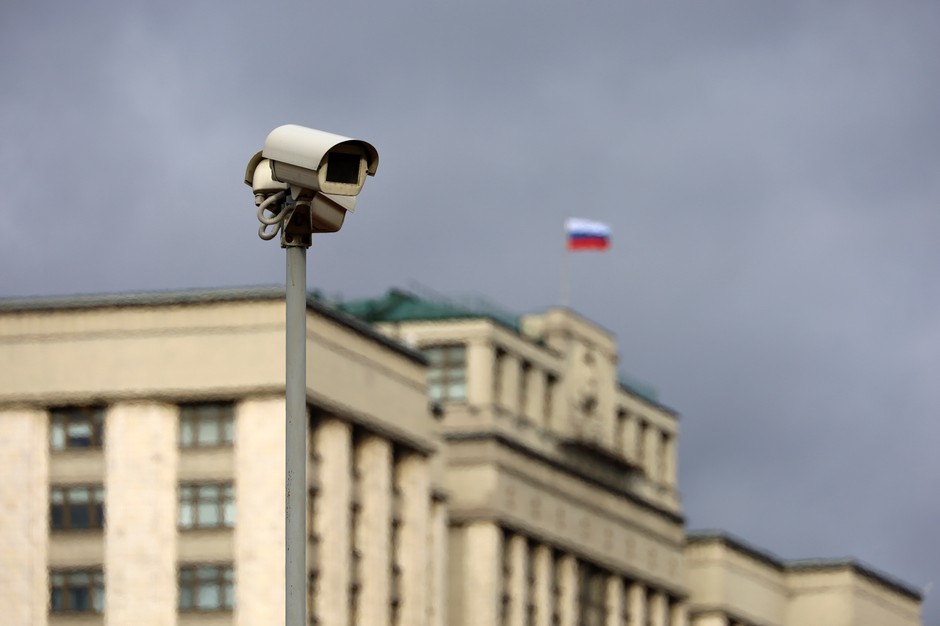
Surveillance in Russia. Illustrative photoOleg Elkov / Shutterstock
A teacher from Tatarstan told the emigre portal of the WIorstka that “he is afraid of coercion [ze strony władz] It will start again. ” – Probably once again They will force us to exert pressure on children and parents – regrets.
– At work, we were told that we would all soon have to go to the max. It has not been specified what exactly it means or how we will use it. It is not clear if you can refuse. Knowing that Max is a tool of state control, I would really prefer not to do it-a 63-year-old pediatrician from St. Petersburg, who asked to maintain anonymity, reveals us.
According to the versat, at least 57 regions forces public sector employees and officials to switch to max, which affects schools, housing services and local governments. State University in St. Petersburg claims that it is “the first university in Russia that began to use the national messenger”, and The city governor announced Saint Petersburg with the first region that uses Maks to provide urban services.
Serious problems and malicious memes
Maks's rapid expansion reveals its fragility. When in July VK launched a public program for catching errors, the so -called Bug Bounty, safety specialists discovered several serious gaps in a few weeks. According to VK, the company paid over 220 thousand. ruble [ok. 10 tys. zł] awards, and currently offers up to 5 million rubles (approx. PLN 226,000) for discovering further gaps in security – which indicates both the risk associated with hasty development and urgency of error repair.
Max can only be installed using Russian or Belarusian phone numbers. Virtual SIM cards are blocked and registration from other countries is impossible. This effectively cuts off Russians abroad from communicating with family and friends in Russia via Maks, unless they somehow get a Russian or Belarusian number.
The recent independent analysis described Max as a highly invasive, noting that Collects IP addresses, geolocation and contact lists, and his privacy policy clearly states that he can provide this data with government authorities and “company partners”. The application demands access to the camera, microphone, Bluetooth, notifications and biometric data. Developers also rely on an open source code from other countries, including Ukraine, which, according to critics, undermines Moscow's claims about technological sovereignty.
Safety researchers documented frauds aimed at Maks usersin which the attackers impersonated technical assistance and offered “protection activation” services in order to persuade victims to disclose SMS verification codes.
Social media have been filled with memes comparing the maximum to “mandatory standing in queues in the Soviet style” and joining that Soon “Max will be pre -installed in our kettles and refrigerators”. Others mock the application defects, publishing screenshots of frozen chats with signatures such as “sovereign technology in action”. On the platform X one of the users joked: “Max works even at sea – but not in my kitchen.”
Moscow. Illustrative photoEveryonephoto Studio / Shutterstock
This humor results from universal anxiety: people take a maximum because they were ordered, but Few seem willing to use it voluntarily.
– Public sector employees in Russia are the most powerless people, on an equal footing with immigrants. This is why They make every senseless decision issued in advance – said blogger Anatoly Nesmijan.
Technological sovereignty à la Putin
Maks's development reflects both Russia's digital ambitions and its uncertain situation. The use of the application is promoted by celebrities and enforced using state decrees, while foreign competitors encounter growing technical restrictions.
Whether Max will become a trusted tool of everyday use or whether it will remain a symbol of state coercion will depend on the ability of VK to eliminate locks in security, as well as whether the Russians accept the download of the application as something more than just an obligation.
It is also worth noting that The authorities do not abandon previous digital initiatives, but consolidate them in Max. Sferum, a Russian state educational platform that combines messengers with online learning tools and is mandatory in schools from 2022, will be included in max. The Ministry of Education has announced that Sferum functions will be available at the Maks from the new school year.
– We registered in Sferum because it was required, but We communicated on other messengers – said one of the teachers from the Włodzimierz District on the occasion of the implementation of Sferum. This scheme can be repeated in the case of max: behind the facade of formal consent, it is still based on foreign platforms – at least as long as they remain available.
The pressure on the max serves as a decisive test of this, Can Russia impose digital sovereignty through administrative pressure and not a technological advantage. After blocking voice calls on WhatsApp and Telegram, millions of Russians faced a difficult choice: use a messenger who they do not trust, or lose comfortable communication with friends, family and colleagues.
As the deadline of the obligatory pre -installation approaches and enforcement of the transition to applications through subsequent regions Max can be successful not because the Russians want it, but because they don't have an alternative.