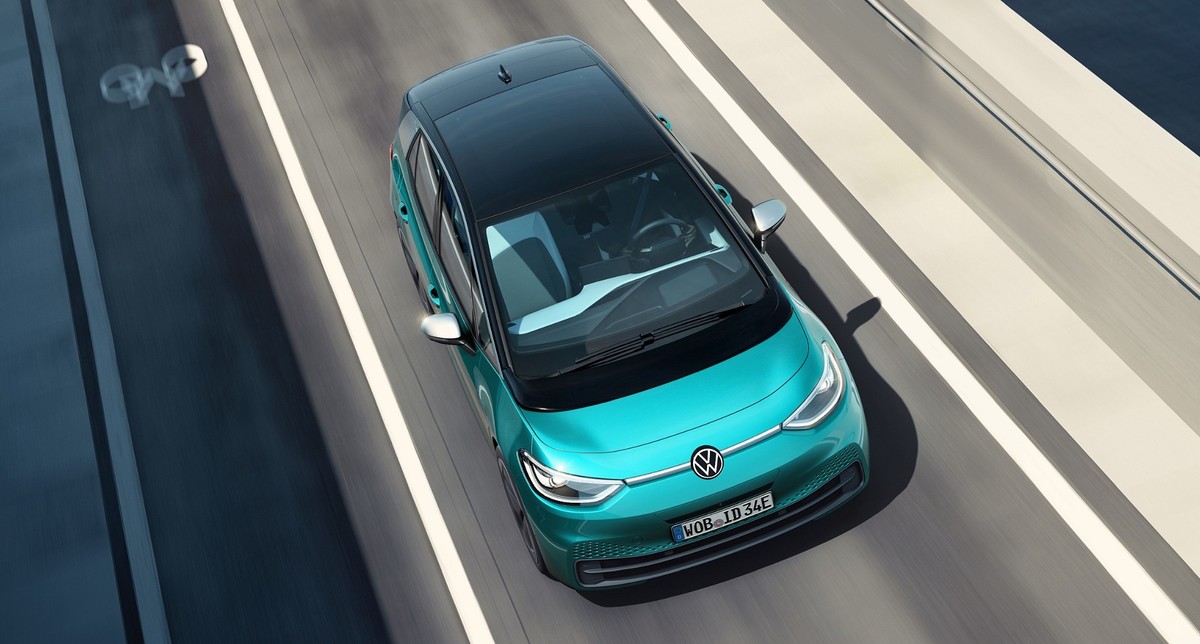
In mid -August 2025, Volkswagen launched in the UK the option of paid unlocking full power in ID.3 PRO and Pro S models. The car has 150 kW (approx. 201 km), and as standard, and After activating the subscription, he gains 170 kW (approx. 228 km) and a higher torque.
The customer can pay around 16.50 pounds (approx. 81 PLN) per month, 165 pounds (approx. 811 PLN) per year or about 649 pounds once (approx. 3195 PLN). This only program changemade remotely. VW movement immediately caused a wave of criticism and questions about the boundaries in the approach “car as a service”.
Check also: British automotive industry in crisis. The worst results in seven decades
Why producers do it
The production of electric cars is capital -intensive, and margins – especially with price pressure from Chinese brands – can be small. For boards Repeated revenues from software and services are therefore tempting.
GM explicitly forecasted that the software and service (software and service department) could bring $ 20-25 billion. annually by 2030, and Stellantis announced the target of around EUR 20 billion from program solutions to the same year.
At the same time, McKinsey analyzes indicate that the market and automotive electronics market by 2030 can reach hundreds of billion dollars and grow faster than selling vehicles themselves. In such a world, offering cars with software functions activated on the server side and OTA updates, this A natural way to stabilize revenues for producers. Especially when traditional strategies shake under the pressure of new realities, including duties and geopolitical tensions.
It is also not only a Volkswagen idea. Mercedes is still selling “Acceleration Increase” for selected EQ models and programmatically accelerates the car and reduces the time from 0 to 100 kilometers per hour, with a monthly, annual or “lifetime” option. Tesla has been offering a one -time “Acceleration Boost” for years in the application, and previous BMW experiments with a subscription for heated seats showed how Quickly, consumers can say “enough” and force the retreat. These are three different approaches to the same idea: paid functions that are technically already in the car, and the software only unlocks them.
Read also: The moment for leasing the car is right now? After the new year you will lose by a lower tax limit [WYLICZENIA]
Do producers have to look for profits like that?
In short: no. The subscription is a choice of a monetization model, not a need for technology imposed. The same functions can be valued once when buying, sold as forever unlocked and assigned to the car, or tied with equipment packages – as for decades, it was done with engine variants, especially in more expensive premium brands.
What's more, different customer segments react differently. In commercial fleets, subscriptions of telematics and vehicle management services often have business sense, because you pay for real functionality, and the cost is distributed to operating activities. In the consumer segment, unlocking power or “installments” seats can be received as double paying for the same. An example of BMW – which withdrew from the subscription of the seats after negative reactions – shows that the market corrects too aggressive ideas.
It is also worth adding that the new regulations allow and organize remote changes in cars, but do not force subscriptions. The EU has the Unece R156 standard, which requires manufacturers from systemic, safe software update management and any functions on demand. This is a process safety frame, not a business model.
At the same time, the European Commission is working on regulations providing honest access to vehicle data for websites, insurers and leasing companies, because in the era of a car connected to the network, data and keys to the functions become a market resource, whose monopolization could hit competition and consumers. There is also a discussion about the so -called almost to repair and this, What can actually be repaired in computerized vehicles and full of programming code.
See also: The installment of your loan for a car after the MPC decision will fall as much [WYLICZENIA]
What results from this for drivers
The next few years Social contract test around the car as a digital platform. Since the software can strangle or unlock power or better comfort, manufacturers will try dynamic prices, time licenses and offers “try before you buy permanently”. This gives flexibility, but at the same time transfers the risk to the client. Growing complexity of the subscription, uncertainty of what will stay with the car on the secondary market and the temptation to micropayment can undermine confidence in the brand.
Reports about the growing irritation of customers and the threads about the function of the function, i.e. unauthorized unlocking of possibilities, show that The limit of acceptance is close. Where the functions are already physically present in the car, consumers instinctively expect their full accessibility after purchase. It was just that for many years and we are used to it.
At the same time, it is possible to indicate the scenario in which the digital model works in favor of the user. If the paid functions are legibly marked, valued reasonably and by default assigned to the vehicle for the entire period of his life, and the most important elements of safety and mobility will remain outside Paywall, then Subscriptions can become something like an insurance or service package – a tool of convenience, not a source of frustration.
Economics will eventually decide. If the promises of great revenues from the software prove to be exaggerated, companies will return to disposable models simpler for the client, as it has already been done in the case of heated seats.
The punch line is brutally simple. Electrics revealed that Their biggest disadvantage is not necessarily batteries, but the temptation to treat the car as an application. Technically, it is possible, regulated, financially tempting – but it is the market and drivers will decide where the innovation ends and begins abuse. Contrary to appearances, we have a decisive voice here as drivers and car owners. We can vote with our wallets.
Author: Grzegorz Kubera, Business Insider Polska journalist