“Why oblige us? The state should be the invisible hand that helps. Now it is the visible hand that confuses us.” The increase of the share capital to 8,000 lei is discouraging, say the small entrepreneurs


The increase of 40 times of the minimum share capital, from 200 lei to 8,000 lei, scheduled for 2026, radically changes the rules of the game in the Romanian entrepreneurship. If until now the entrance to Business was accessible to almost anyone, the new threshold will turn this step into a difficult financial test for thousands of Romanians at the beginning of the road. This measure will exactly discourage the segment that the Romanian economy has the most need, warns the representatives of the community the group of small entrepreneurs in Romania, of which over 60,000 members belong.
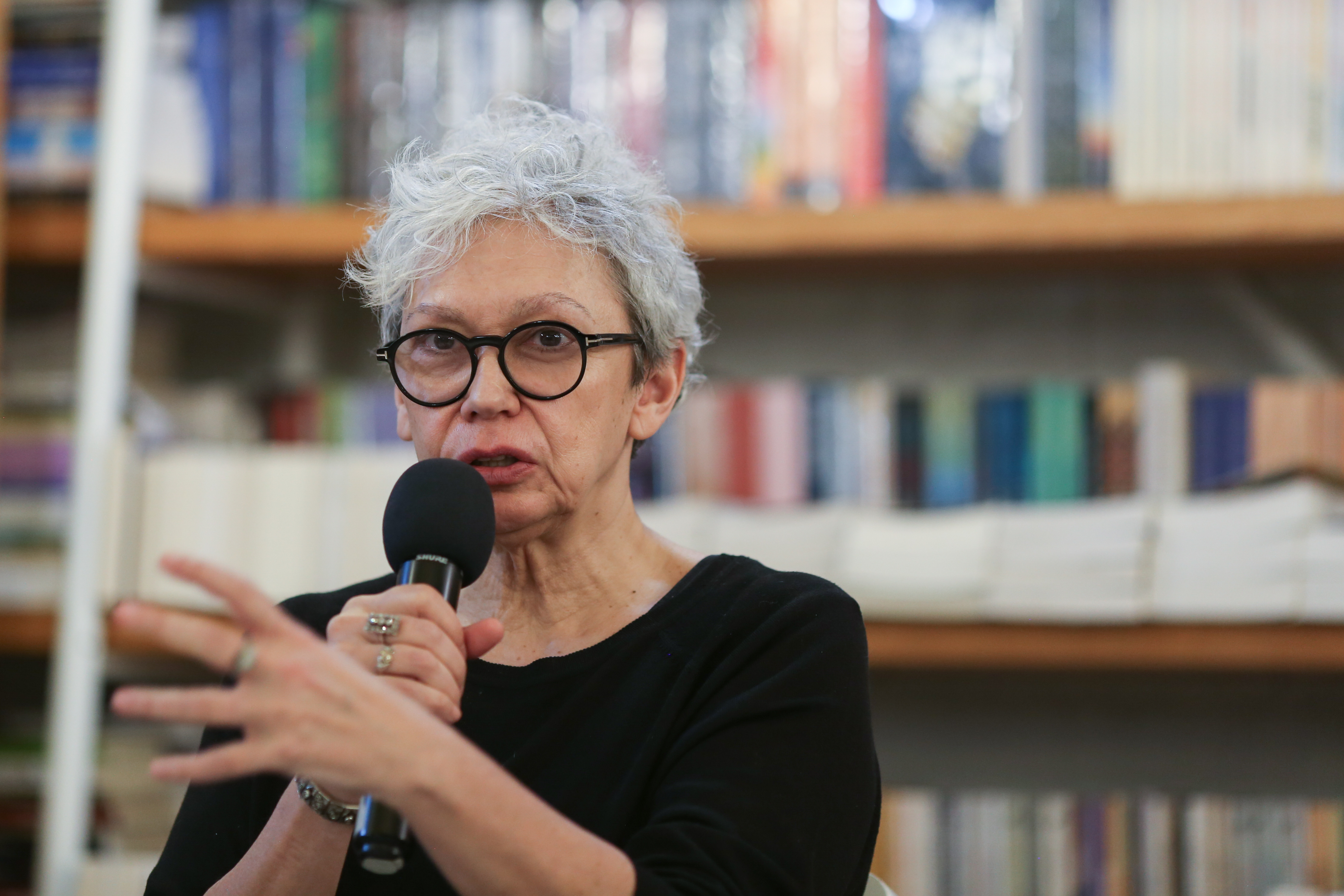
“The increase of the share capital to 8,000 lei fundamentally changes the threshold in entrepreneurship. In a country where many entrepreneurs start with minimal resources and compensate through creativity and adaptability, this measure can exactly discourage the segment that the economy needs: people with good ideas, but with small budgets”warns Mona Bardos, business consultant and creator of the community the group of small entrepreneurs in Romania who brings together over 60,000 members.
At the practical level, 8,000 lei means blocking a sum which could be invested in marketing, equipment, stocks or vocational training. For services in services or for freelancers who want to take the step to SRL, this amount is disproportionate to the real operating costs, adds Mona Bardos entrepreneurs.
Although the government claims that the purpose is to account for entrepreneurs and reduce ghost companies, Mona Bardos draws attention to the fact that The real effect will be hitting small businesses at the beginning of the road. “Instead of putting obstacles, it would be more useful to create a stable environment and offer easy access to entrepreneurial education and financing.”point this.
What the small entrepreneurs say about the increase of the share capital to 8,000 lei
The announcement regarding the increase of the minimum share capital, from 2026, has aroused strong reactions among the small entrepreneurs.
For some, the measure is a useless obstacle to the private initiative:
“Why oblige us? The state should be the invisible hand that helps things to happen easier. Now is the visible hand that stiffly confuse the little ones.”says Ioana, a member in the community the group of small entrepreneurs in Romania.
Others see it as a necessary measure for the responsibility of the business environment:
“I do not understand where so much indignation. The state does not take you anything, it forces you to have some money when you set up a company. For Romania, where companies open and close for all kinds of reasons, but less to bring value to the market, I think it is a good measure.”considers Radu.
Some entrepreneurs admit that money is not stuck, but warns of the increasingly hostile tax climate:
“It is ugly on their part to impose a share capital of 8,000 lei, but those are not blocked money. They can be used in the company's interest. However, I am very close to migrating my business to another more friendly country.”says Stefan.
There are also voices supporting the idea, arguing that a minimum decent capital could filter non -serious business:
“The truth is that too many companies are made with 5 lei in your pocket, then we claim to go. The share capital only has to be presented, then it can be spent. If you put the company in bankruptcy, you answer within that amount, and now, being 1 leu, there is a bit invitation to evasion and donkeys, that you do not respond with nothing. Justify that at least 3 months you can resist ”says Cătălin, a member of the community of entrepreneurs.
Thus, the dispute remains open: for some, the increase is a brake in the way of the initiative; For others, it is a step towards maturing the business environment in Romania.
What is the share capital
In Romania, the minimum compulsory share capital was 200 lei since the 1990s. After the amendment of the law of 2020, the minimum share capital became 1 Leoand the vast majority of newly established companies after 2020 chose the minimum threshold (1-200 lei).
The share capital is the amount with which the associates or shareholders of a company contribute to its establishment, in the form of money or goods, and which is officially registered in the constitutive act and to the Trade Register.
The main roles of the share capital:
- Legal: It is a condition for setting up the company and a minimum guarantee for creditors.
- Economic: represents the starting resources of the company.
- Proportional: establishes the share of participation and the rights of each associate in the company.
For example, if for a company with two associates it puts each 500 lei share capital, in a SRL with a total capital of 1,000 lei, each will hold 50% of the social shares.
Little entrepreneurs say they feel under pressure: higher taxes, postponed investments and blocked employment plans
Recently, the group of small entrepreneurs in Romania has conducted a community survey, according to which 60% of small entrepreneurs claim that they are “very affected” by increasing taxes and will reduce expenses. They are considering postponing the investments and blocking the employment. Only 4% say their activity is not significantly affected.
At the same time, ask how the year 2025 as a whole for their company, 53% Of the entrepreneurs say there is a continuous tension, everything seems unstable and unpredictable, 23% that is a tumultuous year, and again 12% that is a better year than 2024.
“The year 2025 has become a resistance test for small entrepreneurs. Increasing taxes, legislative instability and lack of a clear horizon forces them to be extremely attentive to each leu spent. Many break their development plans, reduce their teams and concentrate their energy on survival. Reorganization – because in this climate, who remains without strategy and structure risks losing everything.
Entrepreneurs who accept to get out of insulation and quickly adapt their business model have real chances not only to resist, but to grow accelerated, even in a hostile environment. In this sense, the ACE method becomes a key tool: an actuable plan, structured in clear stages, which helps entrepreneurs to restore their business, make their processes more efficient and increase their profitability. Correctly implemented in a few months, the ACE method can generate increases up to five times of turnover in the first year of changes ”explains Mona Bardos, business consultant and creator of the community the group of little entrepreneurs in Romania.
NBR has counted the number of under-capitalized companies
Almost one third (31%, 2023) of the companies operating in Romania present capital below the law, these deficiencies generating a number of other vulnerabilities, respectively the limited access to financing and the low level of financial intermediation, as well as the discipline for deficient payment in the economy, say the representatives of the central bank.
The requirement of recapitalization of these companies is estimated at approximately 35 billion lei, mainly coming from companies with domestic private shareholding (as a number) and from companies with foreign private shareholders (as a value), at the level of both categories being observed an increasing evolution in the last four periods.
Subcapitalized companies make 6% of the turnover and hire about 7% of the total number of employees. These companies hold 6% of total assets. However, they can generate a higher impact through contagion effects at the level of the sector, considering that they are responsible for 12% of the debts of the non -financial companies.
These companies generate one third of the arrears from the commercial partners, the NBR shows.
This practice, fueled by a deficient financial education of entrepreneurs is reflected in a deterioration of payment discipline, with multiple negative effects on the economy: increasing credit risk, increasing insolvency, slowing economic activity against the backdrop of investment and production, as well as negative effects on the public budget.