The connection between the money in your pension in Pillar II, Agatha Christie and Bismark Chancellor

These days there is a lot of discussion about pensions, especially about the money in Pillar II. Specifically about how you will be able to withdraw. So I set out to tell you a story.
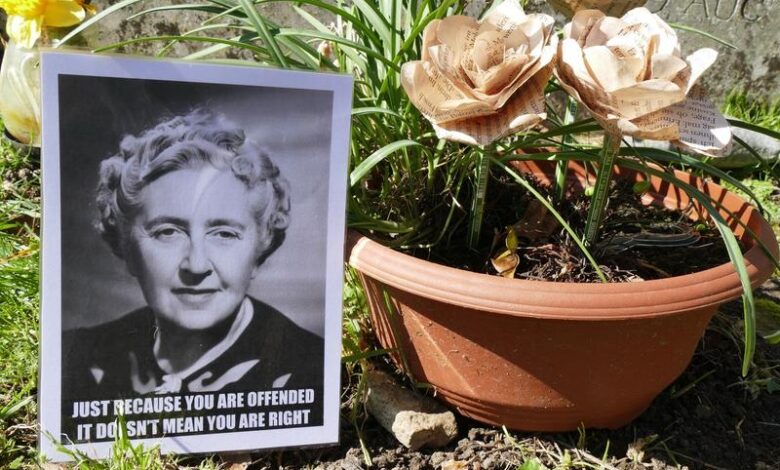
Among my favorite police readings is “a rye pocket”, by Agatha Christie. He is a classic police novel, in which Miss Marple investigates a series of bizarre crimes in a rich family in England.
It all starts with the unexpected death of a tycoon with a duplicitous reputation. The autopsy reveals that the man had been poisoned. The mystery is amplified when the family's wife and maid are also killed in ways that allude to a famous English poetry (“Sing of Song of Sixpence”), in which the phrase “a rye pocket” appears.
The case itself was ingenious, but I was intrigued by the title. Leaving aside the absurd nature of the song “Sing a Song of Sixpence”.
I also tasted in my childhood. It is slightly spicy, slightly bitter and slightly earthly to taste, with notes reminiscent of nuts
Sometimes (and only occasionally) I still buy rye bread today.
The rye is originally from Turkey today, but today it symbolizes the northern food systems of Europe – a resistant cereal that grows in the hard northern climates, where wheat does not grow. Russia assumes the title of the largest consumer of the rye, while Poland has the highest consumption on the inhabitant and is also the largest cereal exporter, according to “Edition Economics”.
But the world champion in the production of rye is Germany, which produces 33% more than the next big producer, Poland.
The “marriage of iron and dryness” is the generic name given to an alliance mediated by Otto von Bismarck, the first chancellor of unified Germany, between the nobility of Prussia, and the newly-broken capitalists from the “heavy” industries, concentrated in Renania in the West. (Sources: Encyclopedia Britannica- Otto von Bismarck, Heinrich August Winkler, “Germany: The Long Road West”, James Retallack, “Imperial Germany 1871–1918”, The Cambridge History of Modern Europe, historical/publicistic articles- for example, Deutsche Historische Museum- sections dedicated to Bismark and sections “Eisen und Roggen,” as well as German Economic History Encyclopedias).
How Bismarck created a new protectionist block of power
In 1879, Bismarck abandoned his coalition partner, national-liberals, who supported, among other things, the free exchange. He created a new protectionist block, causing rye producers, to accept the tariff protection for the heavy industries in Renania, who then fought with British producers. To achieve this, he offered them tariff protection against cheap American cereals that were beginning to flood European markets.
This alliance between rye producers and iron producers, mediated by the “iron chancellor”, propelled the German economy to new peaks. It allowed the new heavy industries – iron, steel, machines, chemicals – to develop behind protective walls and, finally, to reach the main producers in the UK.
Bismarck's legacy did not end with the development of heavy German industries. There is another inheritance that had an even greater impact – and far beyond Germany: the establishment of the state of well -being.
The inheritance of Bismark
Many people believe that the state of well-being is the product of “progressive” political forces, such as the US Democrats in the US, the British Labor Party or the Scandinavian Social-Democratic parties, but, in fact, the Bismarck ultra-conservative was created first.
In 1871, shortly after the unification of Germany, Bismarck introduced an insurance program that protects workers from industrial accidents. Although it covered only a limited range of workers, instead of being a universal scheme, it was the first public insurance in the world, the cited work shows.
Once he strengthened his power through the “marriage of iron and dryness” in 1879, Bismarck accelerated his efforts for social assistance measures and introduced public health insurance in 1883 and a public pension in 1889-both unprecedented until then.
In 1884, he extended his previous insurance for work accidents to cover all workers. Germany has failed to introduce the first unemployment insurance (this honor is France).
Bismark knew that if workers were not protected against shocks (work -related accidents, old age, unemployment, etc.), they would be attracted to socialism
Bismarck did not introduce the state of well -being because he was a “socialist”, as he is normally called anyone who supports the state of well -being nowadays. He was even a famous antisocialist. Between 1878 and 1888, he strongly restricted the activities of the Social Democratic Party, without being able to completely prohibit the party.
But he was fully aware that if workers were not protected against major life shocks (work -related accidents, old age, unemployment, etc.), they would be attracted to socialism. In other words, Bismarck initiated those social assistance schemes precisely to keep socialism at a distance.
After the Second World War, even many center-right parties in European countries came to embrace the state of well-being, because they realized that providing security to ordinary citizens was vital to reach political stability, especially in the face of systemic competition from the countries of the Soviet block, writes Ha-Joon Cited Book.
Social benefits are not free. Everyone pays
Many of the social benefits that people receive are funded from “social insurance” contributions – that is, payments related to certain public insurance schemes such as old age and unemployment – which most taxpayers pay.
For example, in the UK, due to socialized health insurance within the NHS (National Health Service), you do not have to pay every time you go to the hospital. But you paid your visit to the hospital (and you will continue to pay it in the future) through taxes and contributions to social insurance.
The state of well -being is better seen as a social insurance package, which covers the eventualities that can happen to anyone, acquired collectively by all citizens. It may have (but may not, depending on how the fiscal system and social assistance schemes are designed) an element of revenue redistribution, but this is not its main role.
The idea of the state of well -being is that, as citizens (long -term residents), we all receive the same insurance package at a lower price, buying bulk. The best way to illustrate this aspect is to compare the cost of US assistance, which is the only rich country that does not have a public universal health insurance, with that of other rich countries.
People in today's rich countries owe their security and prosperity
As a proportion of GDP, the US spends at least 40% more and up to two and a half more for healthcare than other as rich countries.
Despite this, the country has the weakest medical results in the rich world, which means that “health” is much more expensive in the US than in other rich countries. There are various explanations for this, but an important reason is that the American health system is fragmented and therefore cannot benefit from collective acquisitions as much as its counterparts from other countries that have a more unified health system.
People in today's rich countries owe their security – and prosperity – a humble and resistant cereal, often considered inferior to its better known cousin. For without protecting the rye produced by the Prussian landlords, Bismarck could not have created the political alliance that allowed him to build the first state of welfare in the world.