Interviewing who are the young 24 -year -old graduates who thought of the Romanian Pavilion from Osaka, visited by hundreds of thousands of people. “After all, less means more”

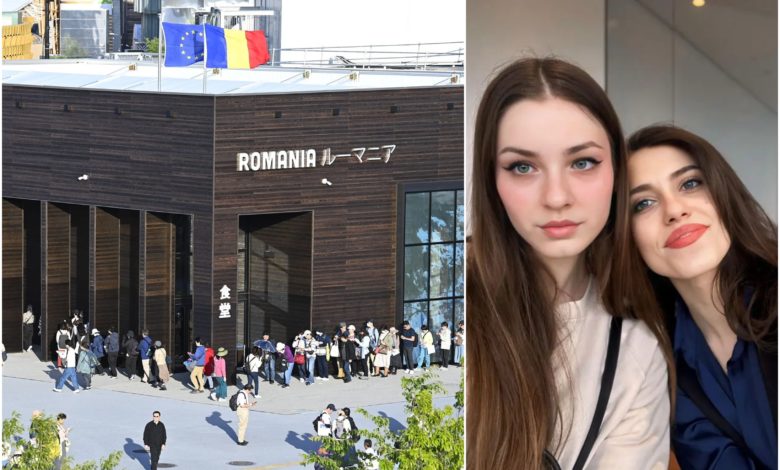
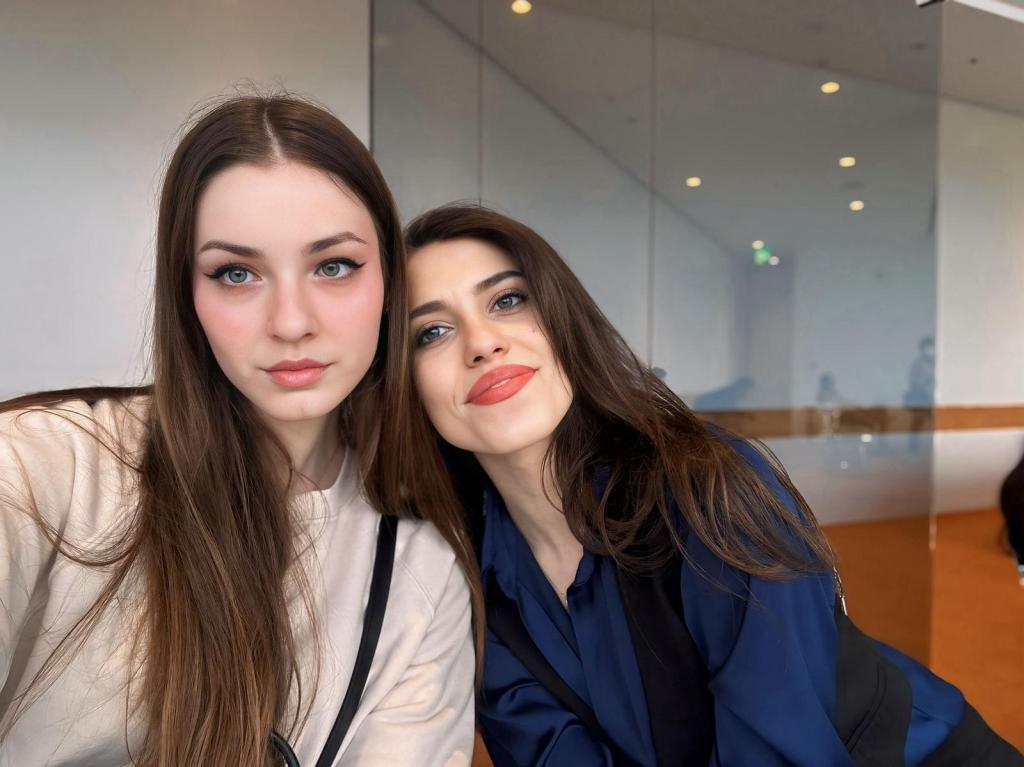
“We wanted to show, through something simple, our value, including as a country,” says the young architect Georgiana Muraru, who together with her colleague Anca Bodoloacă, made the creative concept of the Romanian Pavilion. In a dialogue with Hotnews, the two 24-year-olds talk about the idea behind the project and the emotions they had when they learned that the pavilion would be erected at Osaka. “At our age, I think the healthiest is to think about some things and not say” no “.
- The Romanian Pavilion at the Osaka exhibition was visited, in the first three months of the exhibition, by over 360,000 people. The world exhibition of innovation, science and social development is open from April to October.
“We gave our interest and soul for this project. We gave what we could, how much we could,” says Anca Bodoloaca, in the dialogue with Hotnews.
Their creation was born in 2023, when the two young people received a theme at college. Two years later, they graduated from the Faculty of Architecture in Bucharest, and their “theme” turned into a flag, erected at Osaka.
How did it all start
The theme received it when they were in year 4, after the Ministry of Foreign Affairs asked for the support of the architectural universities in the country for the elaboration of proposals for the flag.
The “Ion Mincu” University of Architecture and Urbanism in Bucharest has found a way to actively involve students in the creative process.
“It was not an extra project, besides the faculty. They only implemented it at the workshop,” explains Anca.
The “Romanian magic box” and the inspiration from Japan
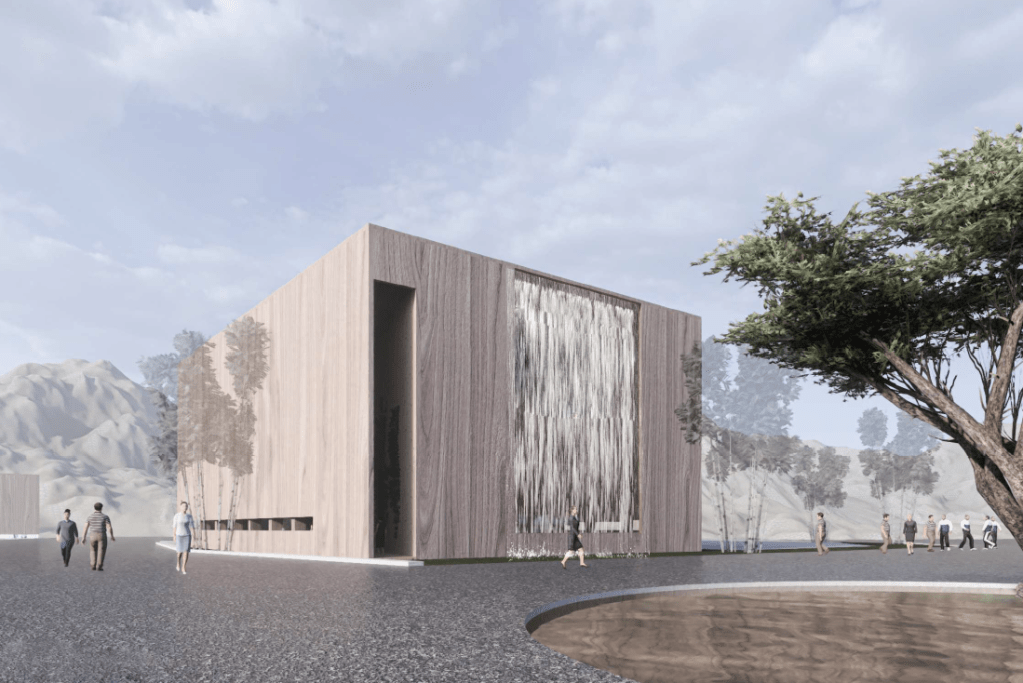
Anca and Georgiana then made Romanian Magic Box – in the translation “Romanian magic box”
“The idea started from the desire to transform something simple. We wanted to show, through something simple, our value, including as a country, and that everything happens inside. All Romania is inside something simple,” says Georgiana.
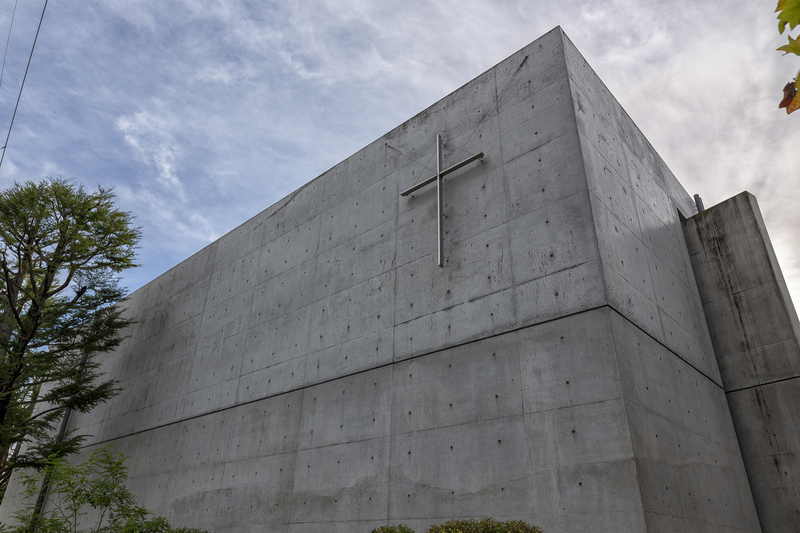
The young woman reminds of the Japanese architect Tadao Ando, who designed Church of the Light, a church in Osaka – “a reinterpreted minimalism, through which you have a very narrow entrance and everything is a parallelepiped.”
The same narrow entrance, which opens a lot, is also found in the Romanian Pavilion. In the phone, the young woman has photos with this church, which she wants to show.
The simplicity behind the victory
“I wanted to be a magical box that happens. And, in fact, this is the key to the project: its simplicity. It is also a mysterious job, because you outside you see a box, which invites you to go,” says Anca.
Both believe this simplicity made them winner.
“The project has an interior and exterior symbolism through materials, by what is projected, how it is in the flag. This I think it helped to selection, because it seemed and is something simple that you discover only when you get there,” confesses Georgiana.

The pavilion has an area of 900 square meters and is divided into nine thematic areas. In the area of “the steps of the miracle” there are 3D projections that recreate the atmosphere of Salina Turda. In the pavilion there is also a restaurant with Romanian specific, and in the area of crafts are exhibited ceramic, wood or leather objects, but also sculptures of salt with national symbols.
“After all,” Less is more “(in the trad.” Less means more “), Anca complements.
“We wanted to make Romanians conscious of heritage”
In addition to the Japanese architect, Anca and Georgiana were also inspired by Lucian Blaga's poetry, “I do not crush the miracle of the world.”
“It was the poetry to which we reported and reinterpreted through the pavilion. We went through a metaphor, looking for symbolic things of our country, which would not necessarily be the way a traditional house looks,” says Georgiana.
And the poetry is designed inside, over the image with the church submerged from Geamăna, a village in the Apuseni Mountains, where the steril from the Copper Exploration Poieni was discharged. The church has now become a tourist attraction.
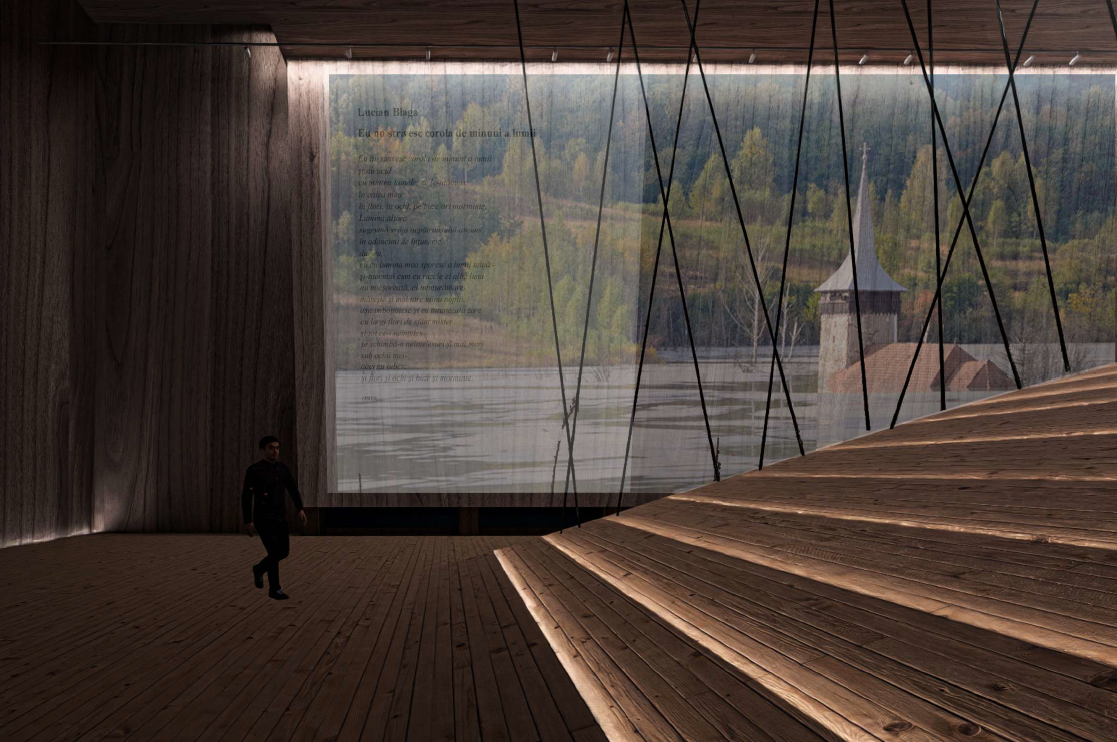
“At the level of visual material, we came up with the idea to design the career from Roşia Montană, which is spectacular. I was there at a volunteering and I was in a kind of hiking there and I could not believe how the place can look. Through this project we had the chance to present to the world. Anca.
“When I discovered that it was done physically, it was a shock”
In October 2023, they learned that their idea would become a building. “It is very interesting to win. We did not realize its importance because, being in the faculty workshops, I treated it as a project-we did not excite it much. We took it as such and then, after discovering that it would be physically, it was a shock,” says Georgiana.
“From so many projects, we were surprised and happy that our project has become a winner. It is a chance for us that we managed to get here,” admits Anca.
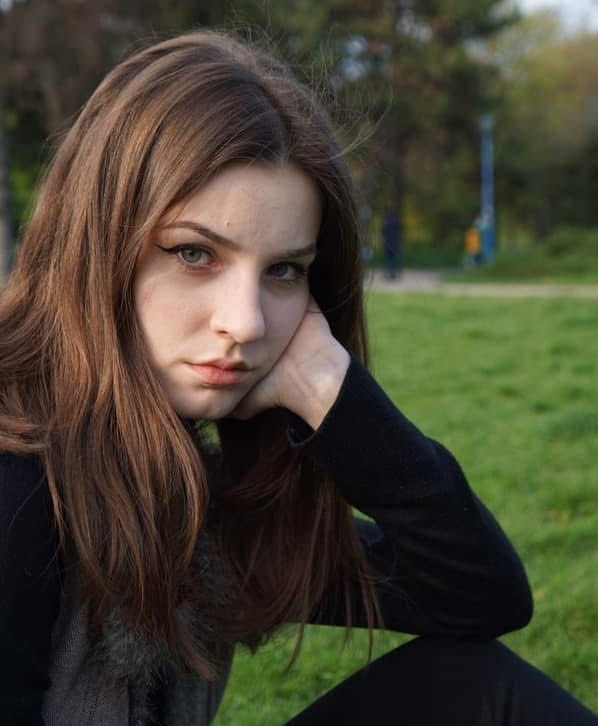
“I have not seen the project in reality yet.”
However, they did not see their creation, because they did not reach Osaka, where the flag was lifted.
“I was in Tokyo for the administrative side, before the pavilion was built,” says Anca.
They are joking on this topic, but I admit they were occupied: they had to support the license.
“At our age, the healthiest is to not say no”
Now, at the end of college, young people think about the future plans. No one is sure of what it will look like, but I know they want to continue in architecture.
“I work at an architecture office at the moment and I would like to design. I would like to be a workshop assistant, to help students from younger years,” says Georgiana. “And, God help, make another flag with Anca,” she replies, laughing.
Anca is more restrained when it comes to her plans, but claims that she does not exclude the possibility of leaving the country. “I want to learn as much as possible, to improve what I do, and in the end I get to design. It beats me and a thought to leave the country, but maybe not now.”
Both believe that the healthiest thing for young people is not to say “no” to opportunities.
“At our age, I think the healthiest is to think about some things and not say” no “. Any opportunity comes, comes with a certain sense, and in our field, being an important element,” adds Georgiana.