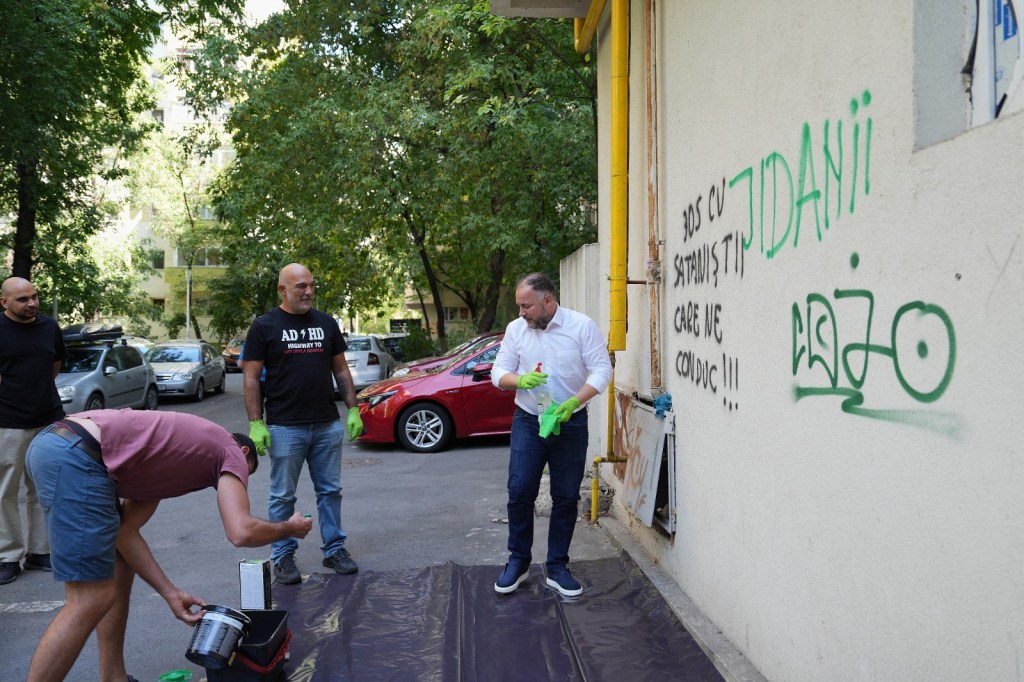
The walls of our city become periodically hatred for hatred, and most of the times such messages remain there, undisturbed, writes the activist for human rights Ciprian Necula, in an opinion article published by Hotnews. He reports what happened after he reported, on Facebook, the appearance of anti -Semitic and misogynus messages on the walls of a building in Sector 2.
Last days, I pointed to my Facebook page, the appearance of anti -Semitic and misogynus messages in sector 2: “This type of message was ignored by the authorities too long. It is not” sensitivity “to denounce hatred, it is normal. Anti -Semitism and racism are not opinions, they are real dangers. Or we react to society, or we react to society.
“The habit is the first step towards acceptance”
Unfortunately, such situations are not a novelty. The walls of our city become periodically hatred for hatred, and most of the time these messages remain there, undisturbed. Slowly, they normalize, integrate into the landscape and get to get used to intolerance. And habit is the first step towards acceptance.
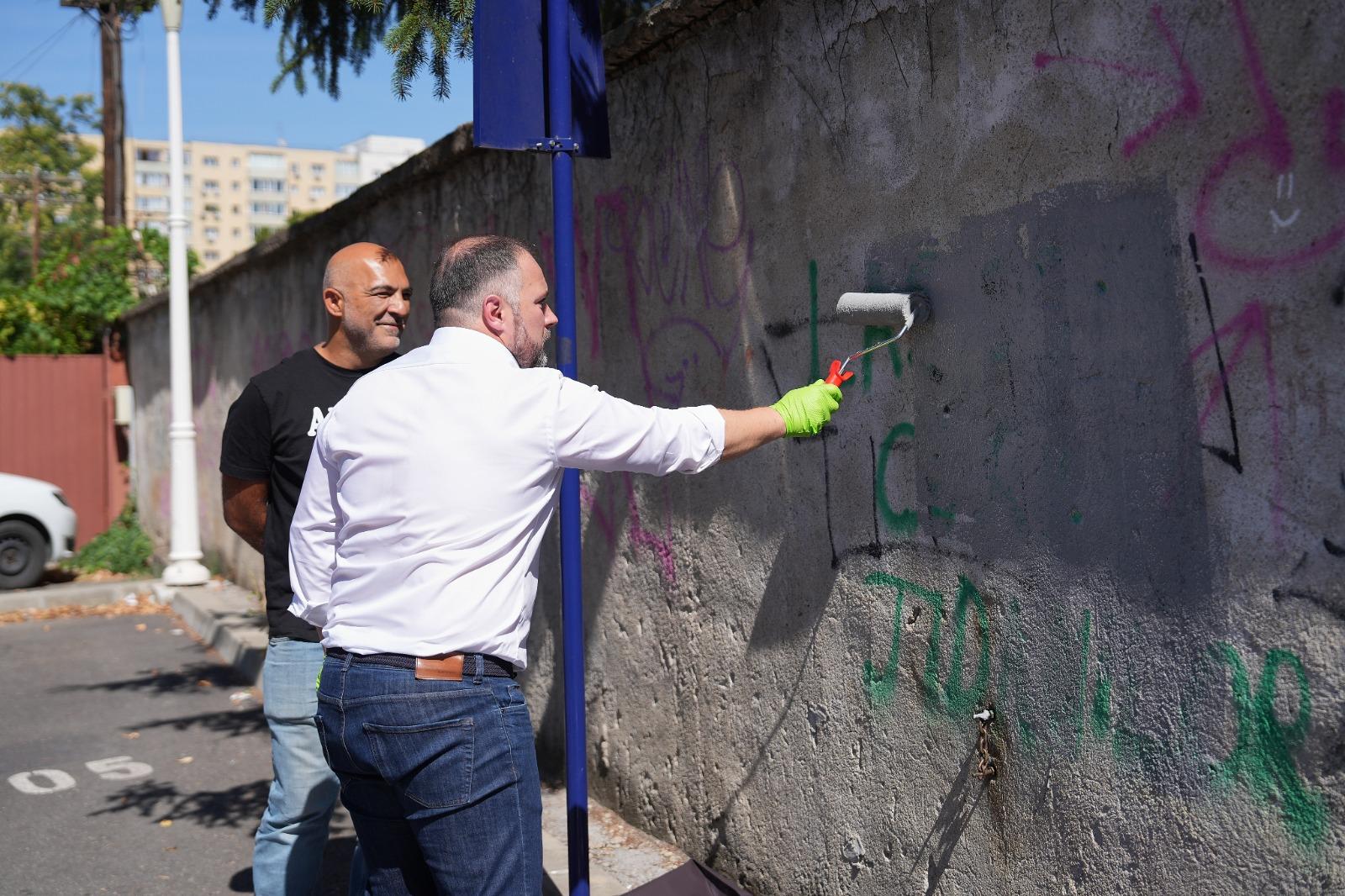
This time, however, something different happened. I informed the City Hall of Sector 2 and, not only did he react promptly, but Rareș Hopincă, the mayor of the sector, chose to come personally to delete these messages, together with his team.
His gesture is, at first glance, a simple one, but in fact loaded with symbolism. Because he shows that political leaders can convey a firm message: hatred has nothing to do on the walls, nor in the public space of a European capital.
Some could look at this action as an act of urban hygiene. But it would be reduced to leave it only. In reality, it is a form of civic and political responsibility. In a period when anti-Semitic, misogynistic or racist speeches gain ground in the online space, the prompt reaction of the authorities in the physical space has a huge moral impact. It transmits to citizens that there is a red line that should not be overcome.
“To ignore the hatred means to let it set up”
And yet, let us not deceive ourselves: the fight with hatred is not only won with the bid and paint. The Internet, with its accelerated dynamics and the echo rooms it creates, multiply and amplify the speeches of hatred much faster than we can counteract them. Therefore, we need firm policies, civic education and a real involvement of digital platforms. But what happened in Sector 2 shows us that there is another type of reaction: the fast, visible, assumed – which shows the citizens that the authorities are not indolent, that they do not consider hatred “a moft” or “a minor problem”.
It is time for other politicians – especially those who claim to be from European values - to follow this example. To ignore the hatred means to let it set up. To act, even symbolic, means to defend the dignity of the community. Because, in the end, the public space is not neutral: he reflects who we are as a society and what we accept to be told in front, on the walls we pass daily.
And for those who could suspect Rareș Hopincă by populism or image opportunism, things must be clarified: the mayor did not come with photographers, cameramen or consultants in communication. He came only with a technical team, with roller, paint and tools. We, those who noticed the situation, surprised by the promptness and determination of the reaction, were the ones who took photos and filming. Precisely because such gestures are, unfortunately, still rare.
Maybe we won't be able to delete hatred from all over the Internet. Maybe we will not be able to eliminate intolerance from all public spaces. But we can show that we do not accept it, that we do not overlook it and that we do not compromise with the values of a democratic society.