
Jim Lovell, the astronaut who heroically guided a failed mission and inspired the Apollo 13 movie, died with one regret

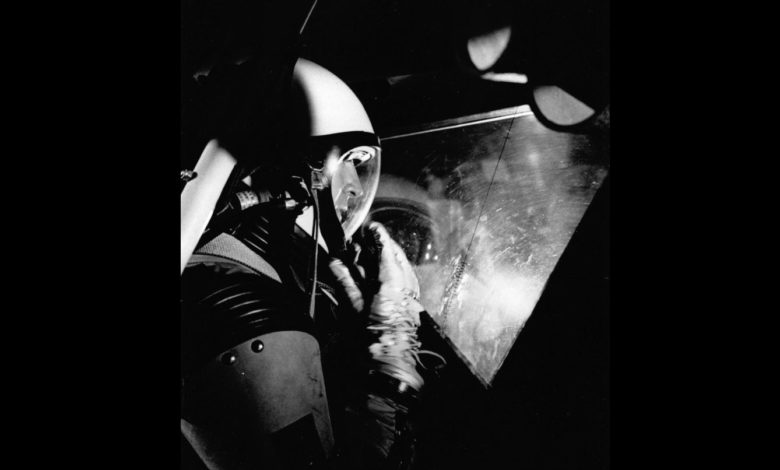
American astronaut Jim Lovell, the commander of the 1970s mission, which almost ended with a disaster, but became a story about survival and inspiration for the successful movie “Apollo 13”, died at the age of 97, NASA announced on Friday, according to Reuters.
The Hollywood Tom Hanks superstar performed Lovell in the acclaimed film of director Ron Howard in 1995. The film reported the Apollo 13 of NASA, which was planned as the third aselenization of humanity, but which tragically failed when an explosion on board, on the way to the Moon, endangered the lives of the three astronauts.
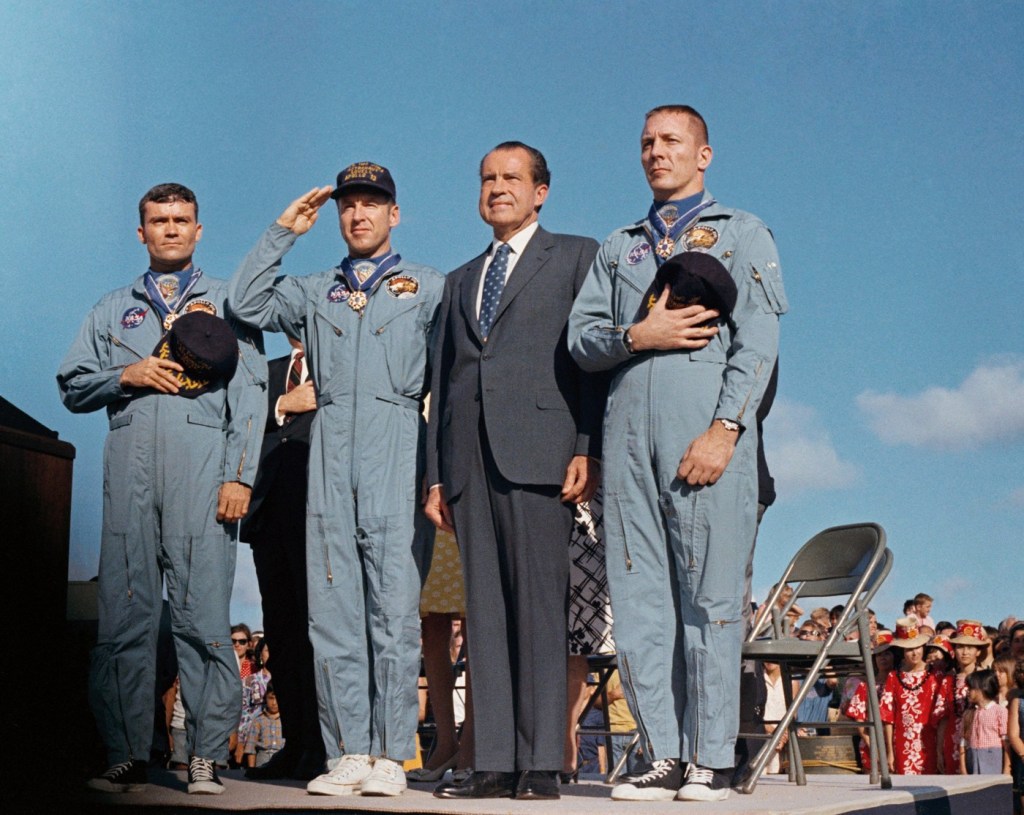
Lovell and his colleagues Jack Swigert and Fred Haise endured extremely cold, crumbling, dehydration and hunger conditions for three and a half days, while, together with the Houston mission control center, they designed ingenious solutions to bring back the space -damaged spacecraft.
“A” successful failure “describes exactly what was Apollo 13-because it was a failure in the original mission-nothing was really achieved,” Lovell told Reuters in 2010, in an interview on the 40th flight anniversary.
The result was “a great success of people's ability to turn an almost safe catastrophe into a successful recovery.”
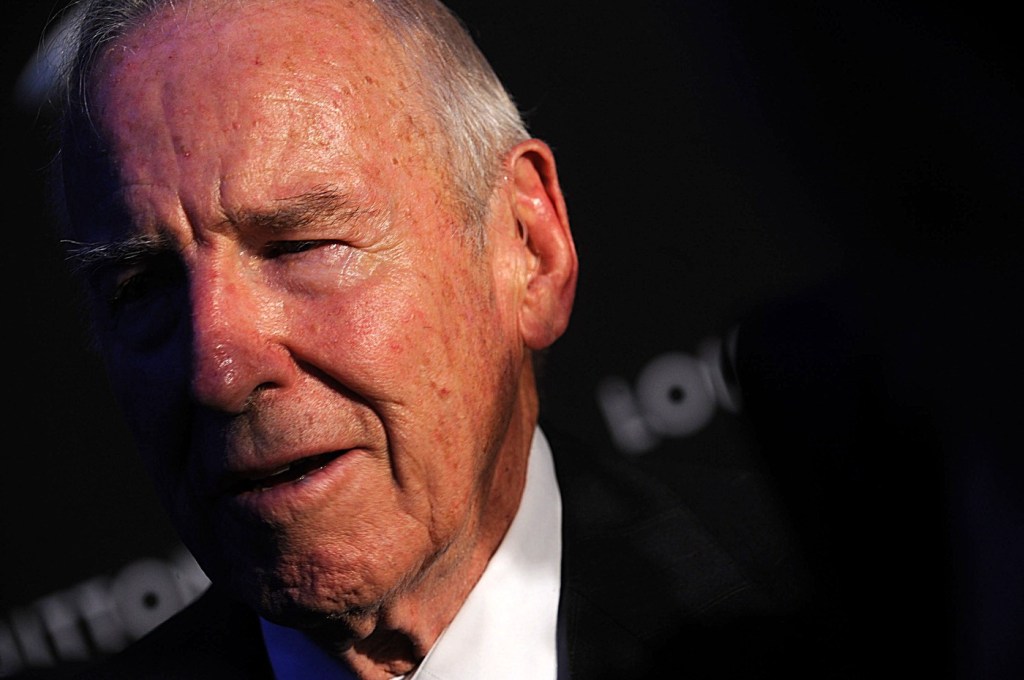
When the Apollo 13 mission took place
The mission of Apollo 13 took place nine months after Neil Armstrong became the first man to stepped on the Moon, when he took a “huge step for humanity” during the Apollo 11 mission, on July 20, 1969.
There were dramatic moments just before the launch of Apollo 13, on April 11, 1970. A few days before, the pilot of the monthly reserve module was mistakenly exposed to the German measles, but Lovell and Haise were immune to this disease. Ken Mattingly, the pilot of the command module, was not an immune to the measles and was replaced at the last moment by the beginner astronaut Swigert.
The mission generally went without problems in the first two days. But, shortly after the crew finished a TV broadcast in which they looked like they lived in space, a cable exposed in an oxygen tank of the command module caused an explosion that seriously damaged the space ship at 320,000 km of land. The accident not only ruined their chances of landing on the Moon, but endangered their lives.
“Suddenly, a loud noise was heard, and the spacecraft was swinging back and forth,” Lovell said in an interview with NASA in 1999. “The lights lit up and the engines started. I looked at Haise to see if he knew. He had no idea. I looked at Jack Swigert.
“Houston, we have a problem!”
Swigert saw a light warning indicator and communicated to the mission control center: “Houston, we have a problem here.” In the film, the reply is attributed to Lovell and spoken by Hanks – with a slight change: “Houston, we have a problem.”
Following a dangerous energy loss, the three astronauts abandoned the command module and headed for the monthly module, designed for two people to land on the Moon. They used it as a rescue boat for a 3 and a half-day tormenting return on Earth.
Astronauts and experts of the American Space Agency in Houston have endeavored to find a solution to bring the crew safely, with the limited equipment they had.
The electrical systems have been stopped to save energy, which led to lowering the temperature to near zero degrees. The water was drastically rationalized, the food was insufficient and sleep was almost impossible. The crew had to improvise a filtering system to eliminate the high levels of carbon dioxide that could have been deadly.
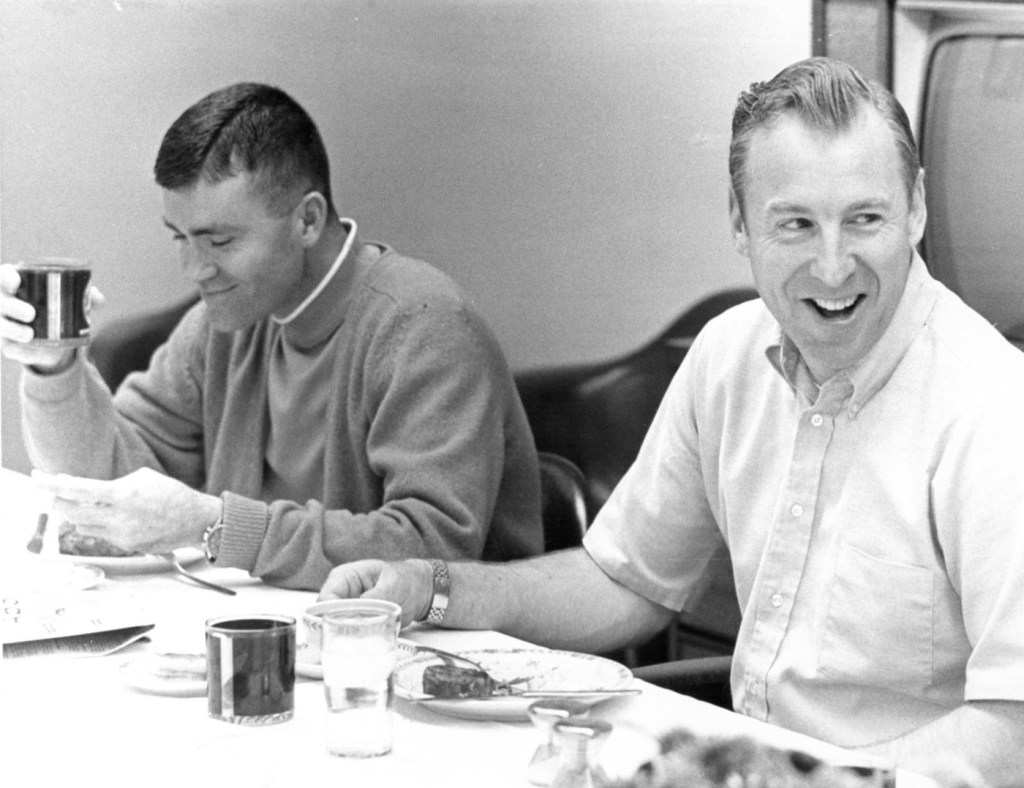
“We didn't think about it”
“It came to our minds that we are in great danger. But we didn't think about it,” Lovell said in NASA interview. “We never recognized that we would not succeed. Well, only once, when Fred looked at the monthly module and he discovered that we had energy for about 45 hours, and we were 90 hours of home.”
People from all over the world were captivated by the events that took place in space – and had a happy ending. The astronauts changed the course to fly once around the moon and back to Earth, landing in the Pacific Ocean, near Samoa, on April 17, 1970.
Lovell no longer had the opportunity to walk on the Moon after Apollo 13, which was his fourth and last trip in space.
His first journey was the mission of Gemini 7 of 1965, which marked the first dock of two spatial ships with human crew. The second was Gemini 12 from 1966, the last of the programs that led to the monthly Apollo missions.
Lovell's third mission was Apollo 8 since December 1968, the first to orbit the Moon.
During a transmission to the ground from their space, on Christmas Eve, Lovell and his colleagues Frank Borman and William Anders read verses from the Bible Genesis Book.
The book that inspired the Apollo 13 movie
Lovell, who later had a monthly crater named in his honor, withdrew from the astronaut quarry in 1973, first working for a port trailer and then in telecommunications.
He was a co -author of the book in 1994, “Lost Moon: The Perilous Voyage of Apollo 13” (the lost month: the dangerous journey of Apollo 13), which was the basis of Howard's film. Lovell remembered a meeting with Howard in which the director asked Astronaut what actor would like to interpret him.
“I replied,” Kevin Costner “,” Lovell said. “And Hanks doesn't let me forget this … But Hanks did an excellent job.”
On Friday, Hanks praised Lovell and his achievements. “There are people who dare, who dream and who lead others to places where we don't go alone,” Hanks wrote on social networks. Lovell, Hanks said, “was that kind of man.”
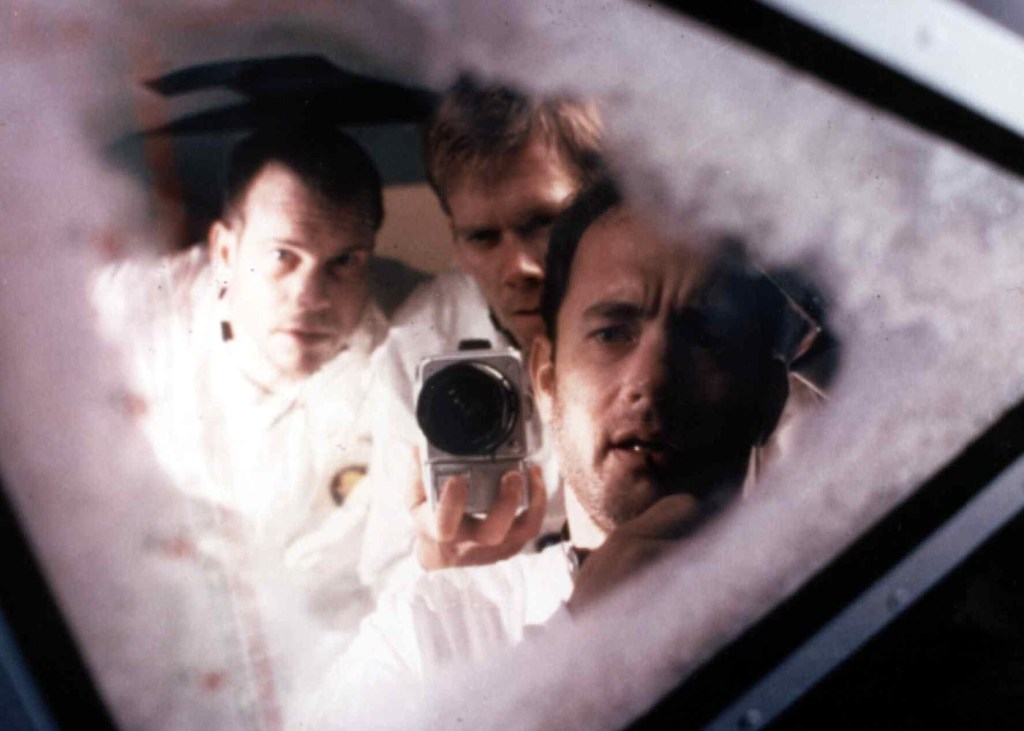
“His numerous trips around the Earth and until very close to the Moon were not made for wealth or celebrity, but because such challenges are the ones that feed the course of life,” Hanks added.
The only regret of Lovell
Lovell made a Cameo in “Apollo 13” in the role of the American navy commander who recovers astronauts and shakes Hanks.
James Lovell was born in Cleveland on March 25, 1928. He was only 5 years old when his father died, and his mother moved to Milwauke. Began to be interested in space in adolescence. He graduated from the United States Naval Academy in 1952 and became a test pilot before being selected as Astronaut NASA in 1962.
In an interview for Associated Press in 1995, Lovell acknowledged that he missed the opportunity to walk on the Moon remained his only regret.


