Germany looks at Poland with jealousy. “We are falling, Poles are climbing up”

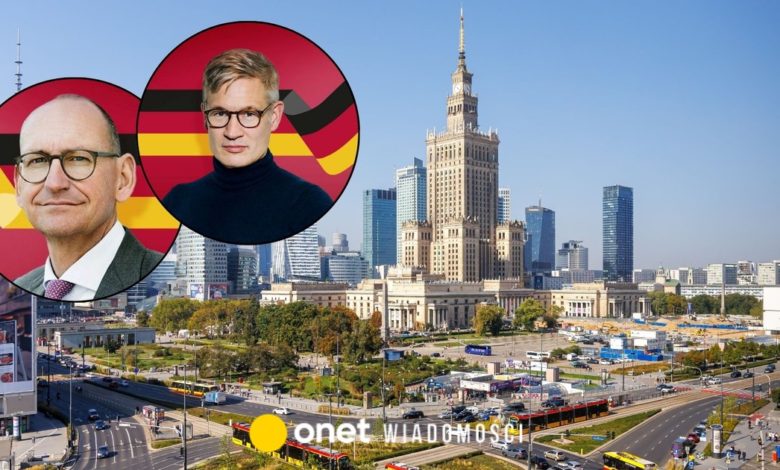
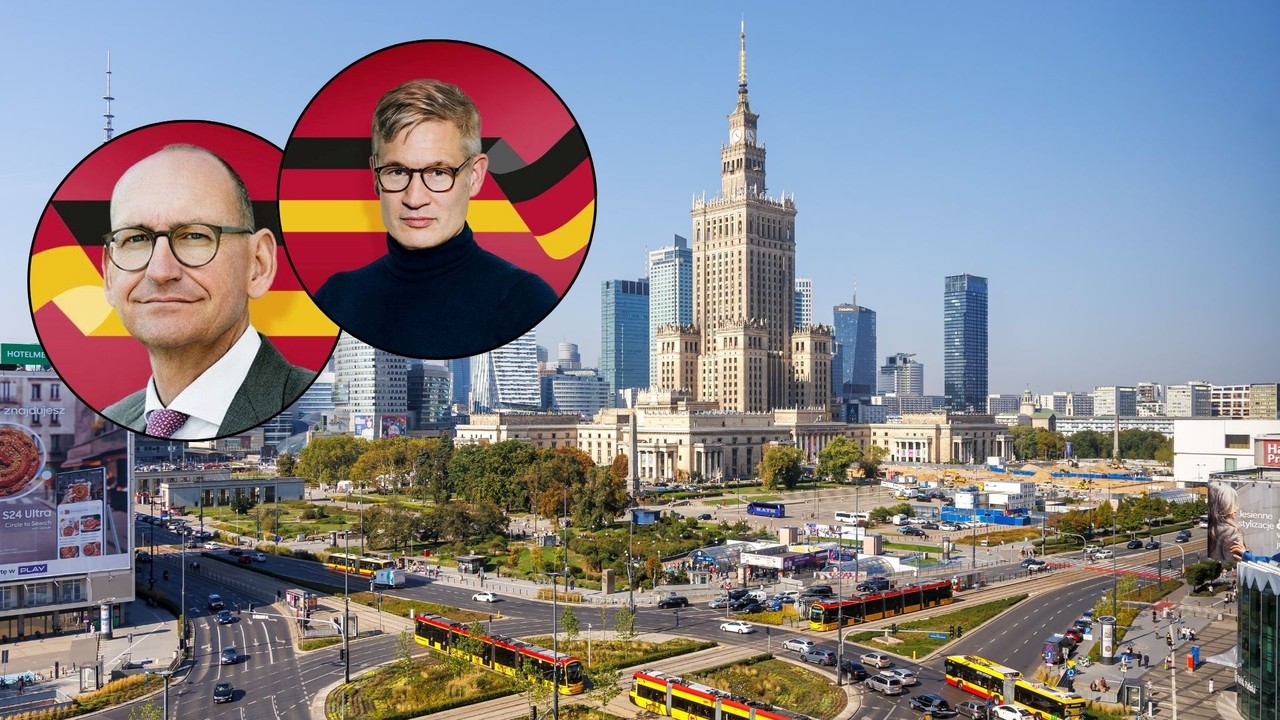
ULF POSCHARARDT: The great shock for those who describe themselves as a liberal democratic majority was that in the last election, contrary to all expectations, Poles faced the PiS party. The president of Poland became a right -wing nationalist Karol Nawrocki, which really prompts the question: how is this possible?
Recently, we dealt with fascinating theories of fascism – including Tilo Jung's theory. It sounds more or less like that – who limits the social state, contributes to the victory of fascism. And now we have a strange situation: since 2015, Poland has an increase in 28 % GDP, unemployment below 3 percent, and huge investments in infrastructure, defense, technologies. How does this relate to the results of the election?
Daniel Stelter: Poles are very successful. Harald Schmidt told a stupid joke in the 1990s that I should not quote anymore because he is politically incorrect. He said: “Here are three lies in one sentence: a busy Pole with his own car is looking for a job.” At that time, the Germans laughed at it, but it was true at that time. You should not laugh at it, because Poles have an amazing history of success behind them.
Especially if we look at the events of the near past – political transformation, the fall of the Eastern Bloc …
Poschardt: What happened also thanks to Poles. Polish Pope, Solidarity, Lech Wałęsa – without these factors all this would be unthinkable.
Stelter: Exactly. Then we helped the eastern part of Germany a lot. It did not always go our way, many people in eastern Germany feel omitted today [w krajowej polityce] – And for a reason. In a sense, they were deprived of the opportunity to build something with their own strength. It was different in Poland.
Transformation success
In 1989, Poles decided to clearly build the so -called Solidarity market economy. They were extremely liberalized by the economy. There is such a thing as an economic freedom indicator and in this year Poles had 51 points in it, which meant that they were “very slave”. Today they have about 70 points The Heritage Foundation publishes these statistics every year. It is true that Poland has not yet reached the level of Germany (71.6 points), but it is already close. If you don't want to, we help her because we become less and less free. We are falling and the Poles climb up. The value of GDP per capita in Poland increased enormously – from 1991 to 2022 almost four times. This is a huge achievement – and it is not accidental.
Critics would probably say that this is explained by EU funds, which Poles get so much. After such an claim, the question often arises why they are so ungrateful. It must be said, however, that it is Poland that most effectively uses EU funds, significantly ahead of Italy and other countries in this respect. Secondly – Poles did not waste money from the EU, but liberalized markets and invested in education. The percentage of population with secondary and higher education is currently higher in Poland than in Germany or in the entire euro area.
In addition, Poland is very exported. It is particularly noteworthy that it develops its industry. In the years 2015–2023 industrial production in Poland increased by 50 percent. In Germany, it has been constantly falling since 2018. It should be added, however, that a significant part of the production was transferred from Germany to Poland.
Why do countries vote for the right with such success? I would reverse this question and ask how Poles perceive the world. Rainer Zelitann conducted a global study in which he asked people, among others, about what they think about private property, capitalism or how they perceive the role of the state. The results of this study are really surprising – Poles occupy the first place in the world in terms of support for capitalism – even ahead of Americans.
In addition, 41 percent Poles believe that the rich have achieved their prosperity by taking a greater risk, and 36 percent. It perceives the rich as a role model. Social jealousy in Poland is the smallest among all surveyed countries – the largest in Germany and France. Therefore, Poles have consistently focused on the economy, carried out liberalization, have a positive attitude towards capitalism and success. And basically this is the result of the good condition of their economy.
A sense of national identity
Poschardt: In my opinion, a sense of national identity plays an important role here. Poles always had a romantic tendency to freedom in their mentality. It became very characteristic, also through the experience of dictatorship within the Warsaw Pact. This love for freedom, combined with Catholic faith, is PiS.
The paradigm stating that economic stability leads to political stability – in Poland it does not work very well. Many Poles perceive the EU's actions as a kind of tracing paper of the hated Warsaw Pact – especially its patronization. Because someone in Brussels tells them what to do.
It should not be forgotten that even Donald Tusk has opposed EU interference more than once – for example in matters of migration policy. The European mainstream elite should ask themselves whether with its arrogance and wiseness it is not too discouraged by Poles, like other countries of Central and Eastern Europe. And whether in this way he does not give the end of the extreme right.
Continued article under video material
Stelter: The approach to capitalism in Poland is interesting for me. Even people who consider themselves leftist are his supporters. Of course, this is also related to the experience of socialism, oppression and Russian occupation.
Elections in Poland, however, are part of a broader context for me. And this one is based on one password: migration. Poles see perfectly what challenges are associated with her. The German education system has great difficulty with children from low levels of education – regardless of whether they have migration origin or not. If we are dealing with immigration, which comes mainly from groups with low levels of education, the effect is that schools cannot cope with it. I think Poles observe this and ask themselves: how to behave our success, since good education is an important factor of prosperity?
In addition, they want to maintain their national identity. This is obviously related to history. In past years, Poland was often undressed, occupied and manipulated by neighbors. Having in mind, it is easy to understand why Poles declare that they are proud of their nation and want to keep it in its current form.
Poschardt: However, I believe that Poles' patriotism is very enlightened. Perhaps that is why Americans, when they talk about “old Europe” and “New Europe”, always give Poles as an example.
Dubious economic growth
Now let's get to the message that sounds like a bad joke. The Organization of Economic Cooperation and Development (OECD) published a forecast according to which, by 2026, Germany will record economic growth of 1.2 percent. And thus – I quote – “they will become the driving force of the euro area growth.” Once again, you can see that hundreds of billions of euros can be put into a good mood even OECD. I do not consider this 1.2 percent. for particularly impressive, taking into account development expenditure. And if it is known that this is only due to state doping, it is actually a rather pathetic matter.
It was interesting that voices praising this success appeared in social media, completely omitting the context. I can't believe how you can congratulate myself, even though you get such a shameful rating.
Stelter: Yes, people saw only a number – an increase of 1.2 percent. They did not see criticism. OECD very clearly states that in order for height to be permanent, structural reforms are necessary. That is why there is talk of “self -propagating economic recovery”. But let's remember: if we actually reach 1.2 percent next year. And we will become the driving force of economic growth in Europe, it will show it above all how bad the overall situation in Europe looks like – since 1.2 percent. or 1.5 percent It is enough to recognize us as a leading country.
Poschardt: Poles will not like it, they want to increase at 3 percent.
Stelter: The problem is self -deception of German politics. My favorite example is the sentence: “We are a rich country.” Politicians repeat them constantly: “A rich country like Germany should …” – and here you can put in what you want: save the world climate, solve the issue of refugees, anything.
The truth is different: we are not a rich country. Maybe we have some resources, but in fact we led our country to ruin and we urgently need a repair. That is why there are so -called special funds. The problem is that politicians convince themselves that this will help solve all problems. In fact, this will only entail a temporary economic recovery. Before the debts enlisted, the first one had to restructure the budget and focus on its consolidation.
By the way, OECD also stated that the work factor should be relieved. Specialists from this ianition have been writing about it for years and are right. This is not only about taxes, but also about social security contributions. German politicians, however, do nothing in this direction. Simply put, the point is for the state to fill its money.
Then OECD states that capital should be more taxed. It's interesting. I think that instead of new taxes, one should rather demand reduction of state intervention. In addition, the number of millionaires fell in Germany. Of course, after the United States and Japan, we have the third largest number of millionaires, but in relation to economic results, Germany has relatively little private property, and if so, it is logical that we collect less taxes from assets. I would rather say – make the state more efficient, more effective – and finally do your in the field of structural reforms. Otherwise, we may have 1-2 percent. growth, but we will not feel its effects.
It is true that you can see a change in moods, but now you need to make urgent structural reforms. Only in this way can you gain real hope for permanent economic growth.
Poschardt: We have long reached a stage in which – as you once put it – we are building a beltway around economic reality. Instead of conducting real structural reforms, we blur the situation with debts. I wouldn't bet a penny on the thesis that something will change. There are no signs, nothing can be heard. Instead, we sit with arms folded and say: somehow it will be. Everyone throws himself greedily at the OECD data and celebrate them as if it was a solution. And forget about structural reforms. I see no tendency to draw conclusions here.