He was in the UN forces camp when Israel fired him: I never experienced something like that

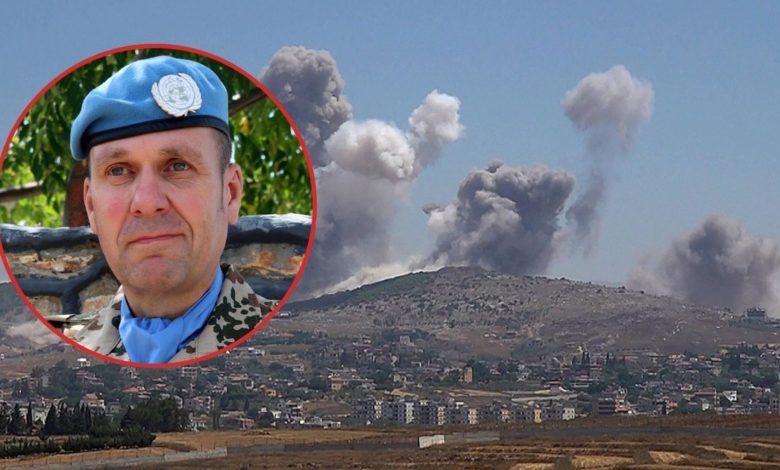
Nearly 300 German soldiers participate in the UN mission in southern Lebanon, whose name in short sounds Unifil. The Bundeswehra is commanded by the Admiral of the Fleet Richard Kesten. Thousands of soldiers in blue helmets from various countries also patrol the area along the so -called the blue line, which has been a demarcation line between Israel and Lebanon since 2000.
After almost a year and a half between Hezbollah and Israel, many towns in southern Lebanon were in ruins. Israel accuses both the UN mission and the Lebanese government that they have allowed the weapons of the Proiran militia in the border region. Hezbollah, not the government, has been controlling significant areas of southern Lebanon in recent years.
Welt: You spent the war between Hezbollah and Israel from 2024 on the southern front in Lebanon. What did you experience on the spot?
Admiral Richard Kesten: Together with our friends we spent over 700 hours in the bunker and with our own eyes we observed the destruction of the town of An-Nakura, where we were stationed.
Welt: How intense was this period?
Kesten: In July 2024, when I arrived in southern Lebanon, the situation was still relatively transparent. Hezbollah fired rockets towards Israel every day, and the Israeli army immediately reacted with a counterattack. These were continuous fire exchange. However, when at the end of 2024, the Israelis began the land offensive, they supported it with a powerful artillery fire, air bombs and fire from the sea. This enabled the Israeli land troops to move forward. However, due to the mass presence of Hezbollah and the difficult terrain of Israel, he could move forward slowly. In An-Nakura itself, the fight lasted for two weeks.
WELT: UN forces, having no solid mandate, stood practically helpless between the fronts. Why didn't you leave the front zone?
Kesten: At the beginning of the land offensive, Israel asked the UN strength to leave the southern Lebanon. The UN refused because it would mean the annulment of the entire mandate. In An-Nakura, we tried to keep our business somehow. Because when it gets serious, we don't run away. However, the supply has become more difficult. We had to think carefully about how to move.
Welt: According to reports, UN forces have fired many times.
Kesten: In the headquarters itself, we had several cases of direct fire, as a result of which several foreign Unifil soldiers were injured. One of the buildings of our camp was hit by a rocket, there were also wounded. The blows of air bombs, partly only a few hundred meters from us, were really powerful. As a navy soldier, I have never experienced such a thing before.
Welt: Was this fire of UN troops random? Or was it a deliberate attack?
Kesten: Once the Israeli combat tank tracked the UN watchtower with a laser and immediately then a hit. There was probably no order, but it was unprofessional. One night, a UN soldier walked along the fence and was shot to the side of the torso with an automatic weapon mounted on the tank.
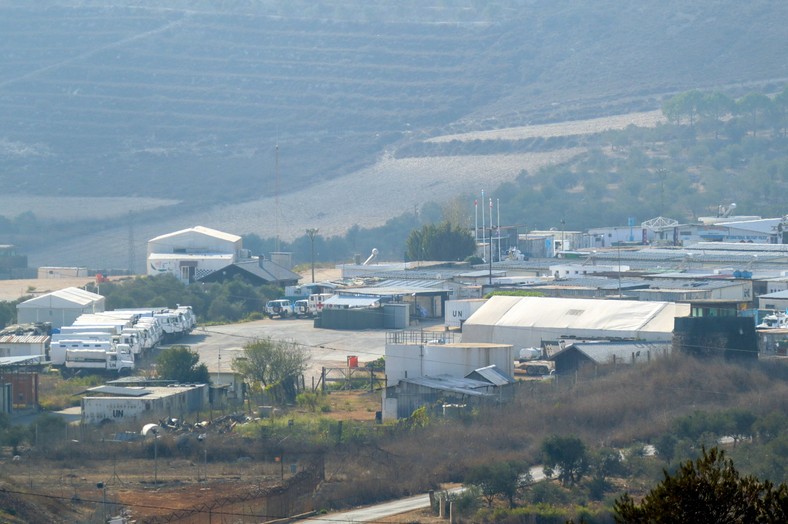
Base of the UN Temporary Armed Forces in Lebanon (Unifil) in the Ebel El Saqi Marjeyound district in southern Lebanon, October 10, 2024. Two peace forces soldiers were injured after the Israeli tank fired the observation tower at the unifil headquarters in An-Nakura
Welt: UN peace forces do not have a strong ticket. This means that they cannot intervene themselves with the use of armed force, but only act as armed observers. What contribution can make at all?
Kesten: Unifil increases the number of possibilities for Lebanese, but also Israelis. However, these possibilities must be used in an appropriate manner. If Lebanese are not active in the field, the very presence of Unifil does not make sense. Israel expects Unifil to take over the task of disarming Hezbollah. In turn, the population of southern Lebanon expects Unifil to protect it from Israeli raids. One thing is clear: it is the Lebanese state who must have a monopoly on the use of force and control over the southern Lebanon. However, if the state does not have money for reconstruction, it will not be able to break through in society.
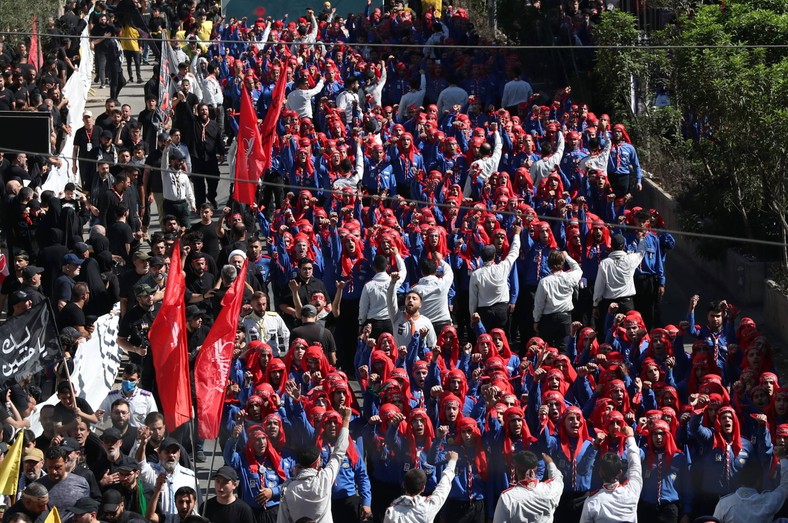
Supporters of Hezbollah celebrate the Ashura Day in Beirut, Lebanon, July 6, 2025. Shiite Muslims around the world celebrate the holy month Muharram, the first month of the Islamic calendar, whose culmination is the feast of Ashura commemorating the martyrdom of Imam Husajna, grandson
Welt: In the ranks of Unifil, it is said that communication with Israel is very limited. Soldiers of peace forces report that they have the impression that they are perceived rather as an enemy unit.
Kesten: There is an emergency number to Israelis. However, Unifil attaches great importance to ensuring that communication with Israel is not chaotic, but runs centrally through the headquarters in An-Nakura. From there, information is transferred to the branches through the Israeli Ministry of Defense. If Lebanon is to regain Israel's trust, this can only happen thanks to the strong presence of the state on the spot. Unifil can help with this.
Welt: What exactly do German UN troops do?
Kesten: Germany is currently providing the “Brandenburg” frigate with about 200 crew members. We manage the UNIFIL Maritime Task group, which includes, in addition to the German ship, also Indonesian, Bangladeski, Turkish and Greek ships. These ships patrol Lebanese coastal waters and check commercial vessels. We classify them as “suspicious” or “non -use”. The main goal is to prevent smuggling of weapons to Lebanon.
Welt: What happens when you suspect about a ship?
Kesten: If the ship is classified as a “ship arousing interest”, the Lebanese coast guard takes over its search – even before entering the port. Currently, German soldiers accompany these operations. Many of the controlled ships come from Turkey, Egypt or Ukraine.
Welt: Until last year, the land road through Syria was considered the main route of smuggling weapons to Lebanon. Is it still like that?
Kesten: During the old Bashar regime al-Assad, the land road was decisive. The sea road played a marginal role for Hezbollah. But that can change now. In April, three containers with assault rifles and parts of weapons were discovered in the port in Tripoli. Nevertheless, we have not yet been observing the systematic smuggling by sea. In previous years, this problem practically did not exist, because the land road was too comfortable. We see that Hezbollah is currently under pressure and works more carefully. Everyone knows that hezbollah's reference would cause an Israeli counterattack.
Welt: I was surprised by the mass destruction of border villages and Bastions of Hezbollah in southern Lebanon, which occurred as a result of a war lasting since the end of 2023. How strong and influential is this militia?
Kesten: Hezbollah is a movement that influences many areas of social life: fire brigade, health care, schools, and city authorities. However, since the end of 2023, the militia is seriously weakened because Israeli intelligence in Lebanon works very effectively. Israel destroyed a significant part of the Hesbollah long -range weapons in the southern part of the country. In addition to high human losses, I also see war fatigue. There were already great concerns in Lebanon that after the war began, militia fighters could join forces with Iran. However, this did not happen.
WELT: Also during Hesbollah's rallies in Lebanon you can now see some restraint. In addition to ordinary battle slogans against Israel, the moods among many supporters seemed subdued.
Kesten: We have information that compensation for destroyed houses and the so -called “martyrs' pensions” for the families of fallen fighters are often not paid. Israel destroyed a huge part of the property belonging to Hezbollah. In the town of An-Nakura, where we are stationed with Unifil, 90 percent are damaged. all houses. Compared to 2006, when Hezbollah was still very financially and powerful, now there is disappointment among the supporters. It would of course be a chance for the Lebanese state to fill this vacuum.
Welt: How effective is the Lebanese army?
Kesten: Navy has a good, motivated officer corps. However, the army as a whole is in a critical condition. There is a lack of permanent, professional staff. Many soldiers receive only a third or quarter of their previous salary – they have to take up additional work to feed their families.
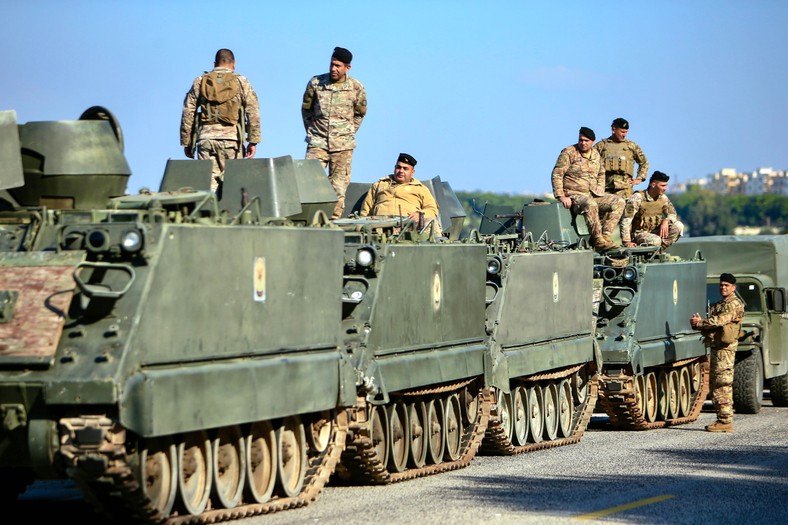
Soldiers of the Lebanese army on board armored military vehicles secure the area after the withdrawal of Israeli army from the seaside city of An-Nakura near the border with Israel, Lebanon, January 7, 2025.
Welt: Do you really have the impression that the Lebanese state is seriously approaching the fight against Hezbollah?
Kesten: The situation has changed significantly. Unifil patrols the southern Lebanon and searches the areas without the participation of the Lebanese armed forces. And through the so -called mechanism – covering the United States, France, Israel, Lebanon and Unifil – the Lebanese army receives specific tasks. This means that if the composition of Hezbollah weapons is found in the southern Lebanon, the Lebanese army has several hours to liquidate it. If she fails, the Israeli army often carries out raids.