2026, the year of the first large highway tunnels. The works that take Romania's infrastructure to a new level

After 12 years since the inauguration of the only highway tunnel in Romania, several such spectacular works could be completed in 2026, although some of the highway segments on which they were designed are still in the beginning. The first tunnels expected in 2026 are being built on the A1.
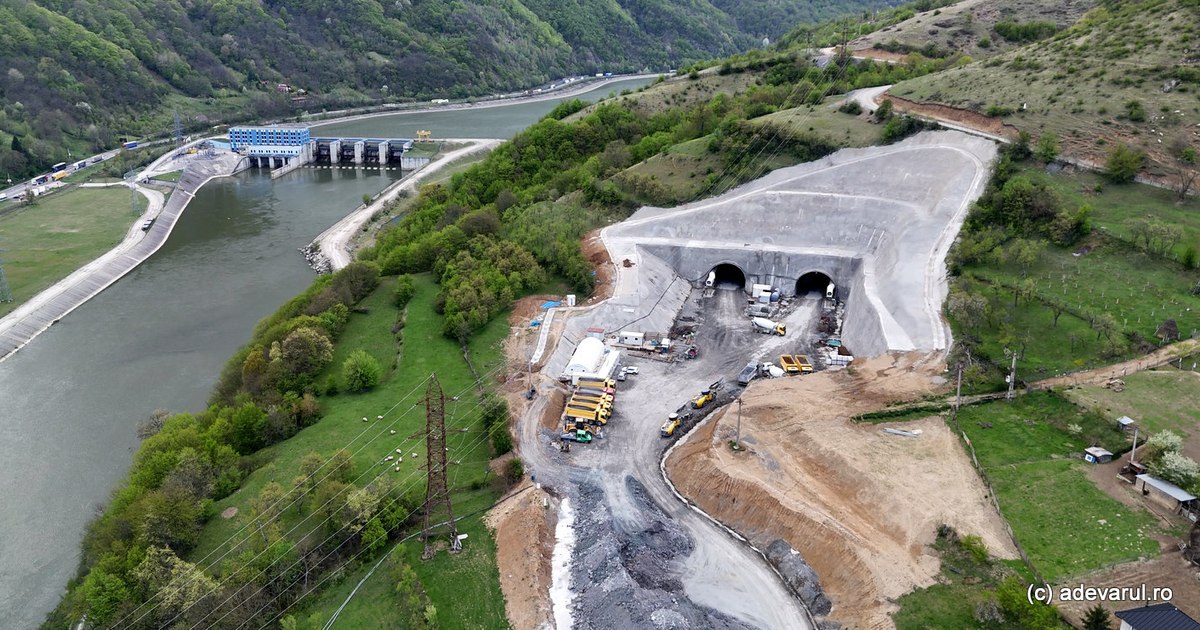
The Robești Tunnel, from the Olt Valley. Photo: Daniel Guță. TRUTH
The year 2026 brings the first large highway tunnels in Romania. The most spectacular such constructions are in the construction site, in an advanced phase, on the Autostrada Sibiu – Pitesti and the Autostrada Vestului, both of which are sections of the longest highway built in Romania, the A1 Nădlac – Bucharest, 580 kilometers long.
Romania's highways started with small tunnels and ecoducts
The first and only completed highway tunnel in Romania was also built on the A1, at Săcel, in Sibiu County. The Săcel tunnel, with a length of 340 meters, was inaugurated in 2013, on the A1 Orăștie – Sibiu highway. Its main role was to preserve the stability of the slope crossed by the highway, but also to facilitate the passage of wild animals between the wooded hills and the Cibin valley.
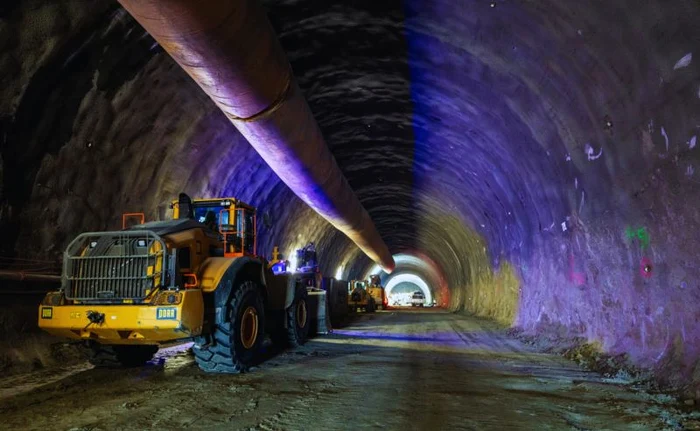
Momaia Tunnel. Photo: PORR
In the following years, no more tunnels were made. Instead, three ecoducts were built, also on the A1. The green passages, also called “passages for bears”, were designed in the west of Romania, on the Lugoj – Deva highway. The first was built in Brănișca, on the Mureș valley, in Hunedoara, and the other two, on the Lăpugi valley, near the Holdea road junction, Lăpugiu de Jos commune, Hunedoara county.
The ecoducts completed in 2019 are approximately 80 meters wide and provide the connection over the highway between the regions of the Southern Carpathians, the Poiana Ruscă Mountains, and the Apuseni Mountains, in “ecological corridors”, areas considered optimal for the movement of large carnivores. Some specialists have shown that, in addition to their role in facilitating the passage of animals, these structures also contributed to the stabilization of slopes in areas previously affected by landslides.
The first large tunnels, completed in 2026
The year 2026 will bring the first large highway tunnels in Romania, currently in an advanced phase of construction. The first of them is built on Section 4 of the Sibiu – Pitesti Highway, between Tigveni and Curtea de Argeș. The Momaia tunnel, from Curtea de Argeș, is over 1.3 kilometers, respectively 2.7 kilometers on both galleries, and could be opened to traffic in 2026, together with the 10-kilometer segment of the Transcarpathian highway.
“We are only 10 percent away from the opening of traffic on one more section of the Sibiu – Pitesti highway. At the Momaia tunnel, 1,350 meters long, the equipment and systems for traffic safety are being installed, and at the Tigveni roundabout the laying of the connecting layer has been completed. If the current pace of work is maintained, this year it will be possible to open traffic on this section approximately 6 months earlier than the contractual deadline, February 2027. It will be used this way for almost 54 kilometers of the 122 kilometers of the Sibiu – Pitesti highway (A1)”, recently informed Cristian Pistol, director of the National Road Infrastructure Administration Company.
Also in 2026, on the same A1 Motorway, but in the west of Romania, the inauguration of the 13.5-kilometer Margina – Holdea Section of the Lugoj – Deva Motorway is expected. The segment includes two tunnels, whose four galleries total 4.6 kilometers. The first tunnel, T1, has a length of 367.5 meters on one tunnel and 415 meters on the other, and the second, T2, has tunnels of 1,985 meters and 1,825 meters.
According to the Timișoara Regional Directorate of Roads and Bridges, until now, at Tunelul Mare, T2, 1,065 meters out of 1,985 meters have been excavated on the right tunnel, and 1,267 meters out of 1,825 meters have been excavated on the left tunnel, leaving less than 1,500 meters to be excavated.
The tunnel, whose galleries are each about two kilometers long, is a complex work, carried out with the help of state-of-the-art installations. The entrances and exits of the tunnel, called portals, being areas with little coverage, are made by the “cut & cover” method, with retaining walls made of bored piles and stone walls, to stabilize the slopes.
“At Tunnel 1, the excavations and shotcrete works have been completed in both tunnels, the foundations of the turned vault have been completed in both tunnels, in the gallery on track 2, waterproofing has already been installed for a length of 340 meters, and in the tunnel for track 1, waterproofing has been installed for a length of 324 meters”informs CNAIR.
Work on the western “highway of tunnels” is due to be completed in the first quarter of 2027, but authorities are optimistic about its inauguration, estimating completion in 2026.
The tunnels, dug by the NATM method
Both the Curtea de Argeș tunnel and the tunnels on the Autostrada Vestului were excavated using NATM technology, the New Austrian Tunneling Method.
“NATM combines the behavior of the rock mass with the permanent geotechnical monitoring of the underground construction during construction. The method is often also called “design during construction” or “the shotcrete method” because it allows for optimized support of the tunnel based on real-time observations of the slope conditions”the highway project shows.
The most complex highway interchange is taking shape. “It will have numerous bridges, passages and even viaducts, on three levels”
The tunnels cross sandy marls, sands and poorly consolidated clays. These conditions required an execution method that would stabilize the soil before and above the excavation face to prevent the vault from collapsing during the work and installation of the support. The resistance structures were adapted according to the cohesion and creep resistance of the materials encountered, the project states.
Seven new tunnels in the Olt Valley
Nine tunnels will be built in the coming years on the A1 Sibiu – Pitesti Highway. The Curtea de Argeș tunnel is in the final phase of execution, with a completion date of 2026. In the Olt Valley, in the Turnu Roșu gorge, seven tunnels will be built on the Boita – Cornetu section, 31 kilometers long, on the slopes bordering Olt.
Of these, the Robești Tunnel (video) has been under construction since 2025 and could be pierced this year. Explosives are used when excavating the over 900-meter tunnel. Almost half the length of its galleries has been excavated to date.
In 2026, the excavation of the second tunnel on the Olt Valley, built in the town of Boita, began. And this one, 270 meters long, could be pierced in 2026, but it will not be able to be transited until the completion of the works on the Olt Valley, estimated for 2028.
Seven tunnels will be built on the section in the Olt gorge. Two of these, one of 270 meters and another of 360 meters, are designed in the area of Boita, at the entrance to the gorge, on the right side of the valley.
Two other tunnels, with a total length of approximately 1.4 kilometers, one of them exceeding 1,000 meters, will be built in the Lazaret area, on the left side of the valley. In the same area, an ecoduct will be built over DN 7, the Olt River and the Olt Valley railway.
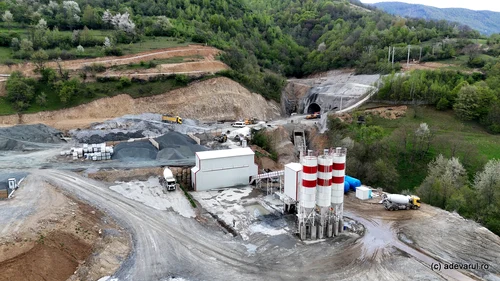
Image 1/12:
Robești Tunnel Photo Daniel Guță THE TRUTH (10) jpg
Another tunnel, 1.6 kilometers long, will be built west of the town of Câinenii Mari, on the left side of the gorge. In the area of the hydropower development from Robești, the approximately 900-meter tunnel from Robești is located on the construction site, followed by another tunnel, approximately 455 meters long.
The tunnels on the future highways
The longest tunnel on the A1 Sibiu – Pitesti highway is being built on Section 2 Cornetu – Tigveni. The builders of the Poiana Tunnel (video), with a double gallery, of almost 1.8 kilometers, work began in 2025, and at the beginning of this year the TBM, Tunnel Boring Machine, which will be used to dig it, was brought to the Port of Constanța.
Meseș Tunnel, the longest highway tunnel in Romania. What will the megaproject on the A3 Cluj – Oradea look like
From here, the components were transported to Călărași, for pre-assembly. The Poiana Tunnel will cross the Frasinet Hill, between the counties of Vâlcea and Argeș.
“Preparatory excavation and anchoring work is currently being done for the platform on which the TBM machine will be mounted that will dig the tunnel. The machine is 100 meters long and weighs 3,300 tons.” informs CNAIR.
Until now, the portals of the Poiana Tunnel have been completed, and the completion of the entire structure is expected between 2027 and 2028.
About 40 road tunnels have been planned in the Eastern Carpathians, on the Autostrada Unirii (A8) – Târgu Mureș – Iași – Ungheni, over 300 kilometers long, which will connect Transylvania with Moldova. On its most spectacular lot, Ditrău – Grințieș, 37.9 kilometers long, in the counties of Harghita and Neamț, the project foresees the construction of 19 tunnels, the longest of which is 850 meters long.
The longest highway tunnel planned in Romania will be the Meseș Tunnel, designed in the vicinity of the municipality of Zalău, in northwestern Romania.
The tunnel, with a length of almost three kilometers, will be the piece of resistance of the Autostrada Transilvania (A3) Cluj-Napoca, Gilău – Oradea – Vama Borș area, approximately 170 kilometers long. Recently, preparations began for the start of work on the tunnel that will complete the construction of the Transilvania Highway.