The sickle of the growing moon and Mars about 45 minutes after the sunset will be visible very close to each other, in just one degree – this is approximately the width of the little finger at the distance of the outstretched arm. The moon will be lit by only 19%, representing a gently glowing crescent, while Mars will be visible as a distinct reddish point in the twilight sky. They will be visible within a few hours
In addition, in this and the next night you can observe meteor streams. The peak of the Meteor Stream of Pispis-Austinides will have to be at the early hours of July 28, when you can observe up to five meteors per hour. The meteor streams of Delta Akvarida and Alfa Cacoronides will also be close to the peak of activity on the night of July 29 to 30. Akvarid delta can generate up to 20 meteors per hour, and alpha caciacornes-five more. This combination of meteor streams with the moon and Mars will create a multilayer heavenly sight, the publication notes.
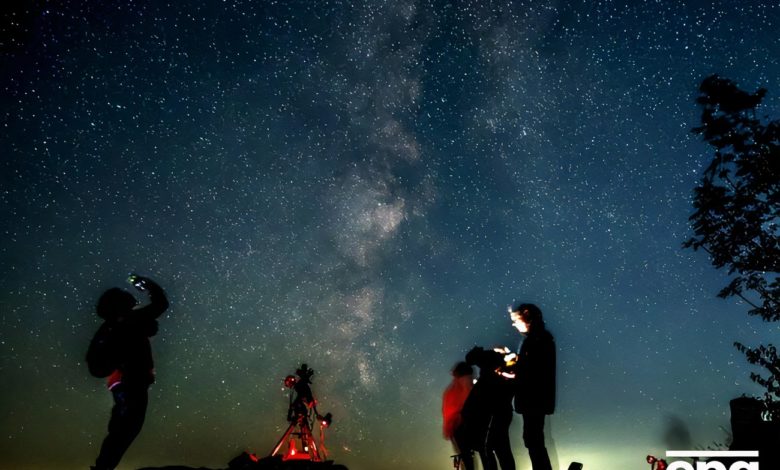
For the best observation of the night sky, it is advised to find a place with minimal light pollution, far from city lights. Since the moon will come in a couple of hours after sunset, the sky will remain dark for several hours, which will give a good opportunity to watch meteorite rain without light interference of the moon. The publication advises, after arriving at the place of observation of the night sky, give the eyes at least 20 minutes to get used to the darkness. Do not look at bright light sources, for example, on the screen of a smartphone. It is also necessary to check the weather forecast in advance in order to be confident in the clear sky on the night of July 28, since cloudiness may prevent you from seeing a heavenly phenomenon.