From the trenches, the Ukrainian soldiers condemn the “fatal mistake” that started the revolt in the country invaded by Russia


Even for Ukrainian soldiers engaged in brutal fights hundreds of kilometers from the capital, the decision of President Volodimir Zelenski to promulgate the law on agencies that make up the country's anti -corruption infrastructure in the last decade, has been perceived as a harsh blow, writes the main English publication from Kiev.
Zelenski has signed a controversial draft law that risks destroying the independence of the National Anticorruption Bureau (Nabu) and the special anti -corruption (Sapo) prosecutor's office, on the evening of July 22, while in the big Ukrainian cities there were protests against this decision. The draft law, adopted by the Parliament a few hours before-and at an unusually fast pace-subordinates the two main anti-corruption institutions to the Attorney General, who is appointed by the president of the country.
Deputies and opposition activists have warned that this will prevent anti -corruption agencies from investigating high -ranking officials without the president's approval.
“I think the government (Zelenski) once again showed its true face, which we see from 2019,” said a 32-year-old drone operator, known under the war indicative “Architect”.
“Only the war has distracted our attention,” he added.
For the “architect” and many other Ukrainian soldiers who remember the Euromaidan revolution of 2013-2014, who removed from the former President Pro-Kremlin Viktor Yanukovici and brought prooccidental reforms, including the establishment of Nabu and Sapo a year later, which happened on July 22. The “architect” was then a student and organized protests in his hometown of western country, Lvi.
While some soldiers claimed that the two agencies have never had real autonomy in practice to investigate high officials due to pressures from above, critics say Zelenski's measure practically destroyed Ukraine's struggle and obstructed the country's hopes in the EU in the future.
Reacting to increasing public indignation after thousands of Ukrainians went out on Wednesday, Zeenski defended his decision to promote the law, saying it was necessary to “clean” Russian influence.
Critics say that Russian agents could work in any government agency – and that there are reasons to be sought and investigated – but that this is not a valid reason to destroy institutions.
By doing the echo of some concerns of Ukrainian soldiers who spoke the publication in Kiev and who felt betrayed by their president, the “architect” accused the authorities of wanting to “create their own small Russia”, in a way that reminds them of Ianukovici.
“But here is Ukraine, not Russia,” said the “architect”.
“(The Ukrainian authorities) will not succeed,” he said.
An unknown number of Ukrainian soldiers have already fallen in defending the country while fighting for the future of democratic Ukraine, notes The Kyiv Independent. The June report of the Center for Strategic and International Studies in Washington estimates that the number of Ukrainian dead on the battlefield is between 60,000 and 100,000, but Kiev has not published his own victims' balance.
“The Ukrainians die every day for a country in which there must be justice and the rule of law”
Petro Kuzyk, a battalion commander in the Ukrainian National Guard, believes that democracy in Ukraine is now defended by Ukrainian soldiers, who keep their positions on the front despite the lack of ammunition, and not by government officials who, in his opinion, will “earn political points for themselves.”
By condemning this rapid decision as “a fatal mistake of the authorities,” Kuzyk said he is afraid that the abolition of the independence of the anti -corruption institutions could provide the government additional opportunities to suppress the unwanted opposition.
“The most disgusting thing is that, against the backdrop of a large number of corruption scandals involving the Government representatives, this seems to be a very primitive attempt to legalize the goods they have stolen from the Ukrainian people,” Kuduyk told the quoted publication.
A deputy company commander, from the 80 Aepurted Brigade, known under the “third” indicative, has expressed concern that this controversial measure could be “a distraction from completely different events” against Ukraine that take place on the foreign policy, such as peace negotiations.
The Ukrainian and Russian delegations meet on Wednesday in Istanbul, in Turkey, for the third round of peace negotiations, which have made minor progress from their beginning.
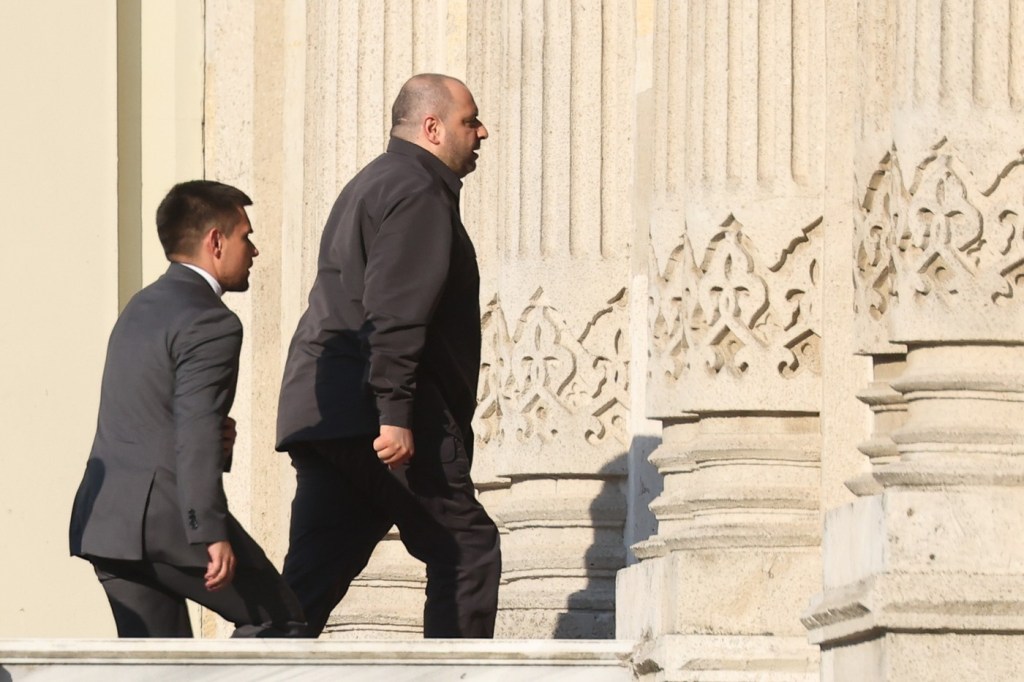 Meeting between four eyes of Russian and Ukrainian leaders of delegations from Istanbul negotiations
The “third”, which comes from the city of Donetk, occupied by Russia in 2014, is worried about the result of peace negotiations. The soldier also stressed that internal instability eventually plays in favor of Russia.
“Our weakness as a society and as state institutions represents, in fact, the power of our enemy,” he said.
Ukrainian soldiers who discussed with The Kyiv Independent said they would continue to fight regardless of the evolution of the capital.
A 31 -year -old drone operator, who uses the “Crimea” code name, the name of his native peninsula, annexed by Russia in 2014, said that Zelenski's decision to withdraw the independence of anti -corruption institutions does not affect his motivation.
“We do not fight for Nabu or someone else, but for our land, which (Russian troops) try to take us,” said “Crimea”.
“The Ukrainians die every day for a country in which there must be right and rule of law,” said a 46 -year -old infantry soldier, who participated in the Euromaidan Revolution and who uses the pseudonym.
“The elimination of Nabu and Sapo seems a betrayal of this hope,” the infantryman said.
“Returned with the signature of the Ukrainian president”
Zelenski promulgated a controversial law on Tuesday that suppresses the independence of anti-corruption agencies, a qualified initiative as a “serious recoil” by the EU, which has expressed “deep concern”, AFP and Agerpres said.
“Return with the signature of the Ukrainian president,” the Ukrainian Parliament's website indicated on Tuesday evening. The message disappeared shortly after the publication, after which it reappeared.
A high Ukrainian official confirmed for AFP that President Zelenski signed the draft law.
The European Commission, through the EU Commissioner for Extension Marta Kos, has expressed “deep concern” on Tuesday's vote, considering that it is a “serious recoil” for Ukraine in the fight against corruption.
Respecting the rule of law remains at the center of Ukraine's accession negotiations, she added.
Ukrainian security services (SBU) announced on Monday the arrest of a member of the Corruption Agency (Nabu), suspected of espionage in favor of Russia, and searched the institution's headquarters.
According to SBU, this employee of the National Anticorruption Bureau (NABU) “worked in the most elitist and most secretive unit, D-2, and Spya for special Russian services.”
Created after the 2014 Maidan Revolution, which has brought to power the prooccidental forces in Kiev, Nabu deals with the fight against corruption, an endemic phenomenon in Ukraine that affects the perspectives of this country to the European Union.
Ursula von der Leyen asked Zelenski explanations
On Wednesday, the President of the European Commission, Ursula von der Leyen, asked for “explanations” to President Zelenski, after promulgating the law that caused a wave of protests in Ukraine, AFP said.
Ursula von der Leyen “expressed strong concerns about the consequences” of this law that suppresses the independence of anti -corruption bodies and “asked for explanations to the Ukrainian government,” a spokesman for the European Commission (EC) on Wednesday.
He also stated that respect for the rule of law and anti -corruption fight are at the center of the European project.
“As a candidate country, Ukraine must fully respect these norms. There can be no compromises,” the spokesman insisted.
Several hundreds of protesters went out on the streets of the Ukrainian capital on Tuesday evening to express their dissatisfaction with the law that suppresses the independence of anti-corruption agencies.
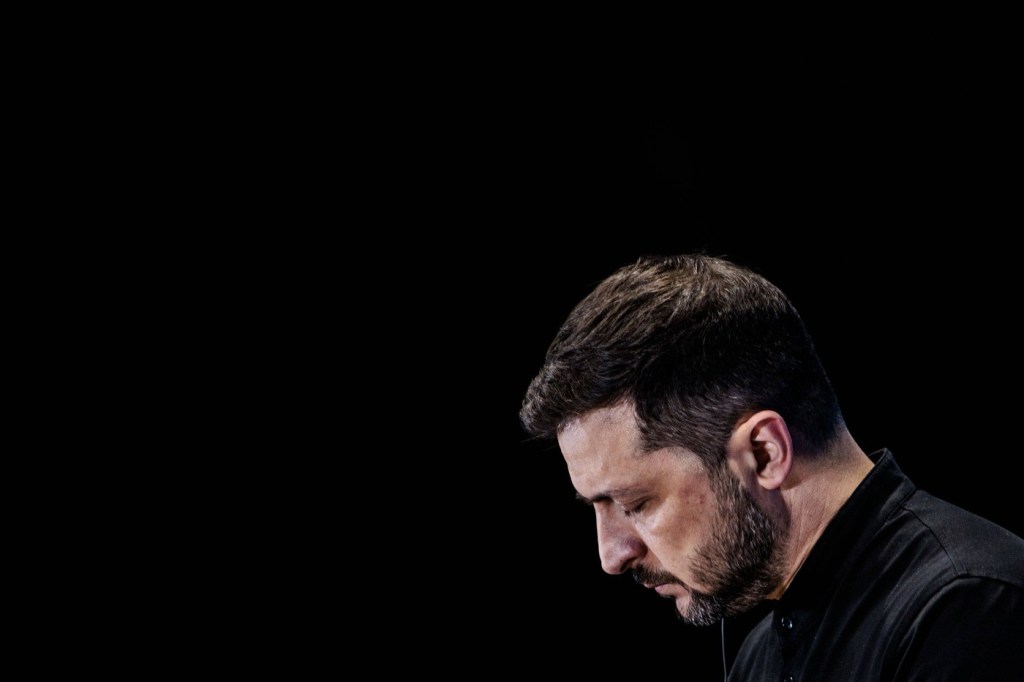 “It was a man very close to Zelenski.” The accusations of a deputy from the Ukrainian opposition after the president promoted a law that removed thousands of people in the street
Other Kiev allies, as well as NGOs from Ukraine, have expressed their concern.
The EU has already expressed its concern, the European Commissioner for Extension, Marta Kos, appreciating that it was a “serious regress” of Ukraine in terms of corruption.
“Limiting the independence of anti -corruption agencies is an obstacle to Ukraine's accession to the EU,” said German Foreign Minister Johann Wadeph.