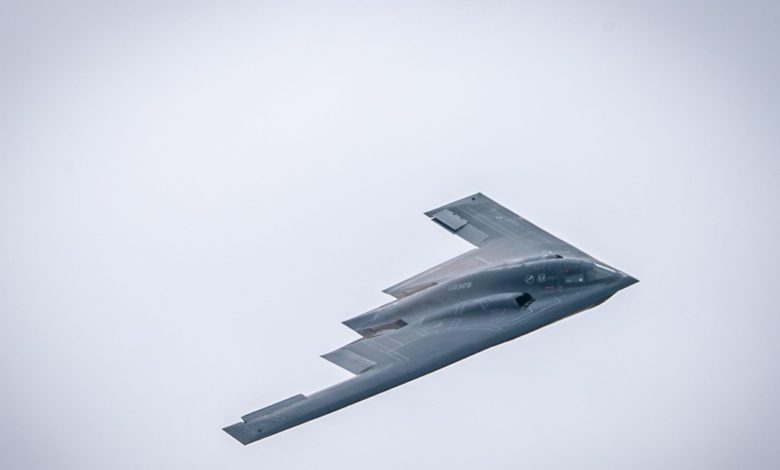
To this day, the longest known battle flight of the B-2 bomber was made by Melvin Deaile and Brian “Jethro” Neal, two pilots of the US Air Force, who in October 2001 flew 44 hours over Afghanistan to drop bombs in one of the first US answers after the attack of September 11.
They told what such an extremely long mission looks like: from stressful refueling in the air, through the fight against lack of sleep, to meals consisting mainly of dried beef.
Read also: Fordo after the attack. What does the damaged Iran nuclear center look like? [ZDJĘCIA]
The longest flight of the B-2 bomber
As Neal recalls, on September 11, 2001, he was undergoing annual exercises related to nuclear readiness. At first he thought that disturbing news about kidnapped aircraft was part of the script. However, the situation quickly explained, and his unit began to develop variants of combat missions for President Bush's administration.
The same week, Deaile and Neal were among several B-2 crews that flew to Afghanistan. Although they knew B-2 very well, they did not fly it often, because the plane costing $ 2 billion. (approx. PLN 7 billion) is too expensive to maintain it for daily exercises. They took most of the trainings on the T-38 training machine.
Despite the occasional long -distance flights, they have never participated in the combat operation before until one October night. They started from the Whiteman base, Missouri, the only station of stationing B-2, heading west to Afghanistan.
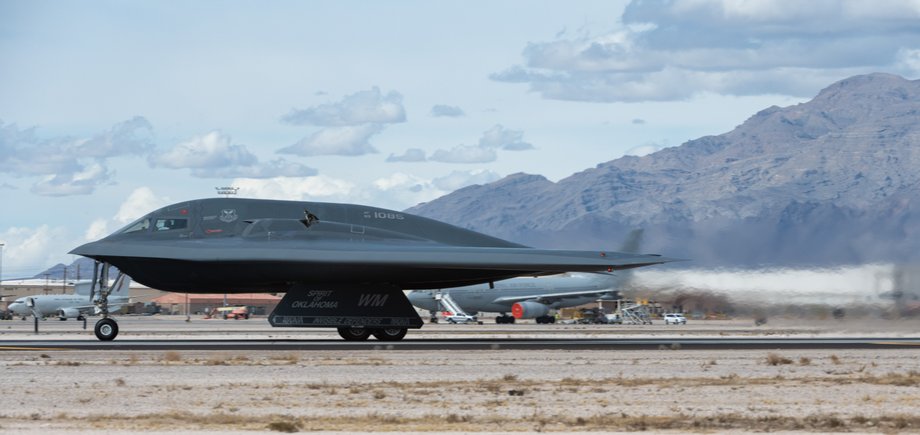
B-2 Spirit Stealth bomber starting during Bamboo Eagle exercises at the Nellis Air base in Nevada in February.
|
Senior Serial Bryson Sherard/US Air Force
Before departure, someone from the technical team arranged them to the cabin … a field bed, barely located in the back of the bomber. – When the ladder folds and you enter the cockpit, there is a flat space with a length of just over 180 cm – says Neal with a laugh. – I think that during these two days I spent a total of five hours in this bed – he adds.
Five hours of sleep for a 44-hour flight is not much. Avtors usually get a special “afterburner”, a stimulating pill called “Pill”. Neal refused to take her, but Deaile reached for his dose.
– You are young, you do something you are training for, you feel excited and adrenaline – says Neal. They tried to change with naps, but the tension before the mission did not make it easier to fall asleep. The flight towards Afghanistan, i.e. to the west, also meant the constant sun behind the glass. “It's hard to sleep when the sun shines in your eye,” he adds.
How years are bomber B-2
Neal compares a flight with a bombing to a change from a sports car to a truck. He flew to F-16 and F-22 for years, but B-2 is a completely different machine. Deaile previously knew B-52 strategic bombers, but Spirit-as B-2 is called-is a completely different league.
During the flight, it is enough that one of the pilots is active and the other can then rest. However, the start, landing, bomb dump and refueling require the presence of both crew members.
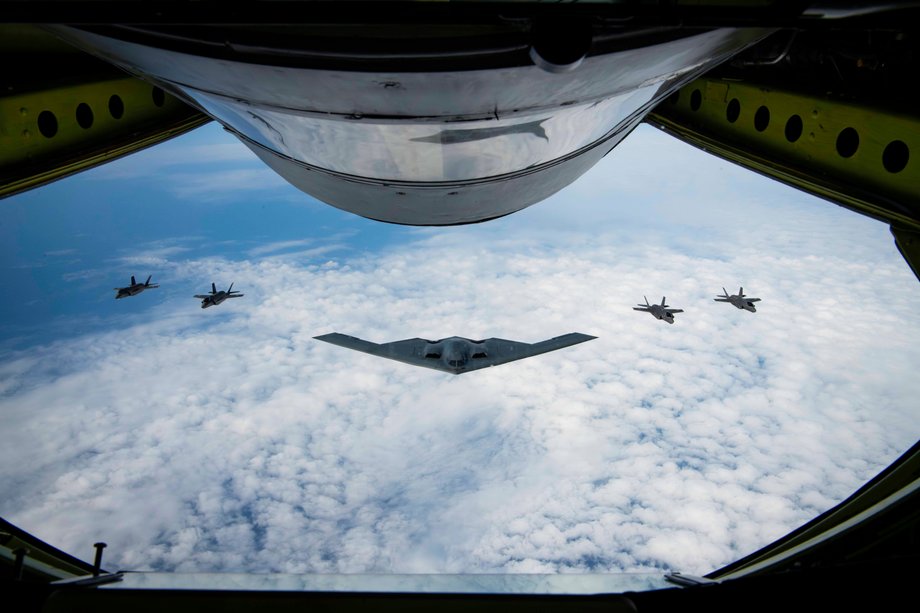
Stealth B-2 bomber SPIRIT USA Air Force flying with f-35 lightning ii joint strike fighters fighters.
|
Older Private Samantha White/US Air Force
B-2 refueling in the air is an operation as demanding as a bomber pilot as a tanker crew. Each type of aircraft requires separate certification for refueling. The process itself lasts about 30 minutes and does not tolerate errors and even a slight scratch of the hull can worsen the properties of Stealth B-2.
“It's very intense,” says Deaile, adding that they received seven refueling during the mission. Neal estimates that they used a total of approx. 340 thousand. kg of fuel JP-8. “You refuel at a speed of several hundred kilometers per hour,” he says vividly. In addition, the aerodynamic shape of B-2 generates a load-bearing force that pushes the tanker.
Record flight
It is the need for another refueling and an unexpected order from the headquarters that made Deaile and Neal enrolled in history with the longest B-2 flight.
After dropping 12 bombs and leaving the Afghan airspace, they got a sudden order to return. They were to use the remaining four JDAM bombs with a mass of 900 kg each. JDAM-Y are classic bombs equipped with a GPS guidance kit.
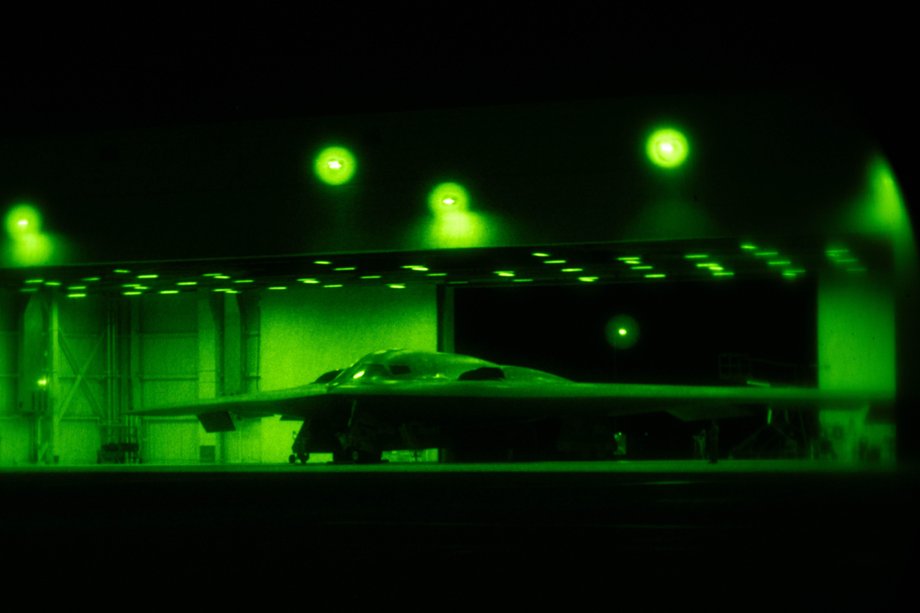
B-2 bomber preparing to attack Iranian nuclear objects.
|
509th bomb wing
To come back, they needed more fuel. A tanker was sent to them, but the crew had never refueled B-2 before. They had to wait until another certified crew was found in their area.
At this stage of the mission, none of the pilots had an appetite. They focused rather on irrigation. In the back of the aircraft they had a snack refrigerator.
After completing the task, they headed south to Diego Garcia, a small base in the Indian Ocean. They were taken over by another crew, and they themselves returned to Missouri on board a military transporter.
“It was much more convenient than the flight the other way,” laughs Deaile.
When asked by BI spokespersons, the Air Force refused to confirm whether the same plane took part in operations on Iran, citing security considerations.
Deaile admitted that it was not so much impressed by the mission itself but the perfect preparation of the whole fleet. B-2 are extremely complicated aircraft, and there are fewer than 20 in the whole US. And the mission over Iran required the involvement of a large part of them, including machines that apparent other activities.
“Air force staged one third of their bombers in one night, performing a task with surgical precision,” says Deaile. “It's really impressive,” he adds.
The article is a translation with American Business Insider edition.