The merger of Pekao and PZU is still worried. SGH expert: I don't see the risk for the financial sector

2025-08-23 09:00
publication
2025-08-23 09:00
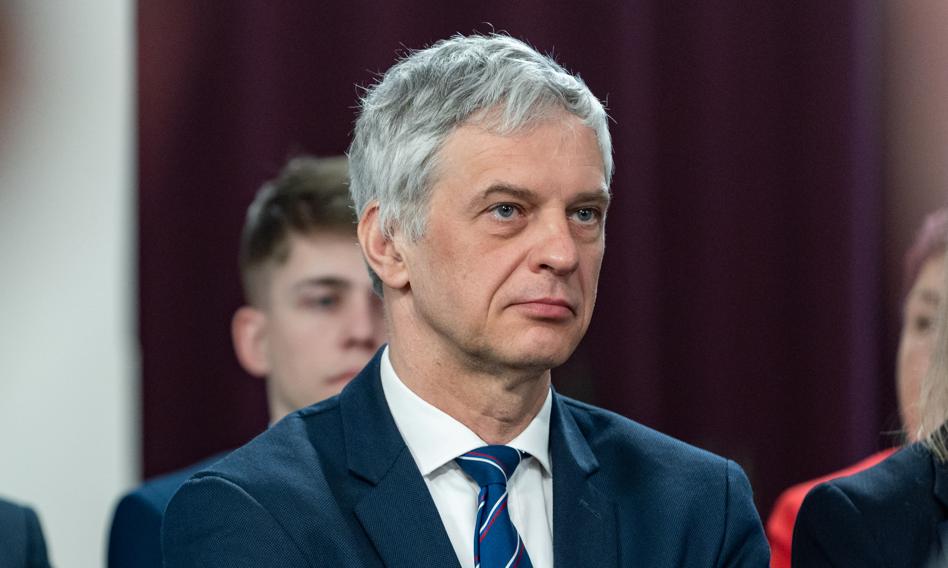
Prof. Małgorzata Iwanicz-Drozdowska from SGH estimated that she did not see any risks and threats to the financial sector in connection with the potential transaction between PZU and Pekao. It is at the initial stage and at first glance the plans of these companies result from regulatory premises – she added.
At the beginning of June, PZU and Bank Pekao signed a cooperation agreement, which will ultimately lead to the reorganization and increase in the efficiency of the capital group. The new group is to be the head of the bank, not – as before – the insurer. As reported, the effect of reorganization may be the release of a capital surplus of PLN 20 billion.
Prof. dr hab. Małgorzata Iwanicz-Drozdowska, head of the Department of the Financial System of the Warsaw School of Economics and the President of the National Association of Cooperative Banks, stressed in an interview with PAP that Estimated release of approx. PLN 20 billion of capital results from changes in provisions in terms of capital adequacy, i.e. regulatory arbitration. – Economic entities identify the possibilities of regulatory arbitration and try to take advantage of them, e.g. by changing the headquarters or allocating certain activities abroad – she explained.
She added that at first glance PZU and Pekao's plans result from regulatory premises and it is difficult – not knowing the details of the transaction – to evaluate other potential benefits. Iwanicz-Drozdowska pointed out that the transaction is at the initial stage.
I do not identify in connection with this transaction – at the level of generality as we know – threats to the financial sector. I perceive this potential transaction as a reversal of roles and taking advantage of the possibilities of regulatory arbitration – the professor pointed out.
Iwanicz-Drozdowska also said that she does not associate such reversal of roles in Europe. However, she pointed out that banks prevail in financial conglomerates operating in the European Union. – In Poland, we currently have a less popular model in which the insurer heads the conglomerate, and This is due to the fact that it was PZU that bought part of the Pekao SA shares from Unicredit (in 2017), who decided to leave the Polish market, and became its majority owner (20 % action package). For regulatory reasons, the entire structure was recognized as a financial conglomerate – she explained.

She also noticed that banks must follow the limits of concentration of commitment, i.e. the maximum amount they can involve in a given client, a group of clients or an industry, and insurers – ensure the appropriate structure of the investment portfolio.
In order for the PZU and Bank Pekao transaction to be successful, it will be necessary to divide PZU by separating the holding company and in 100 percent. A company that has been dependent on her operating activities in the field of property and other personal insurance. Then the PZU holding company would be connected to the Pekao bank as a acquiring entity.
Ultimately, Bank Pekao would be listed on the WSE, and PZU shareholders would receive Pekao shares currently owned by PZU, as well as newly broadcast shares of the bank. At the beginning of August, the president of Bank Pekao Cezary Stypułkowski said that the conditions for exchanging the action may be known at the end of the first or at the beginning of the second quarter of next year. In his opinion, the entire transaction will end at the turn of the first and second half of next year. After the entire transaction, the participation of the Treasury in the new entity would amount to about 27 percent.
At the beginning of August, the current president of PZU Andrzej Klesyk was dismissed from the function, and his duties were temporarily taken over by Tomasz Tarkowski. The Ministry of State Asset has argued the dismissal of Klesyk by the need to adapt the Company's management policy to ownership purposes and the need for more effective implementation of the development strategy. It also assured that “it does not affect the projects implemented by the company.”
The Capital Group of the Universal Insurance Company is the largest financial institution in Poland and Central and Eastern Europe. The group is headed by PZU – a listed company. The group includes, among others: PZU Życie, Link4 TU, TUW PZUW, Alior Bank, Bank Pekao. The group manages about PLN 300 billion of assets and provides services to approx. 22 million clients in five countries. The State Treasury in PZU has about 34.2 percent action.
Bank Pekao was founded in 1929 and is one of the largest financial institutions in the region of Central and Eastern Europe and the second largest universal bank in Poland. The bank's net profit in the first half of this year reached PLN 3.29 billion.
Jacek Stankiewicz (PAP)
JLS/ PAD/ MHR/