“It's a huge bet and no one knows if it will be a winner.” The stakes of Trump's ordered attack on Iran

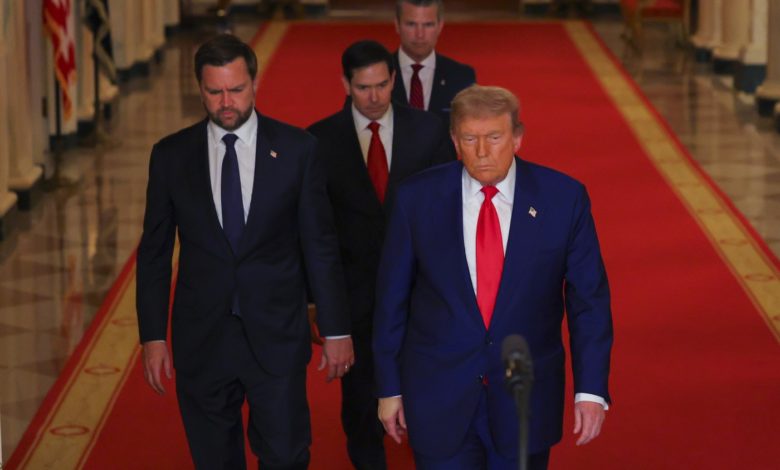
Through a military attack that his predecessors at the White House avoided, Trump risks a lot in the Middle East. The president, however, relies on the fact that the US can reject any response to a weakened Iran and have destroyed the chances of the regime to reconstruct their nuclear program, write Financial Times and New York Times.
On Saturday night, Donald Trump made the most risky bet of the four and a half years spent at the White House, attacking Iran and joining the war of Israel against the Islamic Republic.
Trump's bet is that Iran and his Middle East allies have been so weak that the US president can present his intervention as limited and successful.
It is also a bet that Tehran, intimidated, will quickly look for a solution, instead of responding.
If Trump is right, he would achieve an old American foreign policy objective – eliminating Iranian nuclear threat – and this will be done with relatively low costs.
But this movement has the risk of inflating the Middle East even more – endangering the security of US and Israel.
 Live the United States attacked Iran. Strategic bombers sent by Trump have hit Iranian nuclear sites / the first reaction of the technic: waves of Iranian rockets on Israel and threats to Americans
In addition, he would have negative effects on his inheritance, a president who promised not to attract America into new global conflicts.
“It all depends on the reaction of the Iranian regime-and it is not clear what are the capacities and will of the regime at this time. But the Iran network in the region remains operational and is able to resemble even more instability and terror if it decides to do so,” said Brian Katulis for the Financial Times, a researcher at Middle Institute.
From peacekeeper, to interventionist warrior
Trump spent much of the 2024 presidential campaign claiming that he will be a second term, resolving global conflicts instead of provoking new ones.
Under the pressure of Israeli Prime Minister Benjamin Netanyahu, he considered that the attack on Iran is both an opportunity to take advantage and as a chance to ensure his legacy as a leader willing to use American military power.
On Saturday, Trump seemed to be enjoying his transition from the isolationist to the interventionist.
And in his after -attack speech, he warned that he was ready to extend the military campaign against Iran, if necessary.
 How Iran will respond after the attack commanded by Trump against him. “Eternal consequences”
“It will be peace or it will be a tragedy for Iran much larger than the one I have witnessed in the last eight days,” Trump said. “Remember, there are many targets. But if peace does not come quickly, we will follow those other targets with precision, speed and skill,” he said.
Iran, an exception
Iran has always been an exception to Trump's non-intervening mantra.
At the beginning of 2020, towards the end of his first term, he launched a high -risk military operation to assassinate the Iranian military commander Qassem Soleimani in Baghdad.
“If the Americans are threatened anywhere, we have all these targets already identified and are ready and ready to take any measures are needed. And this refers, in particular, to Iran,” Trump said at that time.
During his visit last month in the Gulf region, the US president issued another clear warning to Tehran.
“We want them to be a wonderful, safe and great country, but they can't have nuclear weapons,” Trump said. “This is an offer that will not last forever,” he warned.
These public warnings addressed to Tehran intensified dramatically in the last week, when Trump left the G7 summit in Canada to consider attacks against Iran.
In contradiction with his position on foreign policy
Washington has tried to minimize the magnitude of the attack.
On Saturday night, Trump's advisers told the Allies that Washington's only mission was the destruction of the nuclear program. They described the complex attack as a limited and controlled operation, similar to the special operation that killed Osama Bin Laden in 2011.
“They said explicitly that it was not a declaration of war,” a high-ranking European diplomat said on Saturday evening, describing the conversation he had with a high administration official, according to the New York Times.
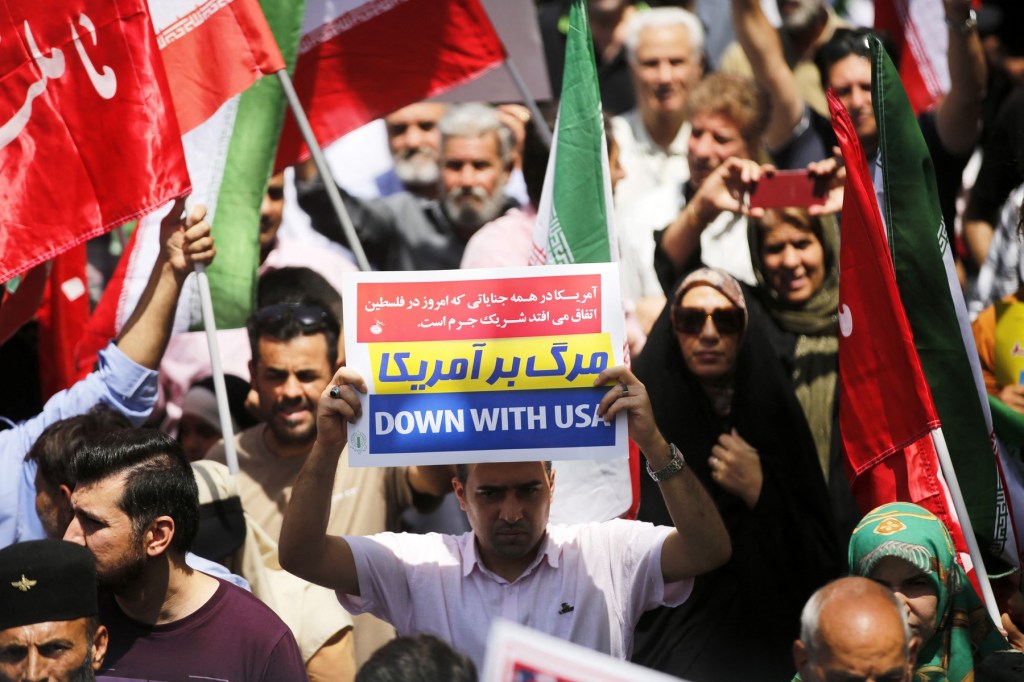 Iran swore to respond to US attacks. All his options are bleak but
Dana Stroul, a former deputy secretary of defense for the Middle East, now at the Washington Institute for the Politics of the Near East, said for the Financial Times that Trump's attitude towards Iran is in contradiction with his previous position in foreign policy.
“Trump has repeatedly expressed his preference for diplomacy, the desire to reach an agreement and the desire to be judged by the wars in which the United States is not involved,” she said.
“Here we are, five months after the beginning of the second term, and he hired the United States in a direct conflict with Iran, without providing the American people serious information about the situation of information services and without seriously engaging with the Congress. On the authorization of the use of military force,” she noted.
Critics and applause
Chris Van Hollen, a democratic senator from Maryland, expressed his anger, signaling the internal criticisms that Trump can expect in the coming days.
“The war in Iraq was also started under false pretexts,” Van Hollen said. “The United States has correctly supported the defense of Israel, but should not have joined Netanyahu in this war of choice,” he said.
Alexandria Ocasio-Cortez, the democratic representative of New York, even requested Trump's prosecution for taking military actions without the authorization of the US Congress.
But other Republican legislators have greeted this movement.
“The decisive action of the president prevents the greatest sponsor of terrorism in the world, who challenge” death “, to obtain the most lethal weapon on the planet. This is the Politics of America First in action, ”said the president of the Chamber of Representatives, Mike Johnson.
A huge bet of President Trump
Trump's action against Iran came in the context in which 51% of Americans disapprove of its performance, and 46.9% approve it, according to the average of the RealClearPolitics.com.
Aaron David Miller, former negotiator of the US State Department in the Middle East, currently at Carnegie Endowment for International Peace, said Trump has “a considerable political margin” to continue the fight, especially if Iran runs.
But he also warned that this opportunity window may not remain open for a long time, especially if the war extends or triggers a new energy crisis.
“As Americans would react to the deaths of some fellow citizens and the price of oil over $ 100 per barrel is another problem,” he said.
Jack Reed, the leader of the Democrats of the Senate Armed Services Commission, formulated otherwise. “This is a huge bet of President Trump and no one knows if he will be a winner,” he said.