The US announces the launch of a demining operation in the Strait of Hormuz. Two American destroyers entered the Gulf

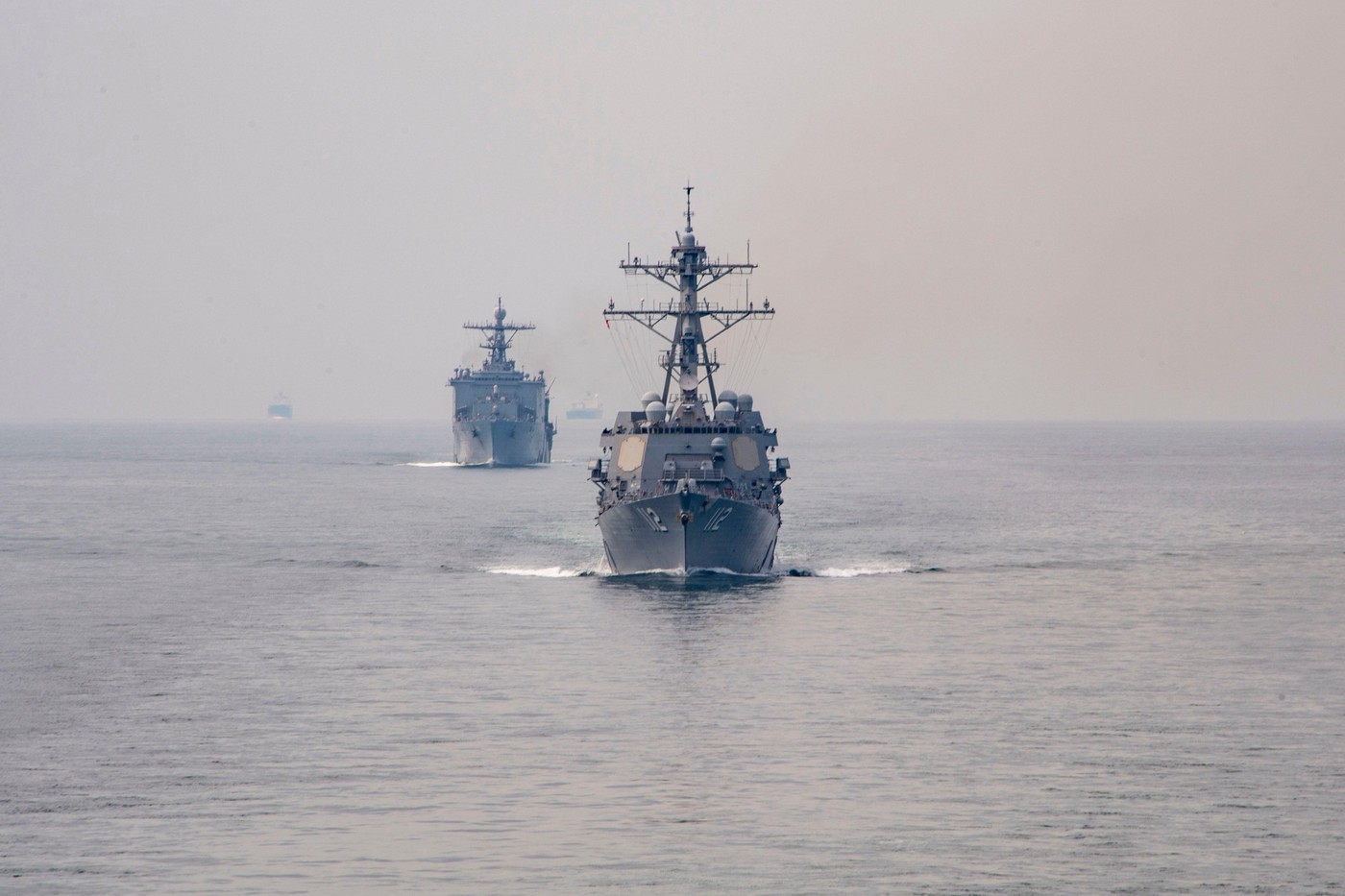
Two US Navy destroyers began a “condition-setting” operation on Saturday to remove mines placed by Iran in the waters of the Strait of Hormuz, the US Military Command for the Middle East (CENTCOM) announced, Reuters, EFE and Agerpres news agencies report.
The ships USS Frank E. Peterson and USS Michael Murphy crossed the strait and entered the Persian Gulf, “as part of a larger mission to ensure that (the strait) is completely free of naval mines” placed by the Revolutionary Guard Corps, according to a statement from CENTCOM.
“Today we initiated the process of establishing a new maritime corridor and will soon share this safe route with the maritime industry to encourage the free flow of commerce,” said CENTCOM Commander Admiral Brad Cooper.
After the first information about the penetration of the two American warships in the Gulf, Iran threatened attacks on them and demanded their withdrawal, a request sent through Pakistan, which is currently hosting and mediating American-Iranian negotiations.
US President Donald Trump said earlier on Saturday that the United States had begun “the process of cleaning up the Strait of Hormuz” and verbally attacked again the countries that rejected his request to carry out a military operation against Iran on their own to unblock this vital corridor for the export of oil and gas from the Persian Gulf.
“We are now beginning the process of cleaning up the Strait of Hormuz as a favor to countries around the world, including China, Japan, South Korea, France, Germany and more,” Trump wrote on his Truth Social platform.
In the same message, posted while negotiations are taking place in the Pakistani capital of Islamabad, Trump said Iran's “only card in their hand is the threat that a ship could 'hit' one of their naval mines” in the Strait of Hormuz. But he assured that Iran's naval forces can no longer lay mines as “all 28 of their mine-laying ships are lying on the seabed” following the US-Israeli bombing campaign launched on 28 February.
In retaliation after the war waged against it by the United States and Israel, Iran has de facto blocked this shipping corridor essential to the export of oil and gas from the Gulf, threatening to attack any ship there with ties to the US, Israel and their allies.
With the ceasefire agreed overnight between Iran and the US to halt hostilities for two weeks and negotiate an end to the war during that time, Iran has pledged to unblock the Strait of Hormuz. But the strait remained blocked, and the few ships that have since transited have done so only with approval from Tehran.
However, three oil tankers passed through the strait on Saturday, according to maritime traffic monitoring data, which would be the first oil tankers to leave the Persian Gulf after the ceasefire took effect.