From airlines and airports, to navigation systems and suppliers, each link in the aviation industry chain is vulnerable to cyber attacks, according to the last specialized report launched by Thales.

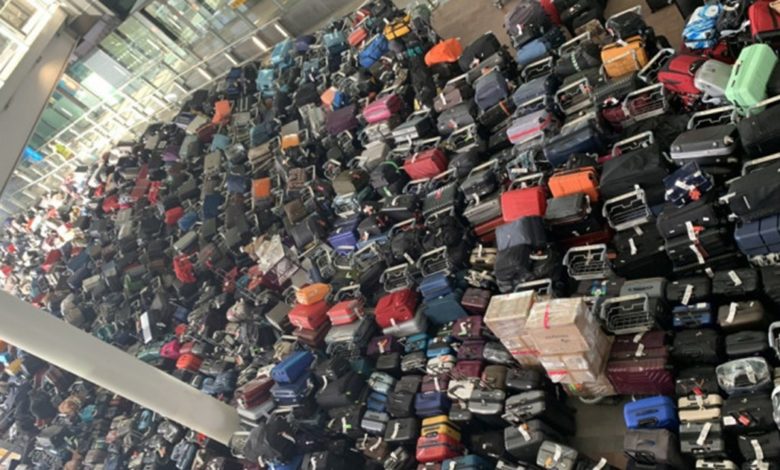
A cyber attack on an airport also affects passengers
The latest report of Thales on cyber threats in the aviation sector, launched on the Paris Aeronautical Salon (June 16-22, 2025), warns of a spectacular increase in cyber attacks, with 600% in a single year.
The report includes an analysis of the increasing convergence between geopolitical confrontations and cyber threats in a sector that has become strategic for state sovereignty, global economic stability and safe circulation of people and goods.
Based on the intelligence data in the market and the analysis of incidents, the Thales report highlights how the actors in the aerospace sector have become the main targets of the cyber attacks, which are motivated by a number of factors, including financial gains, ideological agendas and influence operations supported by States. Between January 2024 and April 2025, 27 attacks were recorded, which involved 22 different ransomware groups.
A strategic sector, interconnected and vulnerable
Although the number of attacks is increasing, the report also highlights a qualitative change in the types of threats facing the aviation sector. In addition to compromising flight operations, cyber attacks now have strategic goals, such as industrial cyber spy, access to sensitive technologies, such as aircraft and communications systems, disturbance of supply chains and capturing high value data, such as diplomatic travel and confidential transport.
These increasingly sophisticated cyber attacks target both airlines and aircraft producers and their suppliers. Notable examples include the Denial-Of-Service attack launched by a group of pro-Russian hackers on an airline and the ransomware that paralyzed the maintenance and supply systems in several strategic air transport nodes. These incidents reveal structural vulnerabilities in an extremely interconnected sector, where a single error can trigger waterfall effects on the entire chain of critical operations.
This high level of risk derives from the specific characteristics of the aerospace sector: the significant operational complexity, with critical software dependence and based on interdependent relationships between the parties involved, the intrinsic value of personal, biometric or strategic data, as well as the immediate consequences of any disturbance, such as the massive delays,
“The aviation industry has become a digital battlefield, with significant economic and geopolitical interests in the game. The sudden increase in the number of attacks requires a holistic approach to cyber security in the aviation sector, the faster integration of artificial intelligence as a reliable ally, as well as a closer collaboration between the public and the public.“, Said Ivan Fontantensky, CTO, Cyber Detection and Response, Thales.
It is expected that the global cyber security market in the field of aviation will reach $ 5.32 billion in 2025, with an average annual increase estimated at 8.7% by 2029, especially impressed by the increasing digitalization of the sector and by the intensification of the landscape of cyber threats.