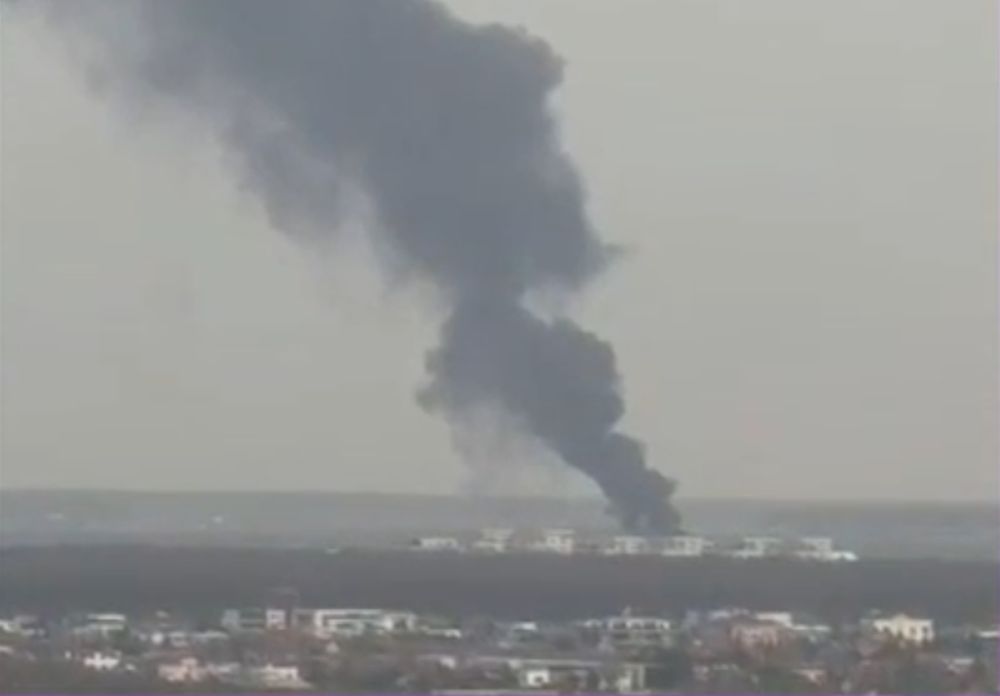
When the war will stop. What does the first signals of Iran and Israel suggest to several intense days of conflict that caused death and terror in cities

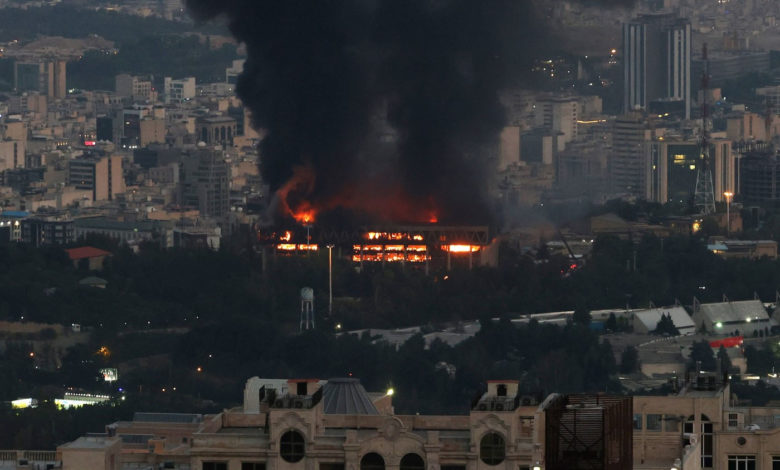
With the devastated air defense, the marginalized allies and the fired rocket arsenal, Tehran leaders are facing the prospect of accepting a return to the negotiations of the nuclear program, as the only way out of a situation that gets worse. But it is unclear for the time being where Israel is willing to go, I write Financial Times and Wall Street Journal.
The Tehran is still concerned with negotiations as a possible way to overcome the crisis-a way to save its reputation and to keep its theocratic regime, diplomats and analysts quoted by Wall Street Journal said.
Iran has canceled the negotiations with the US scheduled for Sunday, but as Israeli attacks intensified, he reported through intermediaries that he is open to diplomacy.
Tehran had already anticipated this in public. “In the future, if the aggression ceases, it is obvious that the conditions for a return to diplomacy will be created,” said Iranian Foreign Minister Abbas Araghchi on Sunday in front of foreign diplomats.
President Donald Trump also said that he wants an agreement and cessation of the war. He confirmed on Monday that Iran had contacted intermediaries.
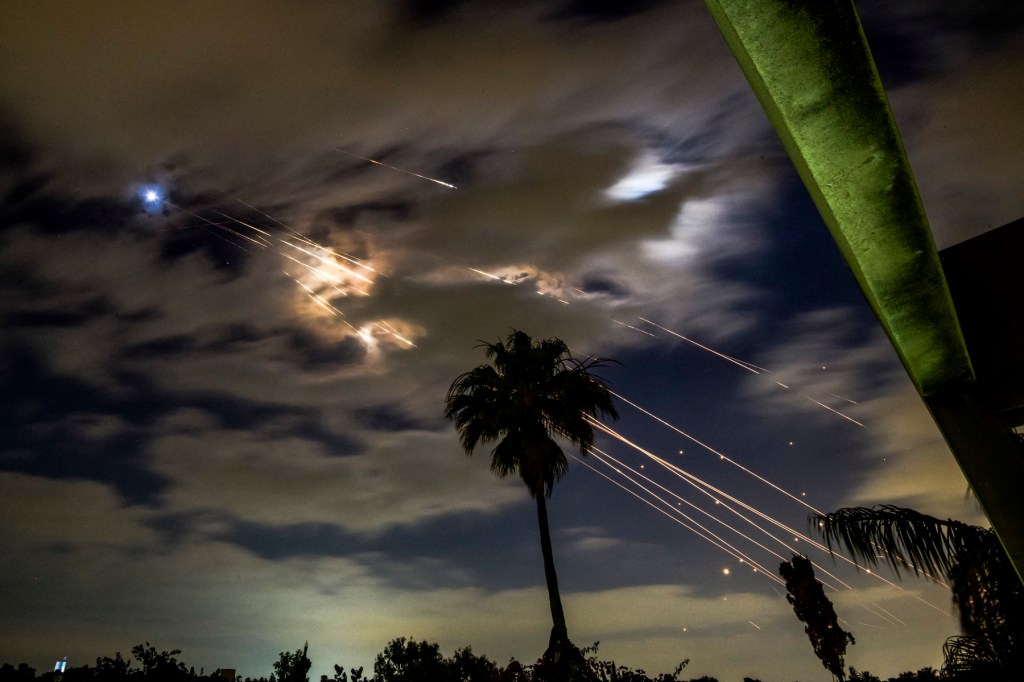 Live Israel-Iran war, the fifth day: Trump demands the “unconditional surrender” of Tehran / Israel says he “hit the heart” Iran / Iranian army announces “punitive operations” / new ballistic missiles, sent to Israel
“They would like to discuss, but they should have done it before,” Trump told the G7 summit in Canada. Trump later said he would leave the meeting one day earlier to deal with the Middle East crisis.
Saudi Arabia and other countries in the Persian Gulf, worried about a possible regional war, also made pressure on Trump to determine the Israelis to stop their campaign.
While Iran has been weakened by attacks, it remains unclear how much he is willing to compromise on the circumstances or the substance of the negotiations.
Israel is not in a hurry
But an Israeli official said on Monday that Trump has not yet made pressure on Israelis to stop his military campaign. “Trump does not tell us to stop,” said Finance Minister Bezalel Smotrich.
Given that Israeli fighting aircraft can freely fly the Tehran, and Iranian counterattacks cause minimal damage, Israeli leaders have few reasons to stop their attack before doing more to destroy Iranian nuclear sites and to further weaken the power of the theocratic government.
Israeli Prime Minister Benjamin Netanyahu said the attacks will continue until the nuclear program and the Iran's ballistic missiles were destroyed and has not given any sign to stop.
He also said that the change of the regime is not an objective, but it could be a result, given the weakness of the Iranian leadership.
Israeli officials said the army has prepared at least two weeks of blows.
Israel will carry out “a few surprises” during this week, which “will make the operation seem almost simple,” said the ambassador in the US, Yachiel Leiter.
The diplomatic emissary referred to the Israeli operation in September last year, when thousands of pages used by Hezbollah agents exploded simultaneously in Lebanon. The attack of Israel was the result of a complex operation prepared for months.
A war of cities
Israel pointed out that Iran's operation could take several days, although it has not set a deadline.
Both camps are aware that a US intervention could be decisive, with Washington having ammunition capable of destroying bunkers, in principle strong enough to penetrate the fort, a nuclear installation buried under a mountain.
But, for the moment, Israel and Iran seem to be employed in a conflict carried over 1,000 km or more, not with ground forces, but in the sky-a battle that consumes military stocks of drones, rockets and interceptors.
Sid Kaushal, a military expert at the Royal United Institute, noticed for the Financial Times that Israel and Iran bears “a war war”, which would be difficult to support for both camps if the US remains outside the conflict or if peace negotiations were not resumed.
“The aerial superiority of the IDF (Israel's defense forces) offers advantages, although the distance and wear of the platforms will eventually have a say,” he said.
Although Israel can cause more damage to Iran, the Islamic Republic has shown that it is capable of absorbing huge losses – as happened during an eight -year war with Iraq in the 1980s.
“Iran is prepared for any unforeseen situation,” said Ahmad Vahidi, counselor of the Iranian revolutionary guard commander, for the local media. “We are not concerned about a prolonged war,” he said.
At least 200 people have already died in Iran.
The difference between the attacks of the two countries
Israel could also be trial, although Prime Minister Benjamin Netanyahu assured the war will last “as much as”.
Until Monday, Israel recorded 24 dead and 592 injured, according to the prime minister's office.
Military experts can only guess how many rockets Iran has and their sophistication level, which is evaluated together with the number of interceptions of Israeli systems.
The stratified defense systems of Israel – Iron Dome, David's Sling and Arrow – have shot down the vast majority of Iran's missiles and attacks, but interceptor reserves are not infinite.
And as Ukraine demonstrated, the longer a conflict lasts, the more interception rates tend to become weaker.
 “Extremely dangerous”. The risks that appeared as Israel liquidates one by one to those in the restricted circle of Ayatollah Ali Khamena
“The question that bothers me is related to Iranian stocks (rockets and launchers) – how long can I continue to launch ballistic missiles at this rate?
McGuinness said that Israel's attacks on Iran were precise and destructive, while most of the attacks of Iran were more inefficient.
However, Netanyahu qualifies Iran's missile attacks as an “existential threat” for Israel, and a prolonged missile bombing and the daily victims would be a factor that could limit the duration of the Israeli offensive.
How many rockets does Iran have? How many interceptors does Israel have?
The calculations on the number of Iranian missiles were made and restored – and did not necessarily have the same results.
Iran, I believe analysts, began the conflict with over 2,000 missiles capable of reaching Israel, according to IDF.
In four days, the Israeli government said Iran has launched over 350 missiles. Perhaps even more significant, the daily estimates of the IDF suggest that the rhythm has decreased after the first night. This could indicate that Iran is trying to preserve rockets for a longer war, having difficulty launching them under the Israeli fire – or both.
Danny Citrinowicz, a specialist in Iran at the Institute for National Strategic Studies in Tel Aviv, has estimated that Iran has over a thousand missiles capable of hitting Israel. “But they have to calculate the time period in which they will have to cope with Israel,” he said.
“I'm not sure it will be a short war,” he said.
Iranian security personalities have suggested that the most destructive rockets of Tehran are still in reserve – probably waiting for the stock of Israel's interception.
“The information about the reduction of Iran's missile stocks are ridiculous,” said Iranian military counselor Vahidi.
“We have not yet fully exploited our strategic missile capacity. We will use our modern armament, including new generation missiles when we consider it necessary.”
The result will probably depend on “events with low probability, but with high impact”
There is no information about how many of these advanced missiles were built and they were destroyed by Israel.
These include solid fuel rockets with maneuverable foci, such as Fattah-1 and Haji Qassem, and Khorramshahr, a liquid fuel rocket that can carry a 2-ton fossa, Iran announced earlier this year.
On Monday, IDF said it destroyed one third of Iran's missile launchers.
“If IDF can penetrate and destroy the launchers in the depths of Iran before they can pull and do this constantly, it will largely cancel the Iran's response capabilities,” said Decker Eveleth, from the Naval Analysis Center in Arlington, in a post on X.
However, to do this, he said, Israel should continuously maintain air domination on Iran – a difficult long -term perspective.
The military domination in the campaign will not guarantee that Israel will reach its campaign goals. “They must destroy the nuclear program themselves or cause unacceptable damage to Iran, and I do not know what unacceptable damage would look,” Eveleth said.
Finally, the result will probably depend on “low, but high impact events,” said for the Financial Times Jon Almarman from the Washington International and Strategic Studies Center, such as an attack on mass victims or an event that causes a deep political division.
“Military operations have political consequences, but wars have deeply political objectives and results,” he said.
“This is a more political war than the majority, and the traditional military wear indicators seem to be unpaid,” added the expert.