The 3 things that lack the euro currency to overcome the US dollar, in the vision of the head of the European Central Bank

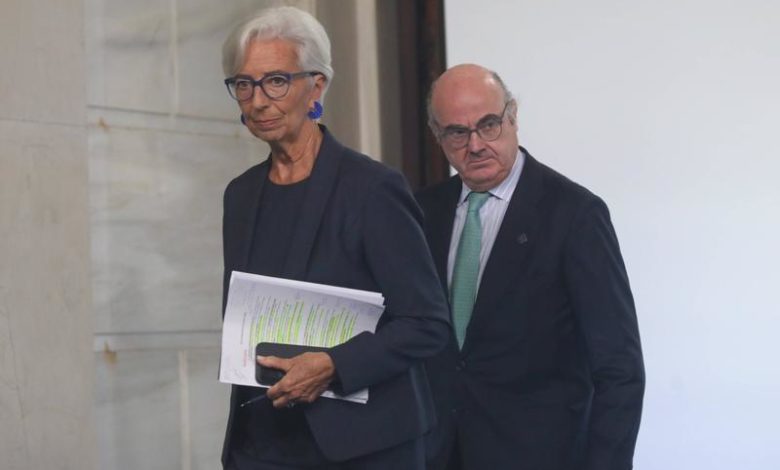
We are witnessing a deep change in global order: open markets and multilateral rules are fractured, and even the dominant role of the American dollar, the cornerstone of the system, is no longer sure. Protectionism, void thinking and bilateral power games take their place, writes Christine Lagarde, ECB president, in an opinion in the Financial Times.
The uncertainty damages the economy of Europe, which is deeply integrated into the global commercial system, with 30 million jobs in the game.
But changing in progress also offers opportunities for Europe to take on greater control over one's destiny and for the euro to gain importance worldwide. Currently, the Euro is the second most used currency in the world, representing 20% of the global currency reserves, compared to 58% as the US dollar has.
Increasing the global status of the euro would bring tangible benefits: lower loan costs, reduced exposure to foreign currency and isolation from sanctions and coercive measures, writes Lagarde.
But such a step towards an increased international importance of the euro will not occur from the blue: it must be worth it. As in previous periods, the current concerns related to the dominant currency do not yet trigger a major change to alternatives. Instead, they are reflected in an increasing demand for gold.
In order for the euro to reach its entire potential, Europe must strengthen three fundamental pillars: geopolitical credibility, economic resilience and legal and institutional integrity.
First of all, the global position of the euro is based on the role of Europe in commerce. The EU is the largest trader in the world-it is the number one partner for 72 countries, representing almost 40% of the global GDP, writes the head of the ECB. This is reflected in the share of the euro as a billing currency, which is about 40%. The EU must use this position to its advantage by concluding new commercial agreements.
The “exorbitant privilege” of an international reserve currency, referred to by Valéry Giscard d'Estaing in the 1960s, comes with responsibilities.
In order to avoid the liquidity deficit in euros abroad, Lagarde proposes to expand the swap and repo lines to key partners to guarantee the smooth transmission of its monetary policy.
“The real confidence, however, is based on concrete facts. Investors are looking for regions that respect their alliances. It has been shown that such guarantees can increase the share of a currency in the currency reserves by up to 30 percentage points.
Secondly, the economic force is the spine of any international currency. Successful currencies, adds Lagarde, usually offer a number of key features: a strong growth, to attract investments; deep and liquid capital markets, to support large transactions; and a large offer of safe assets.
But Europe is facing structural challenges. Its growth remains persistently low, its capital markets are still fragmented and-despite a solid aggregate fiscal position, with a 89% debt report, compared to 124% in the US-the offer of safe and high quality assets is behind.
In order for the euro to win the status, Europe must take decisive measures by completing the single market, reducing regulatory tasks and building a solid capital market. Strategic industries, such as ecological technologies and defense, should be supported by EU coordinated policies. The common financing of public goods, such as defense, could create safer assets, believes ECB president.
The confidence of investors in a currency is eventually related to the power of the institutions that support it.
It is true that the EU is not easy to understand from the outside. But its structured and inclusive decision -making process guarantees the balance of powers, stability and certainty of policies. Respecting the rule of law and the independence of key institutions, such as ECB, are essential comparative advantages that the EU should capitalize on.
In order to further strengthen these advantages, we must reform the institutional structure of Europe. A single veto should no longer be allowed to stand in the way of the collective interests of the other 26 Member States. A more intensely qualified vote in critical fields would allow Europe to speak with one voice, writes Christine Lagarde.
History teaches us that regimens seem durable – until they are no longer. “Changes in the domination of the global currency took place before. This moment of change is an opportunity for Europe: it is a” euro “moment. In order to capitalize on and strengthen the role of the euro in the international monetary system, we must act decisively as a united Europe that assumes greater control over its own destiny, ”she concludes.