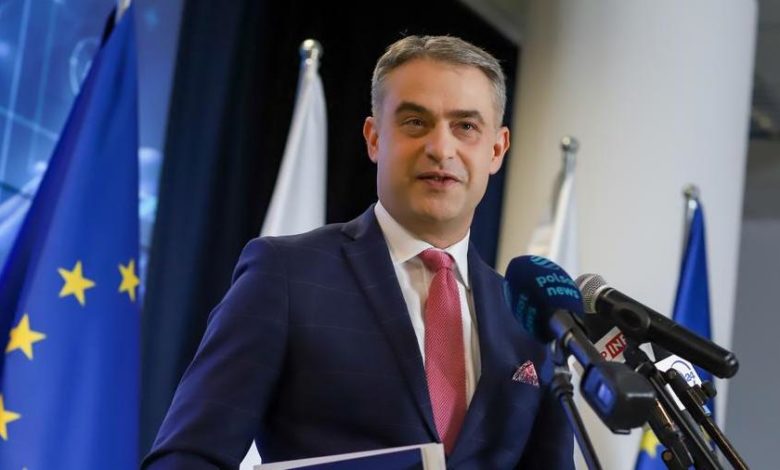
There will be no money for digitization in Poland – assured Deputy Prime Minister, Minister of Digitization Krzysztof Gawkowski in Gdańsk. He noted that the government's goal is to completely give up paper in administration until 2035. He also added that he was a supporter of electronic vote.
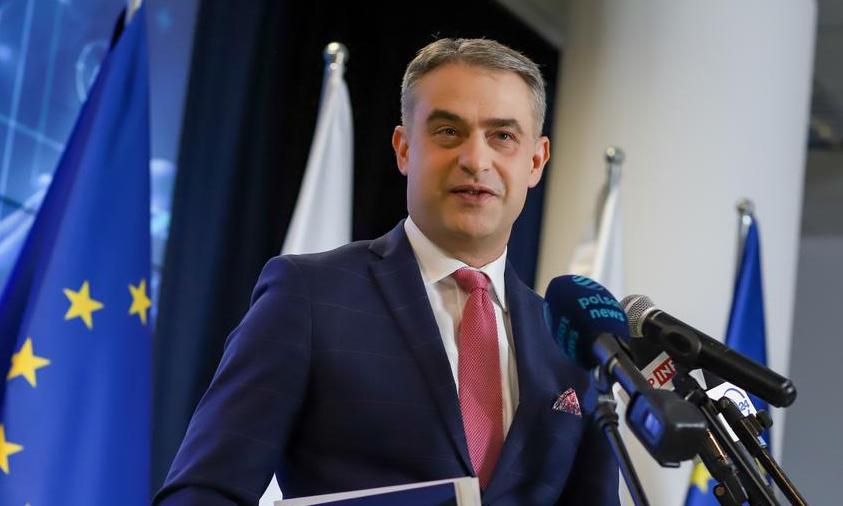
Gawkowski visited the Pomeranian Voivodship Office on Monday, where he met with the Pomeranian voivode Beata Rutkiewicz and the management of the office. The main topic of conversations was the digitization of public administration, cyber security and the future of artificial intelligence in public services.
During the press conference, Gawkowski emphasized that the Voivodship Office in Gdańsk is one of the most technologically advanced in the country. He pointed out, among others for the implementation of the electronic system management of documentation, improving administrative processes and eliminating paper documentation.
“On the map of all these offices in the country, which are a member of government administration, the Pomeranian Voivodship Office is an unit that shines with a glow. I talked to the voivode about how to transfer these good practices to other regions,” he said.
He added that the digitization of voivodship offices is progressing on several levels. “First of all, on improving work, which relate to, among others, electronic documentation management. Secondly, processes related to the implementation of electronic delivery. Third, matters that relate to services that could be digitized in offices in order to manage processes faster and move away from paper” – said the deputy prime minister. As he noted, the government's goal is to completely depart from paper in administration until 2035. “This is a real goal and specific saving,” he added.
The minister announced that the Voivodship Office in Gdańsk received over PLN 6 million as part of programs supporting cybersecurity. These funds are to be used to increase the protection of critical infrastructure and counteract cyber attacks, the number of which – as he pointed out – is the highest in Poland in the entire European Union.
The deputy prime minister reminded that on Monday he also visited the Gdańsk University of Technology and the Institute of Communications, where he talked about the role of artificial intelligence in public administration and the potential for cooperation between science with government and local government administration. “We are talking about the future that has already begun – about artificial intelligence, digital state and interoperability of systems” – he noted.
The minister announced further investments in the digitization of administration and encouraged local governments for greater activity in obtaining funds from government programs. “There will be no money for digitization in Poland, you only need to want to reach for them. There are many programs addressed to schools, such as intergenerational school, such as funds regarding a nationwide computer network, such as cyberbeling activities. All this can also serve local self -governments” – he emphasized.
During the briefing, Gawkowski referred to the speech of Prime Minister Donald Tusk planned for Wednesday and voting on the vote of trust for the government. “This is an important moment. The prime minister will present what has been implemented for the first 18 months of rule and what are the further plans,” said the head of the department of digitization. He emphasized that for the left a key point is the development of housing for rent.
“This should be a national program. The point is for citizens to have easier access to apartments without having to indebted their lifetime and that the prices of apartments do not go up. Investments in social and municipal construction are needed,” he said.
When asked about the possibility of introducing a digital voting in Poland, Gawkowski admitted that he supported such a solution, but he reserved that its implementation requires supra -artistic political consent and building social trust. In his opinion, we are technologically ready for it, politically- not yet.
“If we want to introduce electronic election management, an election process, we must be aware that we all agree to it. Today I do not see such consent. Computer systems, voice management systems can be implemented, but if there is no social trust, because politicians recognize that this is a good place to make politics and saying that someone has falsified elections, it is better to wait,” added Gawkowski.
Referring to the new EU provisions regarding age verification on the Internet, the minister pointed out that the obligation to adapt to EU law rests on technological platforms, and the department of digitization will enforce the compliance with the law.
From July 1, residents of the European Union will have to use the new age to verify age to access selected websites. The new regulations will include not only pages with content for adults, but also popular social platforms such as Facebook, Instagram, X (formerly Twitter), YouTube or Tiktok. The Age Verification (AV) application is to be a temporary tool that will replace the digital identity portfolio in the future. (PAP)
anm/ par/