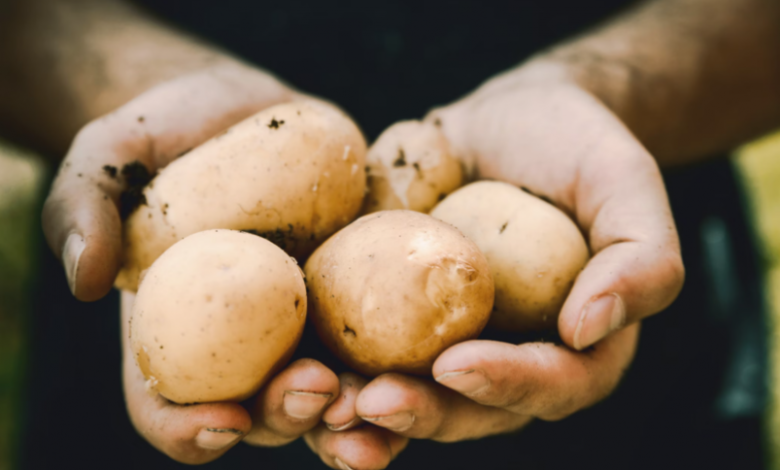
Experienced summer residents are sure that they know everything about the cultivation of potatoes. However, one simple and effective method, known in the 19th century, has long forgotten. Today it again becomes popular due to its effectiveness, simplicity and minimal costs.
The essence of the method

The technology is based on the principle of mulching: tubers are laid out directly onto the surface of the earth, slightly sprinkled with earth, and are covered with a thick layer of straw (30-50 cm) on top. This method of planting helps to retain moisture, eliminates the need for hilling and significantly reduces weed growth.
Why it works
Having decomposed, straw releases carbon dioxide and creates a favorable environment for useful microorganisms and rainworms. Under it, the soil remains loose, wet and warm. These are ideal conditions for potato growth.
What materials are suitable for mulch
1. Straw. Suitable for neutral and alkaline soils, but increases acidity. For balance, it is recommended to add nitrogen fertilizers or humus.
2. Compost. Neutral, nutritious, universal.
3. Sawdust and bark. The soil is acidified, but they should only be used after prolonged composting.
4. Peat. The soil loosens well, but can overheat.
5.Small grass. It is rich in nitrogen, requires preliminary drying and cleaning from seeds.
How to plant it correctly
Choose a smooth plot of the sun. Lay the tubers in rows, slightly sprinkle with earth, then cover with straw. With a deficiency of material, you can plant tubers in shallow holes and covered with a smaller layer. To get an early crop, use sprouted tubers 2-3 weeks before planting. Hold them in the light in a wet mixture from the ground, peat or sawdust.
Advantages
1. This approach will allow you to get a crop of large and clean tubers without damage.
2. This will simplify the collection of potatoes, as the tubers lie almost on the surface.
3. The soil will improve every year.
4. The method works great in heavy clay areas.
The old “village” method works great and with the right approach provides productivity no worse than modern agricultural technologies.