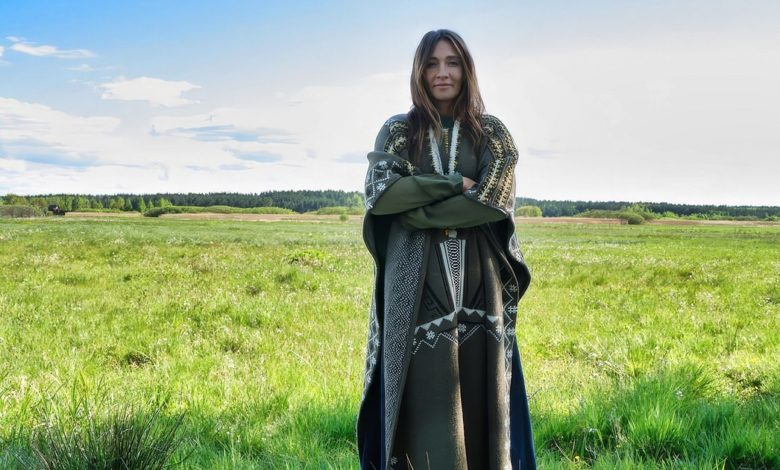
Mikołaj Kunica, editor -in -chief of Business Insider Polska: You rarely speak publicly. I get the impression that you will shun the media. What has changed recently?
Dominika Kulczyk: A lot of good has happened in my professional life recently. Polenergia was a great success, which is a milestone in the development of maritime wind energy in Poland. It is an undertaking that will be important for the entire Polish economy. Thanks to it, new jobs will be created, we will contribute to the protection of our mother Earth and provide Poles with healthy green energy. I decide to speak about what is done, and at the same time I am careful in making promises. And that's why I decided to speak and tell what is going on in Polenergia at the moment.
See also: Here are 1 percent earnings the richest Poles. We estimated it [KWOTY]
So we'll talk about this project. In mid -May, one of your companies (Dominika Kulczyk has 42.95 percent of Polenergia with a market value of PLN 2.3 billion – ed.) She announced a new project. Together with the industry partner, Polenergia intends to build two wind farms with a total power of 1400 MW in the Baltic Sea. This is a very complex project, many things can go wrong, both at the stage of implementation and then operating. We are talking about erecting 100 installations in the Baltic Sea exceeding the Warsaw Palace of Culture each.
As many as 100! [uśmiech] Yes, this project is incredibly ambitious. And it is from the category of those that I like to implement the most. We have completed the next phase of our wind farms in the Baltic Sea guaranteeing financing for over EUR 6 billion, i.e. PLN 27 billion. This is behind the decisions of over 30 financial institutions from around the world made in – you have to admit – quite uncertain times. This proves that our investors believe in what we do in Poland, in Polenergia and believe in this project. I will also reveal that there were many times more willing to participate in its financing, which is unique and makes me make a good decision to implement offshore in Poland from private funds. The world believes in Polish offshore and I also believe in Polish offshore, just like my dad when he started this project 15 years ago.
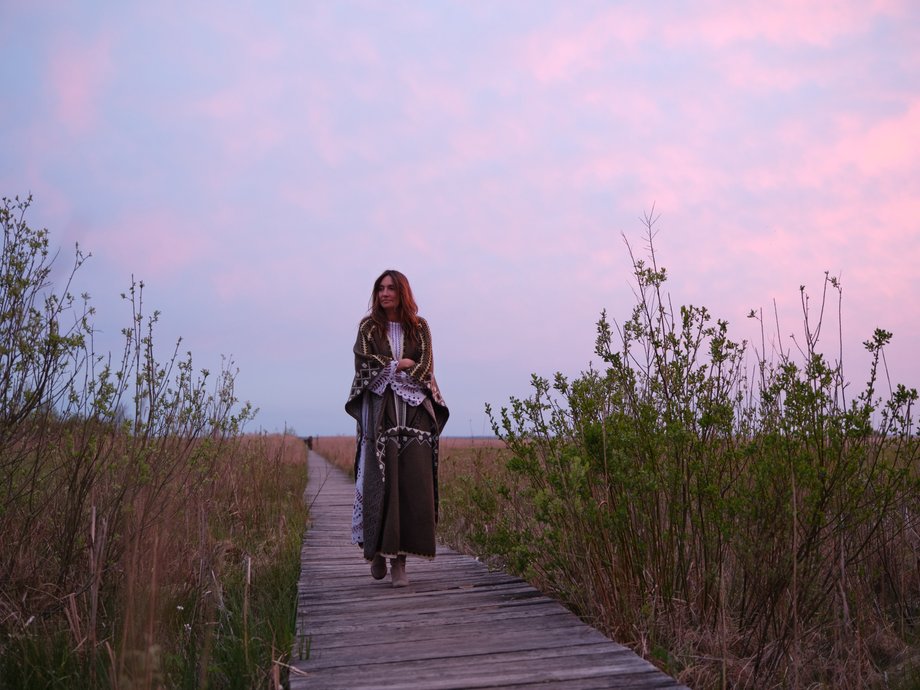
Dominika Kulczyk
|
private archive
Polenergia and Norwegian Equinor will implement an investment in the Project Finance model. This is a complex structure implemented outside the company's balance sheet. So we are dealing with a complex project from both technical and financial engineering. How long and what team did he work on?
The pace of work on this project and the commitment of the whole team were unusual. Last spring we turned on After the change of Polenergia, a new team of brilliant managers went to work. This required extraordinary effort and focus of all our select crew. As I mentioned, 30 institutions from several continents were involved in the project. We have collected world cream, and letters willing for a joint investment we could finance several such projects. They are financiers, lawyers, controllers, people from structuring projects supported by two giant law firms.
Industry advisors were also needed specializing in assessing risks at the stage of construction and subsequent operation, experts in the field of wind forecasts, energy prices, financial security security or even from the Complence area, because it is worth remembering that investors must have a guarantee that the project meets all CSR criteria.
This only shows how high the investment in this scale is and how complicated this business and financial puzzle is. On the Polenergia side, Equinor and entities cooperating with us, we talk about a team counted in hundreds of people. We worked tens of thousands of hours, talks and activities were also conducted in Warsaw, London, Oslo, Paris and several other important places in Europe. And I am very grateful for the enormity of energy and heart.
Let's talk about the economics of this project. The first auction for the supply of energy from sea wind farms has not yet been held in Poland. So how do you assess the profitability of these two farms? How much will green energy from the Baltic cost?
Our farms Bałtyk 2 and the Baltic 3, as well as similar implemented by PGE and ORLEN are among the so -called first offshore phase, where the Contract for Diżerce mechanism was used, a differential that causes a formula to be provided for 25 years, under which the state can secure such a project. In the energy sector, private business cooperation is very important. Without the state, it is difficult to imagine energy, but it is difficult to imagine a healthy economic system without private business. Because only in such conditions of cooperation can large infrastructure investments be implemented. Auction is ahead of us, probably organized at the end of 2025, to the second phase of offshore, in which we start with the Baltic project 1. It will be an important moment for the Polish energy sector.
In Polenergia's portfolio it will be a very significant act. At the end of last year The group had PLN 1.5 billion in cash, and additionally funding under the KPO in the amount of PLN 750 million. In the first quarter of this year. She earned a purely PLN 60.5 million. If the topic with wind farms burns, then Polenergia will advance to a much higher league. What is the far -reaching plan running out of the farm horizon in the Baltic Sea?
I have always believed in the visionary ideas of my dad, in which – let us be honest – almost no one believed 15 years ago. Jan Kulczyk already stated that it would happen for sure, because green energy is needed to Poland. Thanks to his courage and vision today I have this license and I consistently implement and develop this extraordinary project. Earlier there were many more question marks, but it was still a project with a significant risk, so it was definitely a jump for me, and I built wings along the way [uśmiech]. We are talking about PLN 27 billion to a violently private funds. This is a gigantic project that has not been in our family yet. I am very proud, I feel great responsibility and believe in the success of this undertaking.
Given the size and quality of assets from your portfolio, you could implement investments in virtually any part of the world. Meanwhile, you choose Poland and the Baltic Sea, which, thanks to the events in Ukraine and the aggressive policy of Russia, is not the safest aquure in Europe at the moment. Why?
This is a completely natural choice for me. This is my heritage. I have an economic patriotism vaccinated and I think that it is important that we create green energy in counterattack to coal. As a child, I listened to great projects that were created in the country and were building a strong position of the Polish economy on the world map. Today, as a co -responsible person for energetic business in our country, I am lucky to implement them myself.
For several months, a discussion has been back about whether money has nationality. Even the current, quite liberal government convinces about this. What is your approach to this issue?
Money has no nationality. Money is energy, not a digit or accounting.
So there is no nationality, but the projects that this money creates, what is created thanks to money, serve specific places on earth, specific communities, a specific man. And I am very happy that the money I look after is Polish society.
You spent a lot of time in Asia, polished in college and scholarships in China Mandarin, you know the realities of this region. China at the United States is trying to rebuild the economic order of the world. Do you think that the old order of globalization is definitively an element of history?
Despite the various defeatisms, books that have been wearing the end of the story, I think it has no end. It functions in cycles like Mother Nature and Woman. Globalization did not say the last word at all. We are an archipelago, not a separate islands. We are one matter, one planet and one human type. We operate individually in specific places on Earth, but the exchange between us continues at many levels.
Do you think that Donald Trump's customs wars are such an interlude in a constant globalization process?
I think so. This is a kind of experiment that the world has not experienced many years. It is an attempt to force, in which it is primarily about power.
For years you have been in the list of “Forbes” of the richest people in Poland. In the last ranking you are the only woman in the top ten, with a property valued at PLN 7.87 billion. I wonder how such a ranking affects relationships with people? Do “crafts” appear because of this who offer various fantastic common interests?
The first ranking of the richest Poles had an impact on my life, I was 15 years old. I remember, I felt my daughter, a sister in a cool well -living Poznań family. And suddenly it turned out that I had a label and a number. It was of course shocking then, but in time I learned to live in a reality in which I am a bit of alien for many people [śmiech]. Now the ranking has become indifferent to me.
We talk online. I know that we are divided by the difference of several time zones and I wonder what life scattered between London, Switzerland, Asia and probably cognition looks like. Man probably need somewhere to have one place at the end of the day?
Interesting question. I remember that when I was a little girl, I had the impression that I was a citizen of the world. Maybe because I was at a music school, I loved Chopin and played him passionately, and he was told that he was a world citizen. In my heart I am also a citizen of the world, I just feel the child of the mother of the Earth.
It really is that I am a nomad type. I can feel everywhere as if it was my home. I believe in combining everything with everything and everyone with everyone. Dad said that the house is where the closest ones, where the people we love. I, the most important, I have in me.