Director Goldman Sachs AM: Romania is fixed above the relegation line. We are above just the goal. Investors deals with the situation with great severity

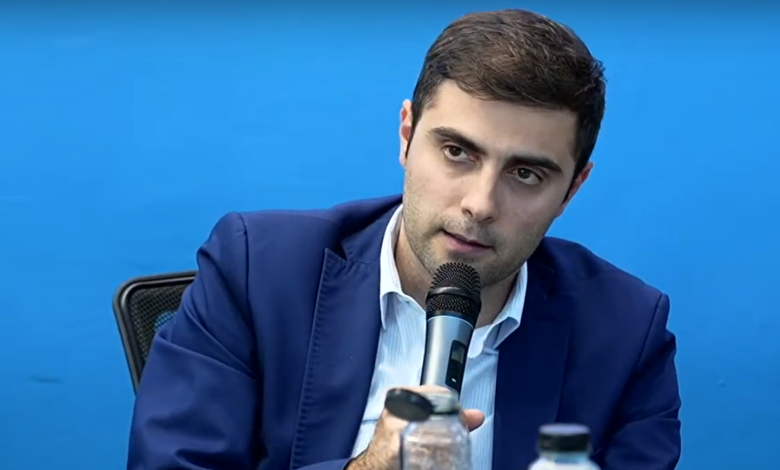
“I do not know if you like the sport, football. Romania is fixed above the relegation line and we are above only the goal, in the sense that the prospect of the performance of the Government of Romania in relation to the fiscal situation of the next period can affect the position in the standings,” the students from ASE Milan Pruusan, the country director, Goldman Sachs, told Tuesday.
Prussan participated in a debate with representatives of the best performing investment funds in Romania, organized by ASE, BVB and the Association of Fund Administrators.
“In this context, added the director Goldman Sachs AM, investors treat the situation in Romania with great severity. That is why increased volatility, which is why loan costs are slightly higher, although they are not higher for Romania.”
He explained to the students that countries around the world are facing large deficits; The governments had to make great expenses to recover the economies through the pandemic and the point of inflation that came with the outbreak of the conflict in Ukraine.
“It is a market for expensive bonds. Think of it in quiet market moments, in the last 5 years, America borrows for 10 years with interest of 1.1.7% for 10 years. the country director of the GS.
Our country is sensitive to loan costs, because a high loan cost increases the need for financing and has a major impact.
“Think about that Romania is funded, if they are not wrong, somewhere at 250 billion lei this year, plus a few tens of billions, a significant amount. Think about an additional percentage in interest means 50 billion euros, which is very, a lot,” says Prussan.
He gave the example of the “Trump factor” in commercial policies.
“From one week to another we encounter important fluctuations. To give you such numbers, before Trump's direct involvement in executive order in the tariff relationship with other economic partners, the rates were somewhere at 2.5%. After coming with a proposal on April 2, the rates increased to 21%. And we see that Europe is beginning to be called to discussions, ”he says.
Last year was quite demanding, just like the last five. “We have become specialists in medicine. Then, unfortunately, we become geopolitics specialists and now we return to the economy manual and look at what it means to high inflation, high deficits, budget deficit, commercial deficit, all happening at the same time,” said Milan Prussan.
With all the challenges, Prussan remains optimistic. “If you are not optimistic, you would not work in this job. Because, yes, it is about growth, about profit and keeping your customers satisfied. Because, in the end, everything we do are limited to the level of satisfaction of a natural person who looks in the investment portfolio, at the private pension account or another tool that I am. ours are external pressures and I think a very useful manual to understand would now be one of the art of negotiation combined with geopolitical studies or the history of the European economy for the last 100 years, ”concludes the economist.