The Mediterranean cyclone is ravaging in Romania. Yellow Code of torrential rains, whirlwinds and hail most of the country


A Mediterranean cyclone hit Romania. Meteorologists have announced three days of severe weather, with vigils, torrential rains and hail. A yellow code was issued for several regions, and hydrologists warn about the risk of floods on slopes and river courses. Two people were hit by lightning, and one of them died.

An Mediterranean cyclone strikes Romania Photo: Archive, Adevărul
Almost all Romania was under the yellow weather code. It rained with ice already in several counties, destroying gardens, orchards and greenhouses.
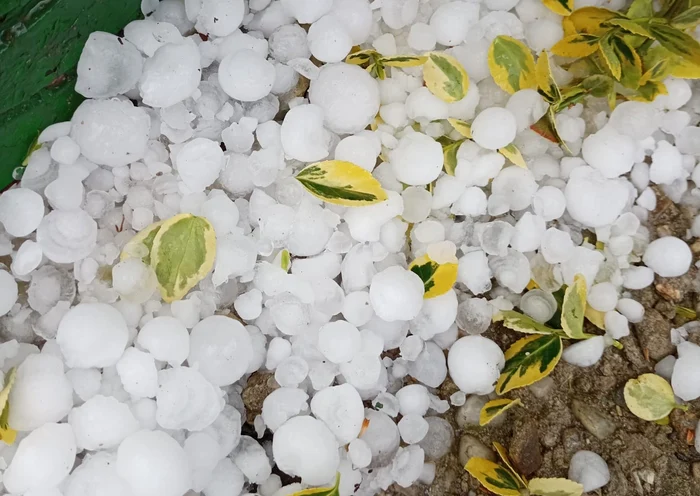
Hail affected the gardens and greenhouses: Meteoplus
In Caraş-Severin, two people were hit by lightning, and one of them died. In Suceava and Iasi, the rivers came out of Matca and flooded the households, while in the rest of the country Grindina ravaged, according to Antena 3 CNN.
According to ANM, until May 26, at 8 pm, most of the country will be periods with atmospheric instability.
“This will be manifested by torrential showers, electric shocks, wind intensifications (generally 40-50 km/h), vijections and hail. In short intervals the quantities of water will be 25-35 l/sqm, and by accumulation will locally exceed 50-70 l/sqm.“, Anm said.
ANM issued a strong yellow wind code on Saturday morning in several localities in the country.
According to meteorologists, on Saturday, from 8.45 to 13.00, a strong yellow wind code will be in force.
The affected areas: the low area of Alba county, respectively the area of the localities: Alba Iulia, Aiud, Cugir, Sebeș, Blaj, Ocna Mureș, Teiuș, Ighiu, Săsciori, Unirea, Jidvei, Vințu de Jos, Galda de Jos, Șona, Mihalț, Pianu, Valea Lungă, Lapadea Nouă, Lopadea Nouă, Lopadea Nouă, Cetatea, Şpring, Sântimbru, Lunca Mureșului, Ciugud, Sibot, Mirăslău, Săliștea, Bucedea Grânoasa, Berghin, Fărăr, Nișlac, Gârbova, Crăciunelu de Jos, Cricău, Livezile, Cergău, Roşia de Secaș, Câlnic, Hopârta, Rădești, Cut, Cut, Dosntat;
The wind intensifications with 50 … 60 km/h bursts will be reported.