Denga fever and Chikungunya disease present an increasing risk for the inhabitants of Europe

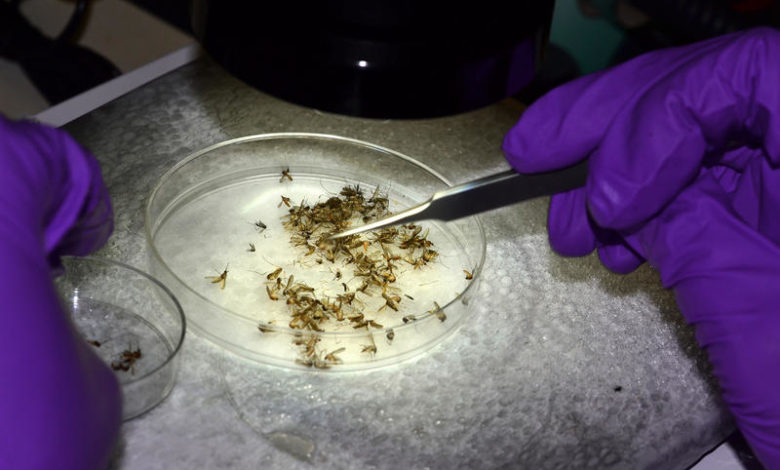
Denga and Chikungunya fever could become endemic diseases in Europe due to the heating of the global climate, which favors the spread of the Tiger mosquito, a vector of these diseases, along with urbanization and human travel, warned a study published on Thursday in Lancet Planetary Health magazine, AFP and AGERPRES reports.
Currently, 4 billion people from 129 countries are exposed to the potential risk of contracting the Denga or Chikungunya fever, two diseases present, so far, in tropical and subtropical countries and whose main vectors are Aedes Aegypti (mosquito-fever-yellow) and Aedes Albopictus (Tiger-Asian mosquito).
The extension to the north of the area marked by the presence of the Tiger mosquito is favored by the heating of the climate: the warmer, the shortening its cycle is shortened, while the speed of multiplication of the virus in insect increases below the temperature effect.
The study published on Thursday analyzes, for the first time, the links between the risk of denying and Chikungunya epidemics in Europe and many factors of the last 35 years, such as the climate, the environment, the socio-economic living conditions, the demographic and the entomological data.
One of the mosquitoes that spread the Denga and Chikungunya fever did not exist in Europe by 1990
Funded by the European Horizon Program for Research and Innovation, this study exploits the data provided by the European Center for Disease Prevention and Control (ECDC) and the World Health Organization (WHO), as well as research aimed at the presence of the Tiger mosquito in Europe, from its arrival in 1990 to 2024.
If the first outbreak of disease took over 25 years to appear in Europe, the frequency and extent of the Denga and Chikungunya fever epidemics have grown steadily after 2010.
Thus, only in 2024, 304 cases of dentic fever were repertoiced, exceeding the 275 cases reviewed in all 15 previous years. And local outbreaks were identified in four countries: Italy, Croatia, France and Spain.
CvasiTytotality of cases (95%) occurred between July and September and three quarters of them were located in urban or semi -urban areas, and the rest (a quarter) in rural areas.
From now on, in the areas where the tiger mosquito has already settled, a single year could pass between two epidemics of Denga or Chikungunya, “probably due to an evolution of climatic conditions”, and this recurrence “is consolidated by the frequency of human displacements”, the authors of the new study shows.
Concerns in Europe related to diseases worn by mosquitoes
The study notes that the areas in which the medical expenses per capita are higher are at the same time the areas for which a higher risk of epidemic has been calculated, suggesting that the number of cases is better detected where the monitoring has been consolidated – and, in the opposite direction, an underdetection is expected in the less prosperous areas.
The research shows especially that each increase with a Celsius degree of the summer temperature increases the risk of epidemic. Thus, summers with very high temperatures “amplify it considerably”, says the authors of the study.
These tendencies suggest that “temperature remains an important factor in the risks of future epidemics, especially under extreme climatic scenarios”, and that “throughout the EU, these diseases tend to become endemic.”
According to the forecasts carried out within the new study, in the 2060s, the epidemiological risk could be five times higher than in 1990-2024.
The discovery advocates for the need for better protection of the populations against these diseases, especially by the supervision of the imported cases and by the establishment of some alert systems.
However, the study has certain limits, they warned its authors.
On the one hand, the circulation of diseases transmitted by mosquitoes in the areas where they are not endemic could be underestimated, because the cases, often asymptomatic, are not registered in such states.
In addition, monitoring varies from one region to another or from one country to another, which could lead to an overestimation of the prevalence of these diseases, for example in France, where this monitoring is consolidated and is often compared to other countries.
Photo: Morganoliver / Dreamstime.com.