Alarming report: Putin could attack NATO by 2027 if it is allowed to restore the army following a possible armistice in Ukraine

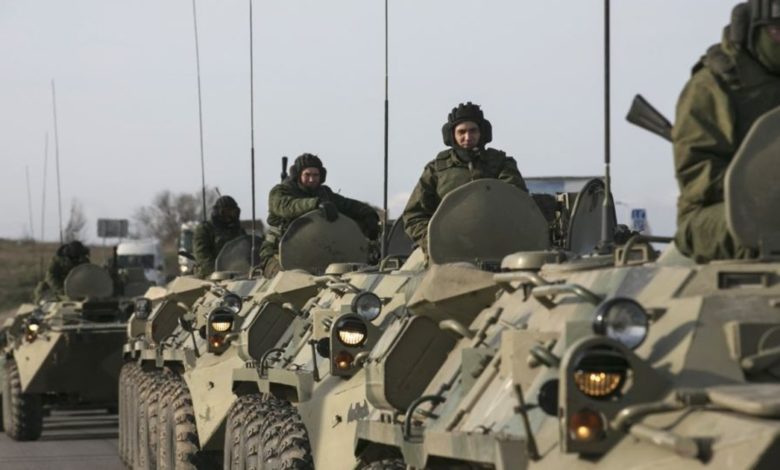
While the international community is increasingly hoping for a ceasefire in Ukraine, security experts sound an alarm: any break in current confrontations could provide Russia to rebuild their armed forces-in order to launch, within two years, a direct offensive against NATO.
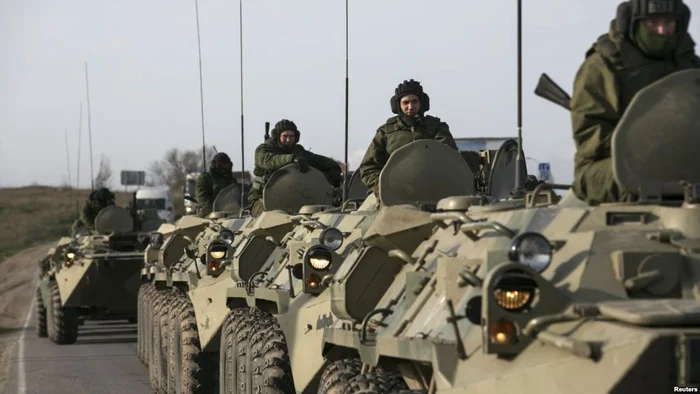
Russia could go back to a “total military mobilization regime/ photo: Archive
A recent report published by the prestigious International Institute for Strategic Studies (IISS) warns that if Vladimir Putin benefits from a period of replication under the umbrella of an armistice, Russia could again go to a “total military mobilization regime” until 2027, with the potential to trigger a new conflict-this time, this time Sun.
Peace as a strategic illusion
Although in recent weeks the calls to a diplomatic solution have multiplied-both from Ukraine and some Western leaders-the Russian president has avoided any clear sign of participation in negotiation efforts. The most recent episode consumed in Istanbul, where, despite the direct invitations launched by Volodimir Zelenski and Donald Trump, Putin refused to personally come to the negotiation table. The list of the Russian delegation transmitted by Kremlin excludes the name of the leader from Moscow, but includes high -ranking figures in his trust circle: presidential counselors, officials and veteran diplomats.
According to the evaluation of JISS, a possible cessation of fire in Ukraine could transform the front of Eastern Europe into a strategic interlude. Russia, already engaged in strengthening military bases near the borders of Finland and Baltic states, could use this break not for withdrawal, but for a much more ambitious military relaunch. Recent satellite photographs show increased activity in at least four key locations in northwestern Russia: Kamenka, Petrozavodsk, Severomorsk-2 and Olenia-just tens of kilometers from the border with NATO.
Europe, on its own?
The fears of experts are also amplified by the uncertainties in American foreign policy. If Donald Trump implements his threats to withdraw or reduce US support for NATO, the continent's defense burden would fall almost entirely on the shoulders of Europeans. IISS estimates that, in the event of such a scenario, Europe should invest up to $ 1,000 billion over the next 25 years to compensate for the absence of US military capabilities: fighter jets, destroyers, bands and logistical infrastructure.
Currently, the US provides about 400 fighter jets, 20 destroyers and over 120,000 soldiers stationed on the continent. All this should be replaced from internal sources if American support is withdrawn.
Trump has repeatedly reiterated that the US “will no longer pay for sufficiently contributing allies” and has requested that all NATO member countries increase their defense budgets to 5% of GDP – a requirement that would involve massive budgetary efforts for most European governments.
At the same time, it is often conveyed that the United States could move some of the military resources to the Indo-Pacific region, in the context of climbing tensions with China. According to the Financial Times, there are already plans to redislocate American troops in the Baltic countries in the direction of Asia.
A new front in the Baltic?
The IISS report also launches an increasingly discussed hypothesis in European intelligence environments: if Putin considers that its goals in Ukraine have been achieved or blocked, it could be oriented towards a new “weak enemy”-most likely, the eastern flank of NATO. Countries such as Estonia, Latvia or Lithuania, already under hybrid pressure from Russia, could become the first targets.
In the absence of a firm position from the United States, such an offensive would put the entire alliance in a solidarity crisis-including by testing Article 5, the fundamental clause of the NATO Treaty on collective defense.
In this tense landscape, the peace negotiations in Turkey seem to be a diplomatic repetition rather than a turning point. The delegations of Ukraine and Russia are present in Istanbul, but the absence of main leaders – Putin and Trump – is a signal that, beyond official statements, no one is yet willing to take the real cost of peace. And in the meantime, the clock is ticking – not only for Ukraine, but for the entire Security architecture of Europe, the Sun points out.