The global market for anti-aging products reached 47 billion dollars in 2023 and is headed for 80 billion by 2030. Discussion of longevity has become the new collective obsession: it appears in movies, podcasts and commercials, and the public space is full of promises: from “vampire” blood injections (PRP therapy) and cryogenics, to biohacking.
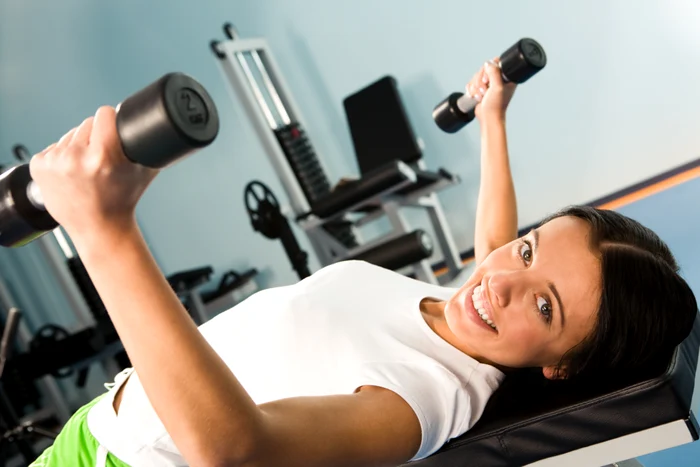
Photo credit: Shutterstock
When longevity becomes a game for the elites
“In about 80 percent of conversations about longevity, you see men addressing other men,” points out Roma van der Walt, former performance athlete and CEO of Vitelle, in a statement to Women's Health. The numbers confirm the paradox: women live more than five years longer than men, but a report by the World Economic Forum and the McKinsey Health Institute shows that they spend more time struggling with chronic conditions because, for decades, medical research has treated the male body as the norm, and women have been underrepresented in studies; on top of that there is unequal access to care.
Robin Berzin, physician and founder of Parsley Health Holistic Clinic, sees the consequences of this imbalance every day. “There is a major gap in the way women's health is treated. The discussion is dominated by male voices, including men who end up dictating menopause and fertility protocols, which leaves me speechless.” she tells Women's Health.
In this context, the idea that youth can be “bought” catches on very easily, draw the attention of specialists. Which, in practice, translates into tens of thousands of dollars spent on vitamin and antioxidant infusions, repeated tests, supplements taken according to rigid schedules and gadgets that measure your body 24/7, with the same hope: to feel like 18 years old again, ignoring the basic principles. “The icing is pointless if there's no cake. And I see a lot of people who skip the cake completely.”says Dr. Berzin for the same publication.
Projects like Bryan Johnson's “Rejuvenation Olympics” turn longevity into a competition with rankings and scores. “It's like: I'm going to be the first person to live to 110, I'm going to be 150,” observed Dr. Berzin. “But for most of us, the point is to feel good now. And nobody's going to come and give us a gold star in 150 years.”
Menopause: the ignored focal point
Gabrielle Lyon, MD and Women's Health advisor, says menopause shouldn't be treated as a surprise. If you want to age well, it's not something that just “happens”, it's something you build through choices made ahead of time, she explains.
Recent research shows that ovaries are not just about reproduction. They also function as endocrine glands, which send hormone signals throughout the body. Jennifer Garrison, a researcher at the Buck Institute for Research on Aging, says the ovaries act as a kind of hormonal “command center” that influences the pace of aging. And when ovarian function declines, the effects are seen everywhere: in the cardiovascular system, in bone health, in cognitive function.
“Virtually every organ in the body has a connection to the ovaries, and we still know very little about what that really means.”explains Daisy Robinton, researcher and co-founder of Oviva Therapeutics, to Women's Health. When estrogen levels become unstable and then decline, the body loses some of the hormonal balance that keeps systems “in line.”
Some data suggest that early menopause (before age 45) correlates with a higher risk of cardiovascular disease and premature death. Also, removal of the ovaries before age 50, without hormone therapy, is sometimes associated with a higher risk of mortality. That's why experts like Northwestern University's Kara Goldman consider hormone therapy one of the few interventions with real potential for long-term protection.
Anne Fulenwider, co-founder of the start-up Alloy Health, says that hormone therapy (estrogen supplementation) is “the basic biohack” in menopause. “There is a window of opportunity where you can understand what's going on in your body and make decisions that will have a positive impact on your bones, brain and heart”she tells Women's Health. Alloy, launched in 2020 and funded with $16 million, offers menopause information, medication access and telemedicine consultations.
For her part, Monica Molenaar, Alloy co-CEO, emphasizes the paradigm shift: “We're talking about how to live really well in the second half of life. We want to dispel the myth that a steep decline inevitably follows.”
Muscle and Bone: The Ignored Foundation
More and more women have started replacing the treadmill with kettlebells and juicing belts with creatine. For Gen Xers now entering menopause, it's a big change from the recipe of their youth: low calories and high cardio.
Dr. Lyon emphasizes a concept he calls “spanish muscle.”“, that is, the period of life when you maintain your muscle mass. The better equipped you are in your adult years, the easier it will be later on. In addition, the loss of muscle mass is one of the first signs that bone density is also starting to decrease. Deborah Kado, a geriatrician and co-director of the Stanford Longevity Center, points out that bone health is seen in both the body's strength and balance: when the bones fail, the rest of the body fails.
For example, statistics show that in the US, 80% of osteoporosis diagnoses are made in women, and one in four women over the age of 65 have the condition, according to the US Food and Drug Administration. The drop in estrogen at menopause accelerates bone loss, while in men things progress more slowly.
The solution? Enter menopause with as solid bones as possible, experts say. Bone density peaks around age 30, then the inevitable decline begins. “It's never too early to start”Dr. Kado tells Women's Health.
Dr. Lyon's practical recommendation consists of strength training (weights, kettlebells, heavy bodyweight – push-ups/pull-ups -, machines), three times a week and, at least once a week, a high-intensity session. But no extremes. “There's a tendency to talk in black and white: strength is good, cardio is bad. That's false. One in three women die from cardiovascular disease. We need cardio.”points out Roma van der Walt.
What's next
“People are finally starting to accept that women's health care can't copy the model built for men.”observes Roma van der Walt.
But for change to be real, serious investment in women's health research and longitudinal studies is needed. “We're missing critical pieces to even understand how a woman's body normally works.” says Robinton. For example, recent research suggests that the menstrual cycle could influence the effectiveness of some cancer treatments, clear evidence of how much information we still lack.
In parallel, women need concrete solutions: additional analyses, monitoring of the lipid profile in perimenopause (when cholesterol can rise suddenly), investigations for bone health. And, perhaps most importantly, normal conversations about strength training and hormonal health, without embarrassment or sidestepping.
“While you're trying not to die, don't forget to live” concludes Dr. Berzin.