American singer James Brown and Romanian actor Eusebiu Ştefănescu were born on May 3. In 1494 Cristofor Columbus discovered Jamaica, and in 1975 Nadia Comăneci became absolute champion of Europe in gymnastics.

Nadia Comăneci photo Getty Images
1481: The Ottoman Sultan Muhammad II, the conqueror of Constantinople died
On April 5, 1453, the entire Ottoman army, led by Sultan Mehmed II, was in front of the walls of Constantinople. After several large assaults and losses, it was concluded that a good way to enter the city would be the digging of tunnels, in parallel with increasing the attacks.
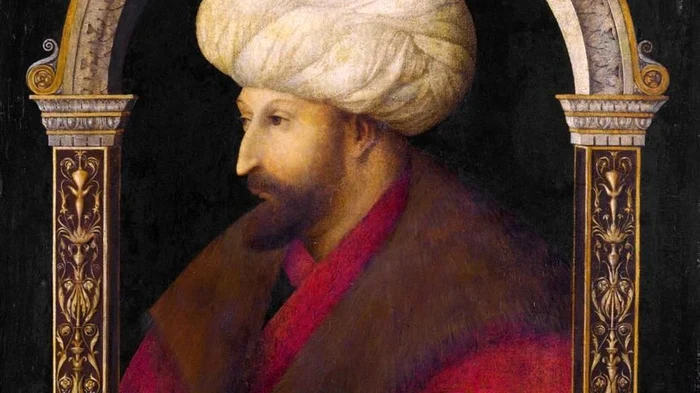
The Ottoman Sultan Muhammad II died on May 3, 1481 Photo: Archive
The Byzantine defenders received the decisive blow on May 29, 1453, when Constantinople was permanently conquered by the Ottomans, writes Mehmet Ali Ekrem in “”History of the Ottoman Empire and Southeast European (1300-1918) “.
The conquest of Constantinople was a shock to Christian Europe. More concerned about their internal problems, neither the Kingdom of England, nor the Kingdom of France, nor the Roman-German Empire came to aid. Pope Pius II tried to trigger a crusade for the recapture of Constantinople, but without success.
Constantinople has become the new capital of the Ottoman Empire. After the conquest of Constantinople, Mehmet II urged the Turks from all his possessions to settle in the city, giving them help to raise their houses and shops.
In Mehmed's vision, he was the successor of the Roman emperor and self-titled “Kayzer-i Rum”, that is, Cezar (emperor), but he was nicknamed the “conqueror”.
Many Greeks left the city and took refuge in western Europe, carrying with them culture and documents from the Greco-Roman tradition that contributed at the beginning of the Renaissance.
Hagia Sofia, built by the order of Emperor Justinian (527-565), was transformed into mosques. The mosaics were covered with a white plaster layer, without being destroyed. The reason is that Islam considers images with angels, humans or animals, as an idolatry. Subsequently, the Turks added to the former cathedral four minarets in the four corners.
1933: The American singer James Brown was born
James Brown was a American singer, composer and showman, considered one of the most influential figures in music history. Born on May 3, 1933 in the state of South Carolina, Brown grew in poverty and had a difficult childhood, but the passion for music helped to make a path to success.
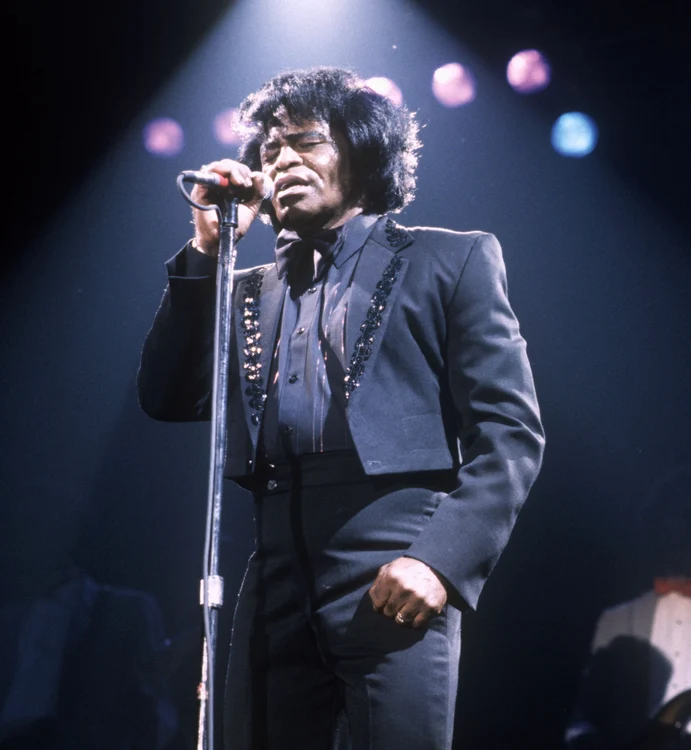
American singer James Brown, nicknamed “Soul Music” Photo Music: Archive
Known under the nickname of “Godfather of Soul” (Soul Music), James Brown has played an essential role in developing Soul and Funk genres. His unique musical style, based on accentuated rhythms, energetic fairy lines and strong vocalizes, had a major impact on pop, rock and hip-hop music. He was a pioneer of the funk, and his pieces were frequently chasing by artists from all kinds.
His best -known songs include “I Got You (I Feel Good)”, “Papa's Got a Brand New Bag”, and “Get up (I Feel Like Being a) Sex Machine”. On the stage, Brown was an unstoppable force – Frenetic dance, changed the costumes with a dizzying speed and kept the audience in the socket with an overflowing energy.
Beyond music, James Brown was also an important voice for the civil rights of African-Americans in the 1960s and 1970s, transmitting through his music messages of pride, independence and solidarity.
He died on December 25, 2006, but his artistic legacy remains alive, influencing generations of musicians and continuing to inspire contemporary musical culture.
1494: Cristofor Columbus discovers Jamaica
The navigator Cristofor Columbus was born in 1451 in Genoa. Between 1482-1484 he made several trips on the coasts of Guinea, being in the service of Portugal.
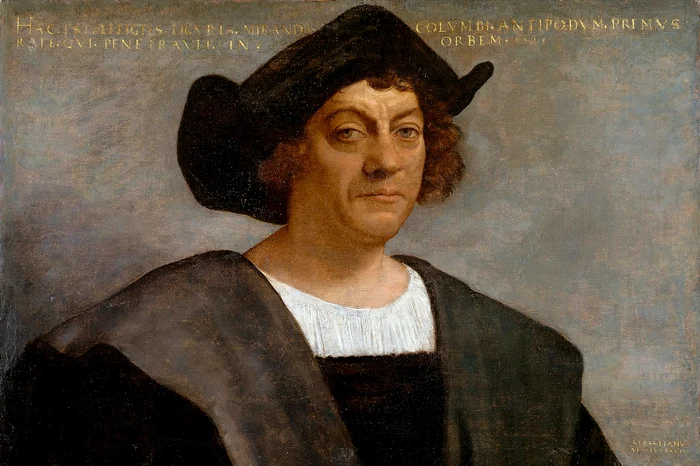
The navigator Cristofor Columbus discovered Jamaica in 1494 photo. Metropolitan Museum
Meanwhile, his travel plan was contained to lead him to the Indians, navigating to the west, along a route that had to be the shortest and most conventional traffic, based on the assumption that the Earth is round, but also on an erroneous evaluation of the extension of the Asian continent and the distance between Europe and the Indians.
When his project was rejected, Columbus moved to Spain to try to obtain the support of the Sovereigns Isabela and Ferdinand.
Departed with three small ships, from the port of Palos, on August 3, 1492, touched the Earth in October 1492 in Guanhani, called El San Salvador. There followed three other trips until 1504, during which Columbus explored several islands in the Caribbean. In 1498, during the third expedition, Columbus reached the American Earth.
1944: Eusebiu Ştefănescu was born, Romanian theater and film actor
Eusebiu Ştefănescu was an actor, poet, writer, theoretician and practitioner of the art of speech and scenic art, professor of acting and dean of the Faculty of Arts from “Hyperion”.
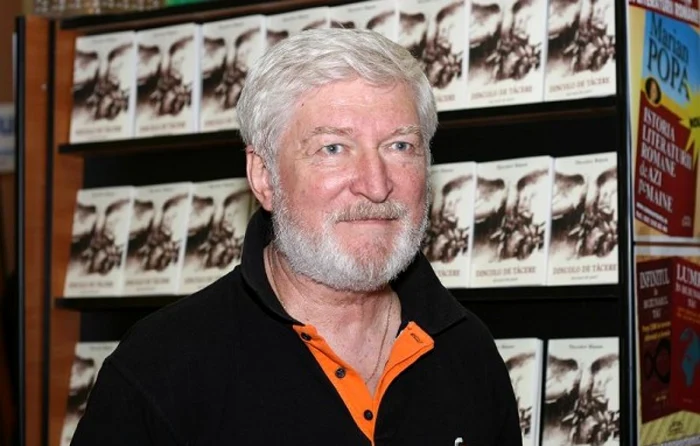
Eusebiu Ştefănescu, Romanian actor of theater and film, born in 1944 Photo: Cinemarx
Eusebiu Ştefănescu began to write poems for eight years. He married Liliana Pleşa early, a high school colleague. In 1969 their first son was born, Ion Bogdan Ştefănescu, first-soloist at the Romanian Philharmonic. At 48, Eusebiu Ştefănescu, remarried with Vali Ştefănescu, a woman with two children.
The actor is known for his roles in movies as “My traveling love”, “Turquoise necklace”, “figurators”, “Maria and the sea”, “Păcală returns” and so on. Eusebiu Ştefănescu has been less present on stage in recent years, the disease affecting its activity.
Among the last shows he played are “The name of the rose“By Umberto Eco,” “The death of a traveler“, By Arthur Miller, at the National Theater in Bucharest, and, most recently,”Bădăranii”, At the Metropolis Theater.
Eusebiu Ştefănescu was ill with cancer and died at the age of 70.
1948: The Law on the establishment of the “Marshall Plan” was signed
The Marshall Plan, officially known as the European Recovery Program (ERP), was the first reconstruction program designed by the United States for European War Second War.
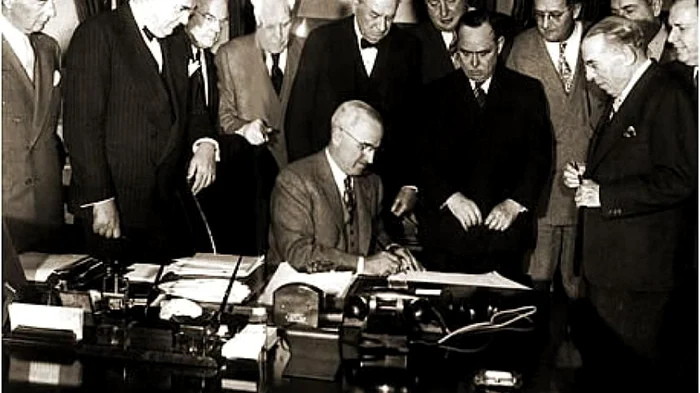
US President Harry Truman signs the Law on the establishment of “Marshall Plan” Photo: Archive
Proposed by Secretary of State George Marshall in a speech at Harvard, the plan offered economic help to the European countries affected by the war.
Although 22 states were invited to collaborate with a joint recovery plan, the USSR refused participation and forced the countries of the Eastern block to do the same, considering the program an instrument of American influence. The Soviets believed that the acceptance of the plan would have led to the Detachment of the USSR from its sphere of influence and to lose the political and strategic advantages acquired by the Kremlin in Central and Eastern Europe at the end of World War II.
On May 3, 1948, President Harry Truman signs the law on the establishment of the “Marshall Plan”.
Between 1948 and 1951, 16 European states and Turkey received support of almost $ 13 billion. For his contribution, George Marshall received the Nobel Peace Prize in 1953.
1975: Nadia Comăneci became absolute champion of Europe at gymnastics
The World Championships were held in Norway in Skien, and Nadia was only 13 years old. It was his first appearance and the first big shot on the stage of international gymnastics. It was also the edition of European in which Nadia Comăneci won the most medals: in 1977 she won two titles (individual compound and parallel), and in 1979 – three other gold medals (individually composed, jumps and soil).
Nadia Comăneci, a landmark of world gymnastics: Getty Images
Born in Oneşti, Nadia Comăneci then became a landmark of world gymnastics, at an edition at which Ludmila Turişni (USSR) started a big favorite, but would only win a bronze medal, finishing four at the individual compound.
A year later, in Montreal, Nadia would get the first note of 10 in the history of the Olympic games. When he ended his career, Nadia Comăneci had gathered nine medals at the Olympic Games (five of them gold), four medals at the World Championships (two gold) and 12 medals at the European Championships (eight gold).
1987: The French singer Dalida committed suicide
One of the first international renowned stars from the Arab world, Dalida, paid a very expensive price for the celebrity.

Dalida, by his real name Yolanda Cristina GiglioTti Photo: Archive
At the age of 54, he committed suicide with a sedative overdose, leaving a ticket he wrote: “My life became unbearable, forgive me!“Following her, there were 170 million discs sold all over the world, 70 gold discs and the first diamond disc granted to an artist.
Born in 1933, in Cairo, Dalida, on his real name Yolanda Cristina Gigliotti, lived a life -crushed by earthquake dramas and unsuccessful amorous relationships, all against the background of a bright career.
From a retired and lonely child, the future Star became, at 21, Miss Egypt, a moment, followed, by her escape to Paris. There, under the name of Dalila, as he “baptized” his businessman, begins to sing through different nightclubs, until an evening when three influential people from showbizz: Bruno Coquatrix, the director of the Olympia concert hall, Eddie Barclay, the founder of the same name, and Lucien Morisse.
The three are fascinated by its beauty and talent, launch the first pieces and climb it on the biggest scenes of the continent. Success does not delay to appear, tournaments flow, and fans applaud it. Finally, tired of tournaments, a draconian work and the requests that came from all sides, it decides to commit suicide.
2003: Romanian painter Constantin Piliuţă died
Constantin Piliuță, one of the most well -known contemporary Romanian painters, was born in Botosani, on February 4, 1929.
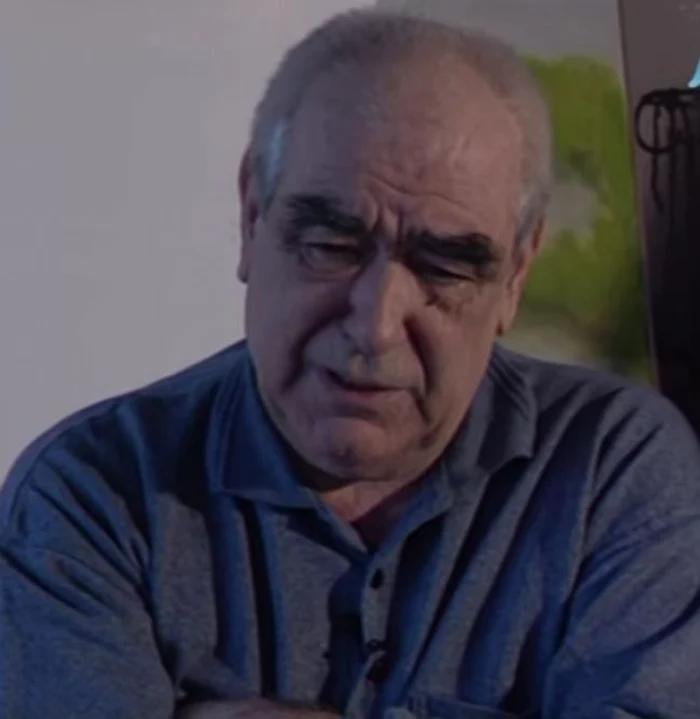
Constantin Piliuță, one of the most well -known Romanian contemporary painters: Botosaneanul.ro
He graduated from the “Nicolae Grigorescu” Institute of Art, the 1956 promotion, and debuted in 1957 at the Galatea Gallery. He had numerous personal exhibitions in the country and on all continents. In an interview with the newspaper Adevărul, Master Piliuță stated:
“Wherever the workshop was located, in front of the Piliuță easel remains Piliuță, it must create in the Piliuță style, it must be it. I never let him forget the painter in me that he has to exploit only the things with which he was endowed by me and God. The rest, all kinds of pretensions built on unauthorized disappear, die. Some of the first places I created were the juniper. I love their atmosphere now. Even if many of the people who were pleased to speak and drink a glass of wine, I find it always authentic and interesting: I can stay alone, I can talk, I can put the country, it is a living space that gives me thought and which sometimes gives me solutions ”, the painter confessed.