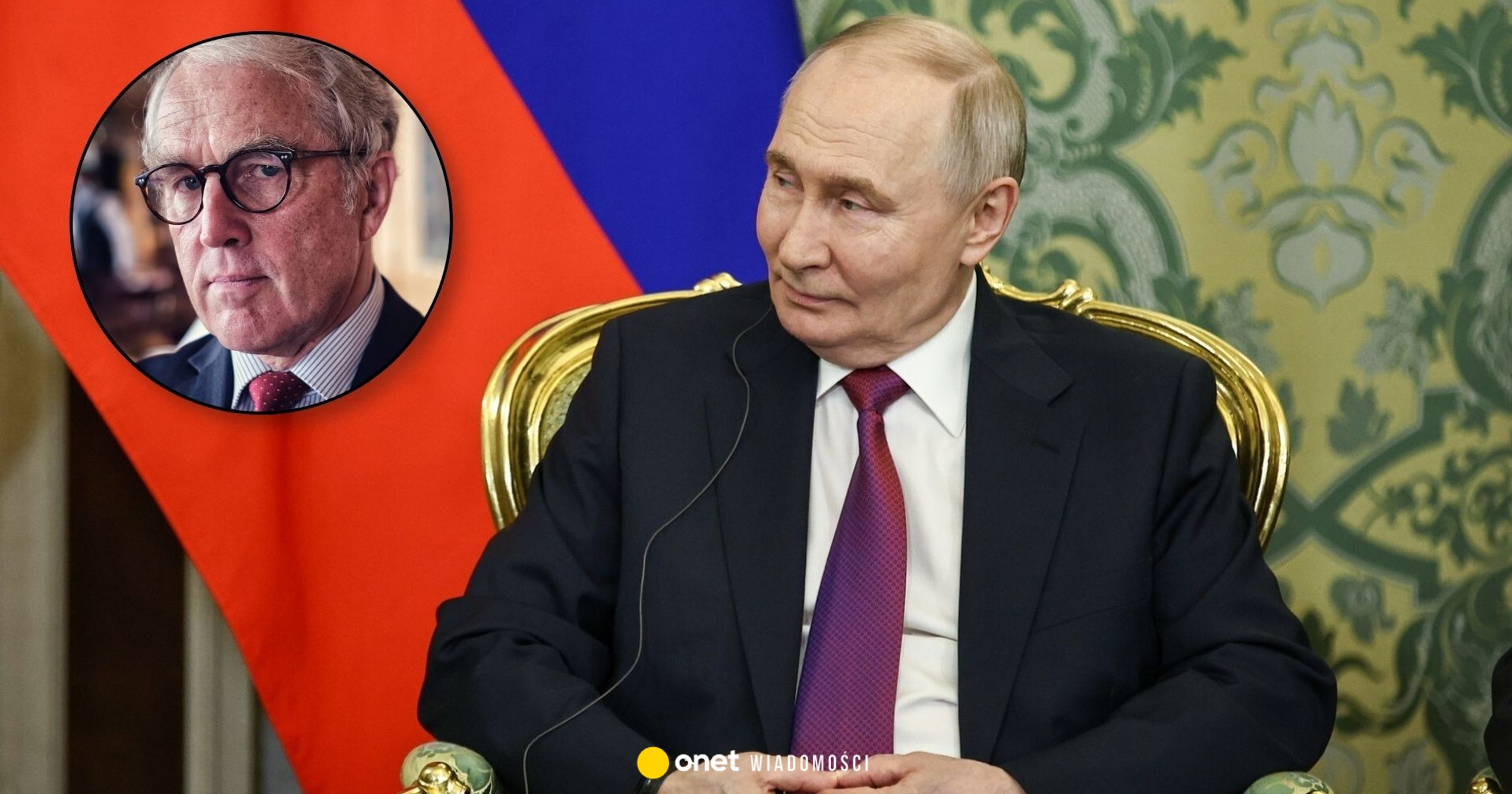
If politicians in Germany or any other European country were ever to negotiate an end to Russia's war of aggression against Ukraine, they must be prepared for one thing – Few people have such sophisticated negotiation tactics as former KGB agent and long-time Russian president Vladimir Putin.
Ruediger von Fritsch, German ambassador to Russia in 2014-2019, warns against this. Over the years, he has gotten to know Putin and his methods well. He himself has also participated in many secret negotiation rounds with the Russian president and reveals what can be expected from him.
In the podcast of Paul Ronzheimer, deputy editor-in-chief of the “Bild” daily, the former German diplomat shares his behind-the-scenes observations.
Good and bad cop
As ambassador to Russia, he accompanied former Chancellor Angela Merkel, then Foreign Minister Frank-Walter Steinmeier and many other leading politicians during talks with Putin and his advisers. As he says, he quickly noticed one thing – that the Kremlin often used one pattern: “good cop, bad cop”, as in American movies.
Russian Foreign Minister Sergei Lavrov willingly played the role of the bad guy, while Putin, on the other hand, behaved more politely and friendly, at least at the beginning. The former often used a method that Fritsch calls “reversing the blame.” It consisted in the fact that even though Russia had committed some crime, he was making accusations against the West.
Fritsch describes it as follows: – I did something really bad, but I point my finger at you and say: “It's your fault! The CIA organized a coup on the Maidan and NATO has expanded, so unfortunately we have to defend ourselves.”
The former diplomat adds that if Western players are not aware that the Kremlin plays this way and are not prepared for it, they are quickly made to feel guilty.
The article continues below the video
According to von Fritsch, Putin consciously plays a different role. — A second conversation follows soon after. You come to the president and he seems so friendly and cheerful, he says nice things, says the former diplomat.
However, Putin's kindness does not last long. — Suddenly he pulls out a dagger and strikes a blow. It's a conversation tactic. She seems very kind, but suddenly she becomes extremely aggressive, he says. He adds that Putin behaves in an extremely composed manner even without television cameras. “But beneath this surface of control there is this hidden aggression,” says the German diplomat.
Careful preparation
He recalls an event that – in his opinion – says a lot about Putin's true character. — In 2015, we sat with a leading German politician with Vladimir Putin. Russia intervened in Syria and waged a terrible war there, also against the civilian population, which was attacked, among others, by Assad's Syrian authorities, even with barrel bombs [prymitywnych materiałów wybuchowych pakowanych do beczek i zrzucanych z helikoptera]. The German politician was critical of the use of this particularly deadly weapon against the Syrian civilian population by the regime of the already deposed Bashar al-Assad. And then Putin laughed, he says
— The Russian president allowed the German guest to finish and then asked: “Should I explain why I was laughing? Poor Assad, he doesn't even have any decent bombs anymore,” adds von Fritsch. According to him, it showed all of Putin's cynicism, which is also visible in the way Russia conducts the war.
Another element of Russian negotiation tactics, according to Ruediger von Fritsch, is exceptionally good preparation. He claims that Putin likes to suddenly appear with surprising details. — I remember a conversation in which he confronted a German politician with information about benefits for Syrian refugees in Germany – how much they receive per day if they are alone, how much if they have two children and are married. Putin knew all this, he says.
He argues that Western negotiating partners must be prepared for their Kremlin opponents to be informed of all details. “Thinking you'll just go there and tell them about human rights… It doesn't work,” says von Fritsch.
This text was created as part of the Axel Springer Global Reporters Network project, of which Onet is a part. The Axel Springer Global Reporters Network uses the resources of the group's editorial offices to publish ambitious materials, investigative reports, interviews, journalistic articles and analyses. It enables journalists – including POLITICO, Business Insider, WELT, BILD, Onet and Fakt – to collaborate on important stories for an international audience of hundreds of millions across a variety of online, print, television and audio platforms.
I’m Ashley Davis as an editor, I’m committed to upholding the highest standards of integrity and accuracy in every piece we publish. My work is driven by curiosity, a passion for truth, and a belief that journalism plays a crucial role in shaping public discourse. I strive to tell stories that not only inform but also inspire action and conversation.