Carry turnover in Polish seaports in 2024 fell by 8.9 percent. compared to the previous year – according to the latest data of the Central Statistical Office. However, both passengers' movement and the number of ships wrapping to ports increased.
According to a report published on Monday by the Central Statistical Office, loading in sea ports in 2024 amounted to 124.2 million tons, i.e. by 8.9 percent. less than in 2023
The largest declines were recorded in ports in Szczecin (by 16.1 percent), Gdańsk (by 11 %) and Gdynia (by 10 %). In turn, the increases of transhipments took place in Police (by 39.2 percent) and Świnoujście (by 3.5 percent).
“The share of individual ports in national turnover in 2024 was as follows: Gdańsk – 57.2 percent, Gdynia – 18.7 percent, Świnoujście – 14.8 percent, Szczecin – 8 %, Police – 0.9 percent and other ports – 0.4 percent” – we read in the study of the Central Statistical Office.
Liquid mass loads had the largest share in the loading structure, which were responsible for 44.4 percent. turnover (including oil and its products – 38.3 percent).
The CSO report also shows that the national turnover amounted to 4.4 million tons and were 25.4 percent. higher than in 2023, but in international turnover a decrease of 9.8 percent was recorded to 119.8 million tonnes. Charges transported between Polish ports and Europe ports accounted for 63 percent. all international revolutions.
Transit loads last year amounted to 21.6 million tons and decreased compared to the previous year by 5.3 percent. Most transit charges were overloaded at the Port of Gdańsk (65.1 percent), then in the ports of Świnoujście (24.8 percent), Szczecin (7.3 percent), Gdynia (2.8 %). Unlike the previous year, there was no freight transit traffic through the marine port in Kołobrzeg.
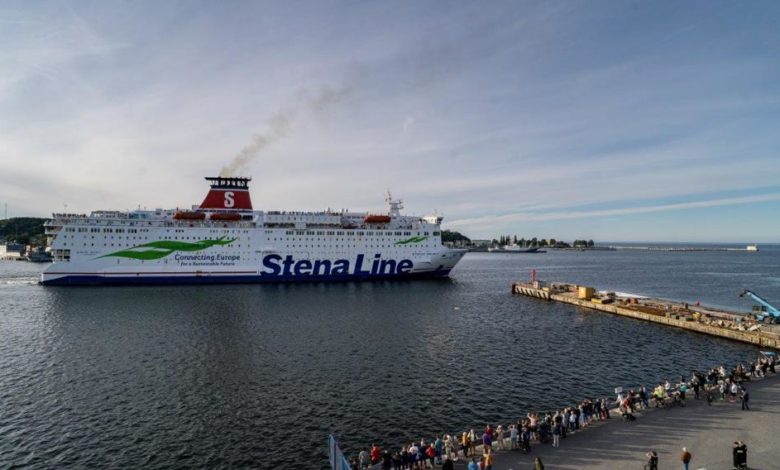
The data published on Monday also shows that passenger traffic has increased in Polish ports. Last year, 2.4 million people started or finished the journey on ships, which means an increase of 7.8 percent. rdr. Most passengers floated between Poland and Sweden – 99.8 percent international movement.
The number of ships of ships also increased – to 20,000 units against 18.9 thousand in 2023.
As the Central Statistical Office donated, at the end of 2024, the sea transport fleet included 89 ships (one more than a year earlier), owned or jointly of Polish shipowners and operators, of which units under the Polish flag constituted 15.7 percent. However, the coastal fleet had 41 units and all sailed under the Polish flag.
The condition of the sea crews and the coastal transport fleet at the end of 2024 is 2022 people, of which 1857 people worked in the sea transport fleet (an increase of 2.5 %), and in the coastal fleet – 165 (decrease by 2.9 percent).
As for the shipbuilding industry, according to CSO data, the portfolio of orders for new ships remained unchanged and at the end of 2024 included five units. In addition, last year, Polish shipyards renovated 403 units (against 458 in 2023)
However, the situation in marine fisheries deteriorated. Half of fish and invertebrates decreased by 20.5 percent. in the Baltic Sea and by 15.6 percent in Dalkomist waters.
The most commonly fished species in the Baltic fisheries was Szprot (52.7 thousand tonnes), constituting 40.3 percent. all fishing. In turn, Bluekite (68.7 percent) and Chilean Ostrobok (19.7 percent) dominated in Dalkomist fishing.
At the end of 2024, the Polish fishing fleet had 721 units – by 12.5 percent less than a year ago. It consisted of two tracks, 108 boats and 611 boats. (PAP)
anm/ pad/