The tick season started – more and more patients go to the hospital after they were stingy. What do you have to do if you bite you a tick

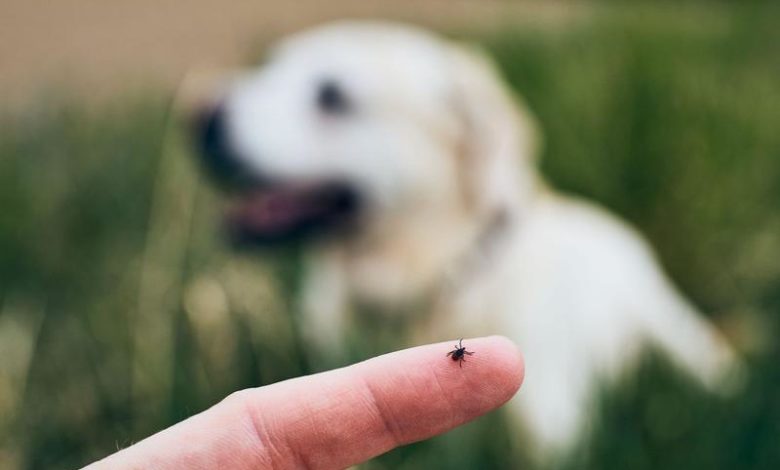
The doctors at the County Emergency Clinical Hospital in Arad point out that the tick season has begun, and many stubborn people have been presented at Emergency Receiving Units to extract insects under the skin and to administer a preventive treatment.
Only at the County Emergency Clinical Hospital in Arad did 25 patients who asked to be extracted under the skin were presented this week.
“Patients, 19 adults and six children, were stung by these insects in the woods, parks or while sewing grass. Doctors recommend that we pay attention when we spend our time outdoors, in parks or in the woods, because the tick sting can pass. That is why it is good when we get home. To extract leather insects, either at home, or presenting us with the doctor, because they can cause serious infections, such as tick encephalitis or Lyme disease, ”Arad County Hospital said on Friday, in a statement quoted by Agerpres.
Last year, the tick season started much earlier, at least a month than normal, against the background of the time, and in the middle of February, many patients had already presented themselves at the county hospitals.
What do you do if you bite a tick
The infectious doctor Adrian Marinescu, the manager of the Matei Balș Institute in Bucharest, says that it is very important to detect the tick immediately, so that, especially in the case of children, it is good to check them carefully every time they return from the park or from the playground.
“First of all, we have to identify as soon as we can quickly, and especially for children, the observation part, when they come from the park, from the playground, it is very important. They can be in any area, including on the fingers and we have to be careful. Second, we must get out immediately, and if we do not go to the medical, we must go to the doctor. Prophylaxis with antibiotic, so that the risk will be as low as possible for the development of complications, ”explained the doctor.
Adrian Marinescu advises us that, in such situations, we will keep our calm, because not all tick bites are dangerous. Only 5% of those who do boreliosis (Lyme disease) make serious forms.
“Most of the time, ticks do nothing to us, the discussion with boreliosis (Lyme disease) is for a certain percentage. And in addition, among those who make the infection, most make mild forms, which are solved by themselves. The percentage of those who make complications is small, somewhere at 5%,” explained Adrian Marinescu.
The doctor recommends that we avoid crowding the guard room for the brick bites, but still go to the doctor, if we fail to remove the tick.
“It is not advisable to go to the guard room for a tick. It is advisable to go to the first medical office, we can also get it home if we have a certain dexterity. I think to get for a tick to the guard room, especially since there are emergencies, waiting time, risk for transmissible diseases, but it is not a time. Free.
The manager of the Matei Balș Institute recommends that we protect ourselves when we go to parks or to the forest: “We must be cautious, pay attention to the period that will follow especially that Vorm goes to the parks, in the forest. We can use spars, we can use clothes that will cover as much of the body surface and in this way we will not suffer.”
How do you get the tick at home
Wearing gloves, the tick is attached with a clean tweezers, as close to the skin to remove your head and mouth, writes medlife.ro.
“If some pieces remain, do not try to remove them, because the body will naturally expel them.
Pull the tick directly outside easily and constantly without twisting. Then, clean and protect the area, using hot water and delicate soap, and on the bite area applies alcohol to prevent infection.
Never use vaseline, lit match, gas, acetone, oil or ammonia to kill or remove the tick under the skin.
By this method you will favor the deepening of the insect under the skin that will release even more saliva and thus increase the risk of transmission of the disease ”, shows in the article medLife.ro.
Diseases that can be transmitted through tick bite
Among the best known diseases transmitted by tick is:
- Lyme disease;
- Babesiosis (frequently in animals, very rare in humans);
- Anaplasmosis;
- Tick encephalitis;
- Ehrlichiosis;
- Powassan virus disease;
- Borrelia Miyamotoi disease;
- Borrelia Mayonii disease;
- Hemorrhagic fever of Crimea-Congo.
Lyme disease It is a rare infection, determined by Borellia Burgdorferi, a microorganism transmitted through ticks. Therefore, not the tick itself nor all the ticks cause the disease, but only those who are carriers of this bacteria.
- Stage I: It appears after 7-10 days after the tick bite and is characterized by redness at the skin level, which gradually becomes a large red spot with the central discolored area and the diameter between 5-30 cm. The symptoms specific to this stage resemble those in the flu: altered general condition, weakness, fever, muscle pain, joint pain, chills and headaches.
- Stage II: It appears a few weeks up to one year after the initial infection and is characterized by: skin rashes located on several areas of the body, small in size, neurological manifestations, cardiac manifestations with inflammation of the heart muscle (myocarditis) and inflammation of the joints (arte).
- Stage III: It is chronic disease with lyme arthritis in the large joints (hip, knees), chronic atrophic acroodermatitis (a condition in which the skin in the lower limbs becomes thin, bright and colored blue), impairment of the central nervous system with paresthesia (numbness) peripheral and disposition.
Babesiosis It is an infection rarely encountered in humans, but which can endanger life by affecting red blood cells. Babesiosis is caused by small parasites called Babesia, and the species that most often affect people is called Babesia Microti.
Symptoms of babesiosis are: body pain; chills; fatigue; fever; headache; loss of appetite; sweating.
Encephalitis virus transmitted by ticks (TBE) spreads through the bite of a tick infected with the Powassan virus. Occasionally, this virus can spread to humans by the consumption of raw milk or goat cheese, sheep or infected cows.
In most cases, infected patients do not have symptoms, but in situations in which they appear, they may include: a general evil sensation; fever; headaches; muscle pain; vomiting; weakness; confusion; loss of coordination; speech difficulties; convulsions.
Hemorrhagic fever Crimea-Congo in humans is a disease caused by the nairovirus virus that is transmitted through bites, through direct contact with the blood or tissues of infected ticks.
Symptoms of this disease include: headaches; high fever; back pain; joint pain; stomach ache; vomiting; red eyes; the red face; the red neck; red spots.