
Isărescu: Romania is walking on thin ice. “We are not optimistic, we are trying to be positive”

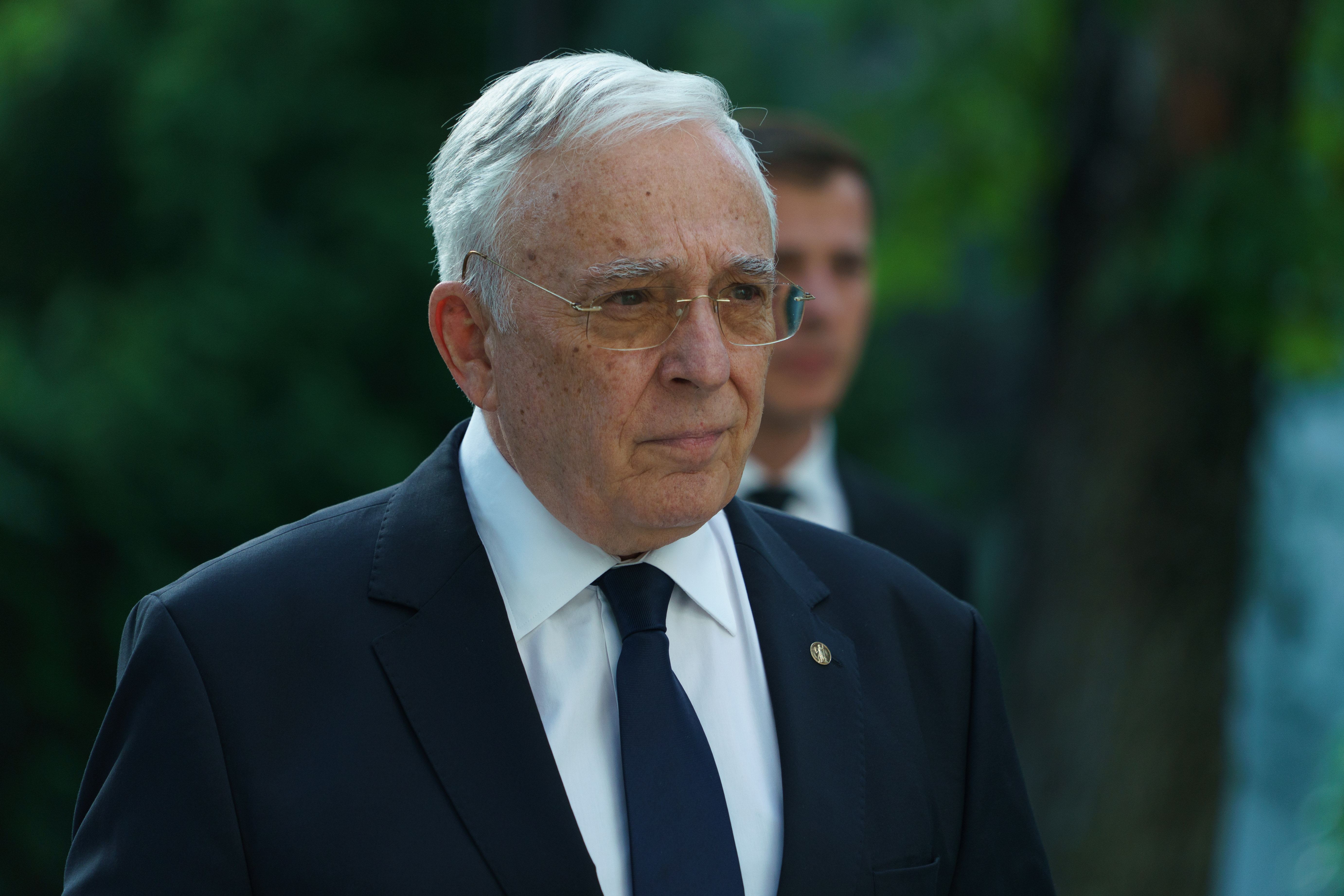
In a country where people have started to count their trips to the city, and companies are complaining about a major decline in turnover, the governor of the National Bank of Romania (BNR) made one of the most direct diagnoses in recent years on Wednesday: Romania has gone, in a few months, from an excess of demand to a major deficit of demand — a brutal change that may push the economy into a “real” recession in 2026, if not offset by public investments.
The governor admitted that the inflation target for the end of this year has been changed to 3.9% (from 3.7% previously)
The summer in which Romania saw what a crisis looks like: 10 billion euros of capital outflows
The most powerful sequence in the speech, however, is the one about last summer.
Isărescu recalls the “May crisis”, the moment when the prime minister's resignation showed the markets how fragile Romania is when politics slips by.
The result: capital outflows of around 10 billion euros.
At that point, the government had an absolute priority: financing the deficit, preserving the country rating and accessing external loans.
And the fiscal package discussed with the European Commission was, in the BNR's logic, a safety belt.
The price of stability: lower economic growth and demand entering negative territory
But the seat belt came with an unavoidable cost.
“The fiscal adjustment determined inherent costs in terms of economic growth,” Isărescu said.
More importantly: Romania entered an area that economists describe as dry, but which in real life means a sudden brake: GDP deviation entered negative territory, and aggregate demand collapsed.
“We went from a demand surplus in less than a few months to a major demand deficit that will continue.”
“How can the NBR make a mistake?” – the explanation behind the forecast that blew up
Isărescu also responded to the criticism that recently circulated online: how come the BNR forecast in February 2025 an inflation of 3.8% for December 2025, and the reality was almost 10%.
“We are also responding to some posts we have seen recently about how the National Bank was wrong a year ago, in February 2025, when it forecast 3.8% inflation for December 2025 and it came out 10%, or close to 10%.
So we didn't introduce the package of fiscal measures in February of the previous year, because no one knew what it would be. Then in February, if you recall, apart from the complicated political situation we all experienced, there were several fiscal packages being discussed, including the introduction of the progressive rate – which would not have had the same impact on inflation. So there was no way we could then introduce a package we didn't know.
We didn't even know how much and to what extent the price of electricity would be liberalized, but as soon as the measures were adopted, July-August, we revised the forecast and got very close to what, in the end, happened”, said Isărescu
In other words: the forecast was not “wrong”, but the reality changed radically, after the government adopted fiscal measures and started to liberalize some energy prices.
Romania is shrinking: fewer vacations, fewer clothes, fewer outings
The governor spoke more in social images. It described an economy in which consumption is quietly retreating: fewer going out, fewer clothes, fewer holidays, fewer major purchases, declining trade.
It's a picture of painful adjustment that may seem “normal” in a fiscal consolidation, but becomes dangerous if it turns into a spiral.
“Here the business world complains of a major decline”, Isărescu warned, emphasizing: “This decline in trade turnover could lead to a real recession for the whole year.”
The only net: public investment. But it is almost impossible to offset the consumption
In the BNR's view, the only engine that can keep the economy afloat without rekindling inflation is public investment.
“They are the only ones that can give economic growth and not generate inflation and external imbalances.”
But here comes the Romanian paradox: Consumption is several times higher than investments. And even more so than public investment. This means that to compensate for a serious drop in consumption, public investment would have to increase enormously.
“There should be a double-digit increase in public investment.”
In other words: the state should accelerate like a sprinter in a race in which he is barely breathing.
Political stability becomes an economic variable
Isărescu clearly said what in Romania is rarely said so directly from the top of an institution: declining consumption has a social and political effect. “Decreasing population consumption is socially painful. And it impacts political stability.”
And political stability, in the BNR's view, is the condition for Romania to: avoid recession in 2026, continue disinflation, regain investors' confidence


