Trump's “final offer”, revealed: Ukraine, pressed to accept the Russian occupation / list of concessions granted to Moscow / What does Kiev receive

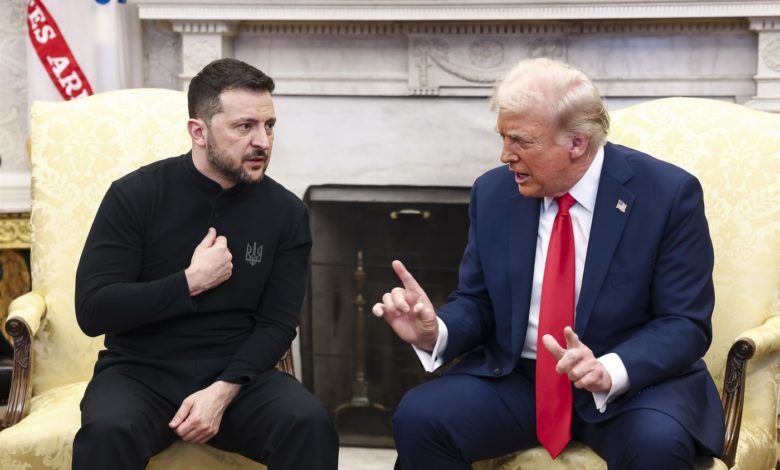
The Trump administration is waiting for Ukraine's response to a peace agreement on Wednesday, which includes the US recognition as part of Russia and the unofficial recognition of Russian control over the other occupied territories, sources that know the proposal directly have told. Other sources quoted by Reuters have confirmed the most important provisions of this plan, while they highlighted the reluctance of Kiev and European Allies.
A one-page document that the US presented to Ukrainian officials in Paris last week is described as the “final offer” of President Donald Trump for Kiev. The White House, writes Axios, insists that she is ready to give up mediation if the parties do not soon reach an agreement.
Trump's proposal would involve major concessions from Volodimir Zelenski, who should accept the transfer of Crimea and other territories controlled by Russia East Ukraine, something he has refused to do so far.
While Russian President Vladimir Putin offered to freeze the current front lines to reach an agreement, he rejected other elements of the American framework, such as a European peacekeeping force on the Ukrainian territory, according to information.
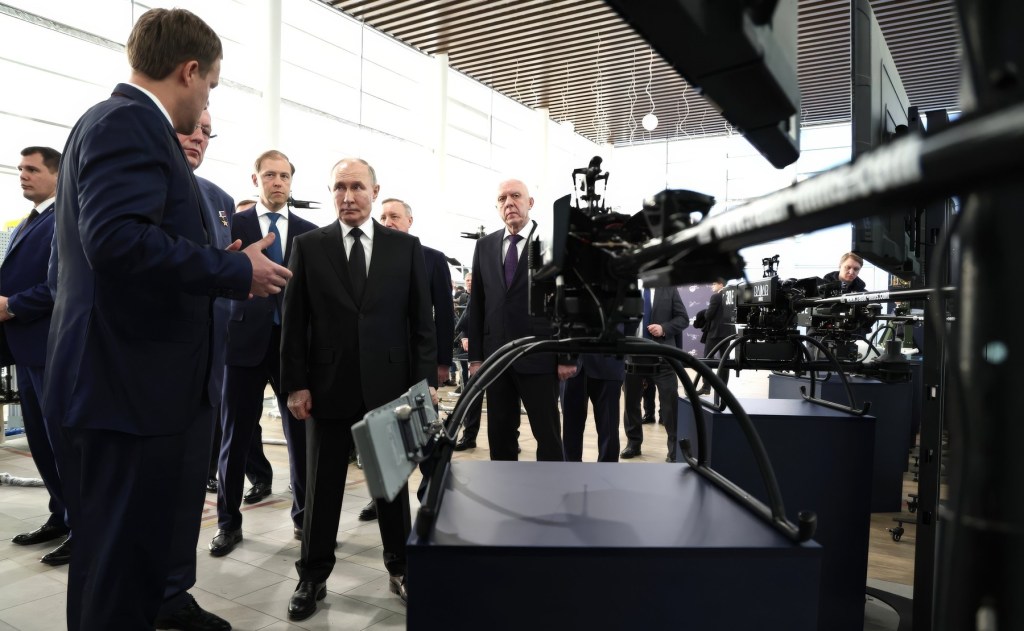 Vladimir Putin offers to stop the invasion of Ukraine along the current front line, writes the British press / Kremlin reacts: “A lot of forgeries are published now”
A source close to the Ukrainian government has said that Kiev believes that the proposal is very biased towards Russia. “The proposal says very clearly what tangible gains get Russia, but it only says vaguely and general what Ukraine will get,” said this source, quoted by Axios.
A meeting of US officials, Ukraine and Europe, which should have been talking about the cessation of the war on Wednesday, including Trump's plan, failed on Wednesday, as US Secretary Marco Rubio canceled his trip to London, and negotiations were relegated.
What does Russia get as per Trump's proposal
- The “jure” recognition of Russia's control over Crimea by the US.
- The “de facto” recognition of Russia's occupation of almost the entire Luhansk region and the occupied parties in Donetsk, Herson and Zaporojie.
- The promise that Ukraine will not become a member of NATO. The text mentions that Ukraine could become part of the European Union.
- Lifting the sanctions imposed in 2014.
- Economic cooperation consolidated with the US, especially in energy and industrial sectors.
What Ukraine receives in accordance with Trump's proposal
- “A robust security guarantee” involving an AD Hoc group of European countries and, possibly, of non -European countries with similar opinions. The document is vague about how this peacekeeping operation would work and does not mention any participation of the United States.
- Return of the small part of the Kharkov region occupied by Russia.
- The possibility of unrestrained crossing of the Nipar River, which passes along the front line in some parts of southern Ukraine.
- Compensations and assistance for reconstruction, although the document does not specify where the funds will come from.
Other elements of the plan
- The Zaporojie nuclear power plant – the largest installation of this type in Europe – will be considered Ukrainian territory, but will be operated on by the US, and electricity will be provided both Ukraine and Russia.
- The document refers to the US-Ukraine agreement on minerals, which Trump said will be signed on Thursday.
Ukrainians and Europeans remain skeptical
The plan was written after Trump's emissary Steve Witkoff met for a few more than four hours last week.
After the plan was presented, Putin offered to stop Russia's invasion along the current front lines as part of a potential agreement, reports Financial Times
Some of Washington's proposals were considered unacceptable by European and Kiev countries, several sources for Reuters said, leaving the parties involved divided, but still optimistic that they could reach a compromise.
The French Foreign Minister, Jean-Noel Barrot, said on Tuesday that Europeans presented in detail the United States, which they consider to be the non-negotiable aspects of a potential peace agreement.
 US peace plan for Ukraine: the transfer of occupied territories, relaxation of sanctions for Russia, NATO accession – excluded
Beyond Crimea, other major divergence points remain, including Russia's pressure to raise EU sanctions before the negotiations are completed, which Europe firmly rejects, diplomats quoted by Reuters said.
Some of Washington's ideas could also dissatisfy Moscow. Two diplomats said the US does not insist on Russia's request to demilitarize Ukraine and do not oppose a European force as part of future security guarantees for Ukraine.
Diplomats quoted by Reuters did not agree whether the US proposal is a firm position of the Trump administration or a starting point to work with Ukraine and its European allies to formulate a common position before presenting Russia.
Negotiations in London but without the main American officials
Witkoff will go to Moscow at the end of this week to meet Putin, the White House announced on Tuesday.
But Witkoff and Secretary of State Marco Rubio are missing from Wednesday's discussions in London, attended by American, Ukrainian, French, German and British officials. Both had previously planned to participate. Instead, Keith Kellogg, the envoy of Ukraine, is expected to lead the US delegation.
The US proposal is expected to be part of the discussions.
An American official involved in discussions said that Rubio and Witkoff have worked together “to develop a framework that would approach the end of the war.”
However, the official said that in the last 24 hours there were indications from the Ukrainians that in London they wanted to discuss a 30 -day fire cease than about Trump's peace plan.
“The secretary has not been traveling to London. Instead, the American delegation will continue to work in conversations with British and Ukrainian counterparts,” the official, quoted by Axios, will continue.
A European official also told Reuters that Rubio has sent his concerns that Ukraine could return to his hardest positions, making any progress impossible in the discussions.
Rubio wrote on Twitter that he had a “productive” conversation with his British counterpart and is looking forward to “continuing” after discussions in London.