The Council of Europe integrates the Russian opposition within the Platform for Dialogue with the Democratic Forces in Russia


A total of 15 Russian opposition figures and representatives of exiled ethnic minorities have been accepted as members of the Platform for Dialogue with the Democratic Forces of Russia of the Parliamentary Assembly of the Council of Europe (PACE), an important step after Russia's expulsion from the Council of Europe in 2022 following the invasion of Ukraine.
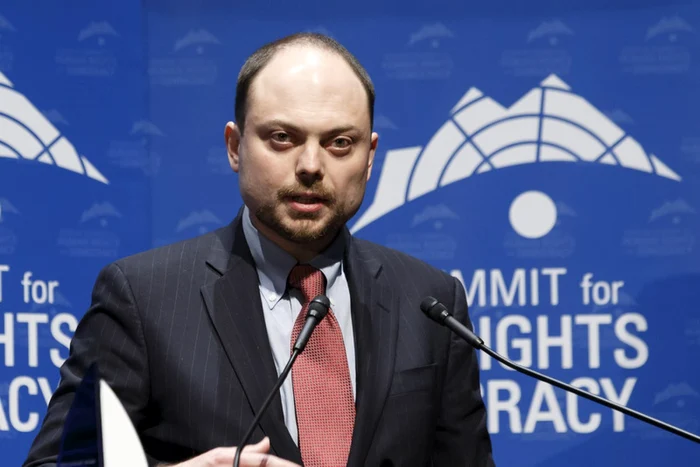
Russian dissident Vladimir Kara-Murza/PHOTO: EPA/EFE
Thus, the Russian opposition now has an official representation within PACE, being part of an initiative designed to open channels of communication between European democracies and democratic forces in Russia. Among the members of this platform are also representatives of Russian ethnic minorities living in exile.
Dialogue with an “other” Russia
Russian opposition politician Vladimir Kara-Murza, a member of the delegation, emphasizes the importance of this platform, stating that “the significance of this initiative cannot be underestimated.” He believes that this marks, for the first time, the establishment of an official dialogue mechanism between the Russian democratic opposition and the states of the democratic West.
“It is the first time that a large and traditional pan-European parliamentary organization like PACE is starting a dialogue with a different Russia. Not with the Russia of assassins and war criminals, but with the Russia of ordinary people, who are against the war and who imagine the country's future in a completely different light“, said Kara-Murza. According to him, this platform will contribute to “abolishing the Kremlin's usurped monopoly over the representation of Russia on the international stage”.
Challenges to representativeness
However, not everyone agrees with this approach. Russian journalist Sergey Parkhomenko expressed concerns about the legitimacy of Russian opposition representatives, arguing that they do not, in reality, represent the will of the Russian people. In a Facebook post, Parkhomenko claimed that “these people do not represent anyone.” “They do not represent the 'Russians' in any way. Nobody gave them that right, and there were no procedures to substantiate such a representation,” he added. The journalist believes that although they may have expert authority, they “do not have representative authority”, and expectations of them must be tempered.
Criticisms mainly relate to the fact that there was no formal selection process or mandate that would give them the authority to speak for the entire Russian opposition or the people of Russia. Parkhomenko warns that while some of them may make “attractive but unrealistic” promises, they should not be considered “legitimate representatives” of an entire nation.