2025-04-21 14:00
publication
2025-04-21 14:00
Industrial robots in its activities are used by 18 percent. large companies (employing 250 or more people) in Poland – according to the study of the Polish Economic Institute. As the authors of the study indicate, robotization is doing well in large, export and non -price companies.
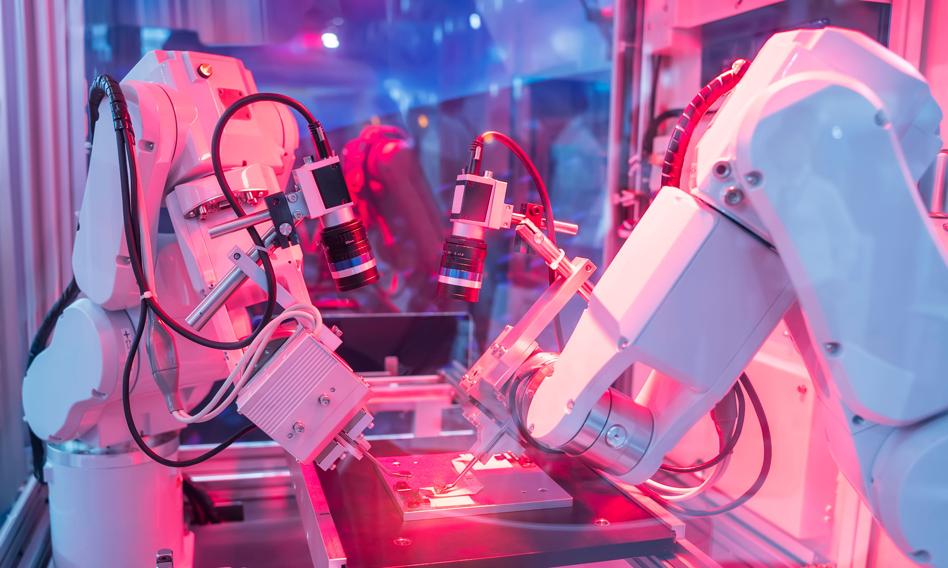
“The image of robotization in Poland is often presented on sectoral data, showing the absolute number of industrial robots used or the density of robotization, i.e. the number of robots per 10,000 sector employees. Data from research of enterprises carried out by PIA illustrates that the use of robots in enterprises in Poland differs, depending on the size of enterprises or their orientation for exports,”
“18 percent of large companies (employing 250 or more people) in Poland use industrial robots in their activities – according to quantitative research of Pie conducted at the end of 2024 at a sample of 1,000 enterprises. At the same time, 4 % of small and medium and medium companies and 3 percent of micro companies” use industrial robots – added.
Research shows that industrial robots are mainly used by companies with a predominance of foreign capital (20 %) or only with foreign capital (17 %).
“For comparison, 5 percent of companies with a predominance of Polish capital and 4 percent only with Polish capital use industrial robots. The above trends regarding investments in the robotization of large companies and with the predominance of foreign capital are also confirmed by export studies of production companies conducted by PIE in 2025.” – written in the report.
The survey of exporters conducted by PIE in January 2025 shows that the focus on export is conducive to robotization in companies.
“One -third of export companies from the industrial processing sector in Poland implemented or implemented robotization. In companies where the value of exports exceeds EUR 10 million, this result reached up to 60 percent for companies from other categories of value up to EUR 10 million, the percentage of companies that implemented the robotization ranges from 10 percent to 19 percent.” – written in the report.
“Similar dependencies can be seen when we look at the percentage share of exports. Companies with exports above 51 percent in over 40 percent of cases have implemented or implementing robotization. 34 % of companies with exports from 11 % to 50 % and 21 % of companies with the participation of exports up to 10 percent of exports are implemented the same technology.” – Added.
The authors of the report indicate that a higher level of robotization is also visible among export companies using non -price strategies in foreign markets.
“53 percent of export companies, which indicated that they compete in their business activities with some elements of price competition, implemented or implemented.
Research from the Polish Economic Institute shows that in Poland industrial robots are mainly used by companies from the industrial processing sector, large and with a predominance of foreign capital.
“At the same time, an important differentiating factor is the participation and value of exports of enterprises. An element conducive to the robotization of export companies may be their participation in global chains of international corporations,” it was written in the report.
“This shows that robotization in Poland takes place selectively in specific categories of companies. Small and medium -sized companies operating exclusively on the local market seem to be a category of companies in need of the greatest support in the robotization process” – added. (PAP Biznes)
pat/ asa/