Since his life, Pope Francis has already outlined the direction of the Pontified Future, through a discreet but decisive reconfiguration of the Cardinal College-the institution called to choose the next leader of the Catholic Church.
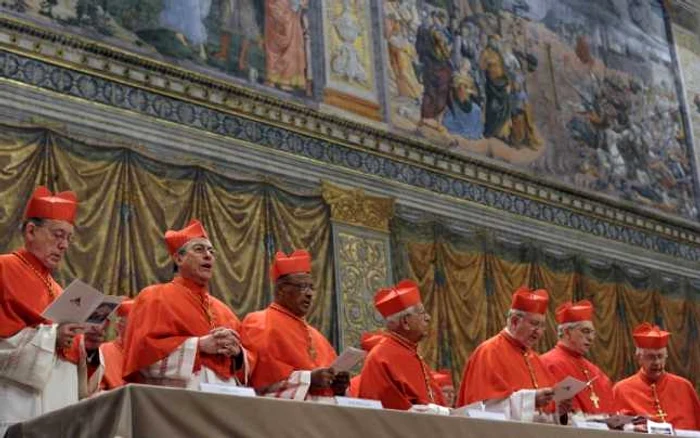
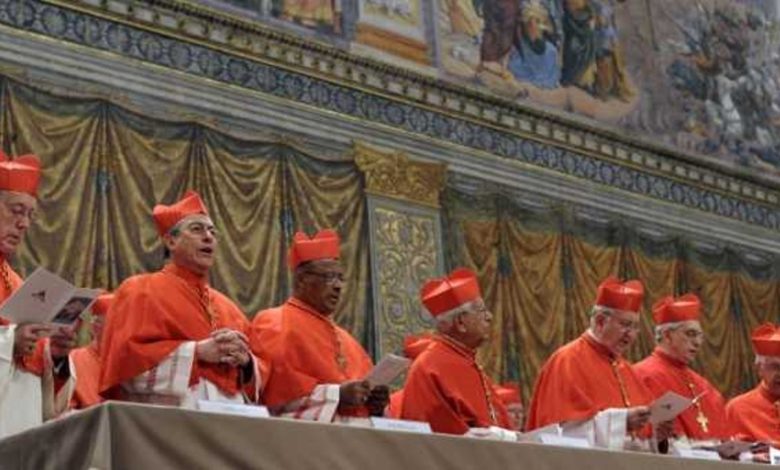
The future Pope will be chosen from the members of the Cardinal College/ Photo: Archive
Since the beginning of his pontificate in 2013, Jorge Mario Bergoglio has, not without tensions, a series of breaks and reconfigurations inside the church. Some of them occurred in silence, in the internal structures of the Vatican, through strategic appointments that already outline the profile of the successor: a pope that will carry on the agenda of an open, social church, less anchored in the traditional rigor and closer to the great themes of the contemporary world-migration, inequality.
“Favorite cardinals”: young, from the global southern, close to the peripherals
The most recent example is Mykola Bychok, the Ukrainian, at just 44, the youngest cardinal. He participated in the marches for refugees in Australia and pleaded for laws to help the integration of migrants – a consonant message with that of the current Pope. He is part of that “new wave” of cardinals designated by Francis: men outside the traditional European sphere, with pastoral experience in the field, often from conflict or poverty.
Of the total of 252 cardinals, only 138 have the right to vote in the future Conclav – the rest exceeded the age of 80. Of the eligible ones, 110 were directly appointed by Pope Francis – that is about 80%. In ecclesiastical terms, this means that the pontifical inheritance is, to a large extent, already written.
What kind of church does Pope Francis leave behind?
Vaticanologists, however, are prudent: although most cardinal were appointed by Francis, this does not mean that they will necessarily choose a “Francis”. The Cardinal College remains a complex forum, where geopolitics, the balance between continents, theological sensibilities and, last but not least, the personality of the candidates can weigh more than the fidelity to the agenda of the current Pope.
“To say that he has filled the college with people who will think exactly as he is a dangerous simplification,” says Austen Ivereigh, a pope's biographer. “He put there voices of the marginalized – of the poor, the migrants, the victims of the war – but that does not mean that they all share his vision 1: 1.”
And yet, the preferred profile is outlined: an empathetic leader, open to interreligious dialogue, less rigid in matters such as homosexuality, divorce or role of women in the church. A leader who, like Francis, embraces the idea of a “land” church, not a one of apostolic palace.
“The Pope of the Global Progressive”?
Among the favorites are cardinals like Luis Antonio Tagle, nicknamed “Asian Francis”, appreciated for his open vision and the warm, humanistic approach. Also, Matteo Zuppi, Archbishop of Bologna, known for his balance between tradition and openness, or José Tolentino de Mendonça, Portuguese poet and theologian, who calls for a church of “serving, not authority”.
At the opposite pole there are names like Peter Erdo, a Hungarian conservative close to Viktor Orbán, or Robert Sarah, who considers the ideology of gender a “Luciferic aberration”. The choice of such a cardinal would represent a radical rupture of the current line.
In the game is not only the religious vision, but also the geopolitical positioning of the Church. The choice of a pope in Africa-such as Peter Turkson-or Asia would signal a recognition of the “global south” as a living center of Christianity, in an increasingly secularized West.
Cardinal Angelo School, 82 years old, is a long -lasting papal candidate. He was among the favorites at the 2013 conclave who eventually chose Pope Francis. School, a former Archbishop of Milan, has deep theological roots and appeals to those who support a more centralized and hierarchical church.
Considered by critics as an open traditionalist, Cardinal Raymond Leo Burke, born in Wisconsin, was named cardinal by Pope Benedict XVI in 2010. He was publicly confronted with Pope Francis's more liberal philosophies, especially in his availability to allow divorced couples to receive the Eucharist. He also called the new language of the Church in terms of artificial contraception, civil marriages and homosexual people. He previously said that Catholic politicians who support legalized abortion, such as Biden, should not receive the Eucharist.
Cardinal Mario Grech, 68, from Malta, has played a key role in promoting Pope Francis's vision for a more inclusive church.
As Secretary General of the Synod of Bishops, Grach asked the church to “learn a new language” when dealing with gay and divorce couples, although he is also considered a traditionalist.
Cardinal Robert Sarah, 79, born in French Guinea, is another possibility for the first black pope, although his age can be a factor.
A conservative voice in the church, Sarah denounced the gender ideology as a threat to society and spoke against Islamic fundamentalism.
While the cardinals are preparing to enter the conclave, the possibility of choosing the first black or Asian pope is a potential tournament moment for the Catholic Church.
The selection of either Turkson cardinal or Cardinal Tagle would signal a recognition of the demographic changes of the church, with concentrated growth in Africa and Asia.
The next pope will face significant challenges in addressing the divided problems, including the church approach to LGBTQ+, divorced Catholics and China relationships.
If the cardinals opt for continuity or change, it may depend on how they evaluate the inheritance of Pope Francis and the direction needed for the future of the Church.
Conclavul – a ritual of mystery and politics
The future Conclav, which can be convened about two weeks after the pope's death, will always be a combination of prayer, backstage strategies and compromises. Although tradition requires silence and retreat, the reality behind the Vatican walls is often tense.
“It is an event in which the theater mixes with the mystery, and the policy with prayer,” noted the analyst John Allen in a description of the conclave as “a show of sacred power.”
Against the background of a fragmented world, with a radical right in ascension, religious tensions and an increasingly acute climatic crisis, the choice of the future Pope will not be just a liturgical gesture. Will it be a signal: does the Church remain an open moral force, engaged in the problems of the world? Or will he return to a form of theological isolation?
The Sovereign Pontiff has already prepared a land on which his successor is to walk – one who will decide not only who runs the church, but what kind of church will be.