China is active throughout Africa: it has built ports in Kenya, railways in Angola, a hydropower dam in Ethiopia and it also looks for minerals along the continent. China came with billions of dollars to build railways in Africa, and the projects are aroused, due to economic, political and ecological implications.
In September 2024 the heads of state in Africa were at an important summit in China, where President XI promised total $ 50 billion investments in the next three years, in dozens of countries in Africa.
Most investments are related to mining. But for some time the projects of “green energy” have been in the viewfinder, including some in the field of electric cars. What happened to that summit you can read here.
Compared to a few years ago, China invests in total in Africa and does, in general, in smaller projects. It is a recalibration phase, because both African and Chinese banks are more careful about the financial risks when they analyze the start of a big investment project.
China has invested massively in the railway infrastructure in Africa over the past ten years, as part of the Belt and Road (BR) initiative.
The Chinese did not invest from altruism, they also made local governments, according to the African press, but especially to have access to natural resources. Many of these lines connect areas rich in resources (ores, oil, wood), facilitating exports to China. The calculations about how many passengers would have to earn from the new links were rarely.
Great influence and new markets
The Chinese also aim to expand the geopolitical influence: through these projects, China strengthens their relationships with African governments, increasing their influence on the continent-and taking advantage of the fact that the US and Europe have invested less in Africa, so it remained “free place.”
Obviously it is also “fat” contracts for Chinese companies, because most of the companies that build these railways are Chinese.
One consequence is the growth of the market for Chinese products, and the connection is clear here: a better infrastructure allows the faster distribution of Chinese goods in Africa.
The most famous railway built by the Chinese in Africa links two big cities in Kenya and cost $ 3.8 billion. Another important railway is the one built by the Chinese between Addis Abeba (Ethiopia) and Djibouti.
Chinese investment traps
Chinese investments in Africa bring short -term benefits (modernization, temporary jobs, better connectivity), but in the long term they can raise serious problems of economic sovereignty and sustainability.
The big problem becomes what is called the “Debt-Trap Diplomacy”, a “Dipline Diplomacy”, which means that some African countries are financially dependent on China, which offers Beijing a strategic and political advantage, especially when those countries can no longer pay their debts. China is too big, too influential and too strong, so that an African country will defy it “on the face”.
Countries that cannot pay their debts reach the loss of control over the strategic infrastructure. In addition, most projects are built by Chinese workers, which reduces the benefits for the local population.
In a New York Times analysis about the big forum in the autumn of 2024, it is also explained that an upset among the leaders of African states is that Chinese RP is not willing to resign debt.
A wish of the heads of state in Africa is also that the commercial balance with China is more balanced, in the idea that Chinese RP buy more finished products from the African countries where it has invested and where it has an important presence.
There is also a problem related to questionable economic sustainability, because some railway lines are used too little or are not profitable, becoming an economic burden.
Although China builds infrastructure, it does not always provide technical training to the local population to administer it effectively. So, we are also talking about the lack of technology transfer. There were also projects that generated environmental problems, because they were massive deforestation even in protected areas.
Nickel railway
The latest railway project for which the documents were signed is the Tanzania-Burundi railway. Tanzania is famous for Mount Kilimanjaro, Zanzibar and Serengeti National Park. Burundi is a country that has no railways. The state of Burundi also has lithium and cobalt reserves, but history has been bloody, with instability and coup. A civil war made over 100,000 dead three decades ago.
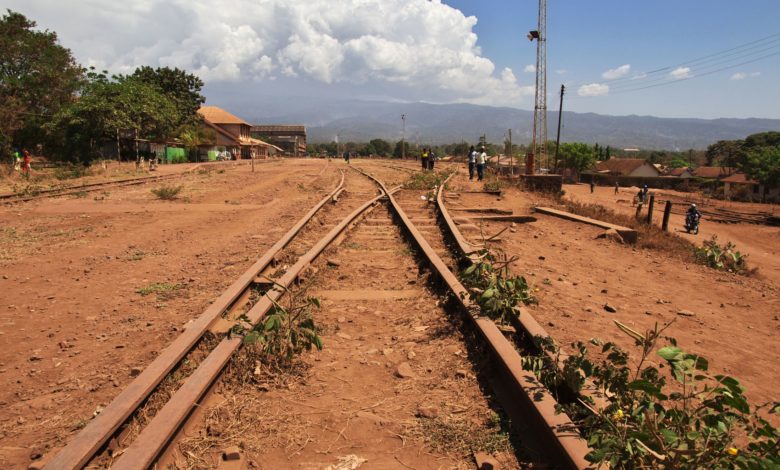
Tanzania has railway lines, but in a very bad condition, and trains look extremely bad, as can be seen from videos placed on YouTube by the railway field. For example, an 840 km trip, between the cities but ES Salaam and Tabora, lasts between 18 and 25 hours, but the 5-6 hours are often.
But the country has invested in recent years in modernization, has also brought some new trains and has increased the speeds on several sections.
The Chinese are old in investments in Africa. In the 1970s, in the time of Mao – with the help of thousands of Chinese workers sent to work with the locals – the line called Tazara, which connects Tanzania and Zambia (1,860 km) was built. Last year, at the great summit in the fall, it was decided to modernize the line, with investments of a billion dollars.
At the end of January, Tanzania and Burundi signed a $ 2.15 billion contract for a 282 km railway between the two countries. The line will be built between the cities that are called Uvinza and Miszongi. There will be two sections, and the companies that will build the line are China Railway Engineering Group and China Railway Engineering Design and Consulting.
Tanzania has a population of 68 million inhabitants, and Burundi, 14 million. On the surface, Tanzania is four times larger than Romania, and Burundi is much smaller, about five counties from us.
Financing comes through a loan from African Development Bank.
Miszongi, a town in the center of Burundi, is close to the tenth nickel warehouse in the world. In addition, there are in the area and reserves of gold, platinum, paladiu, copper and iron. Estimates are that Burundi has nickel reserves that total 185 million tons.
After everything is ready, the estimates are that the line will be able to carry the transport of 3 million tons of minerals annually.
The new line will be connected with a 411 km long railway that is under construction in Tanzania. For this, the contract was signed in 2022 and the Chinese are doing works.
The new railway should lead to the decrease of the number of heavy transport machines, given that some of the minerals will be taken by freight trains.
Photo source: dreamstime.com